Category: Penetrating Damp

  • Penetrating Damp Appearing After Heavy Rain

    Penetrating Damp Appearing After Heavy Rain

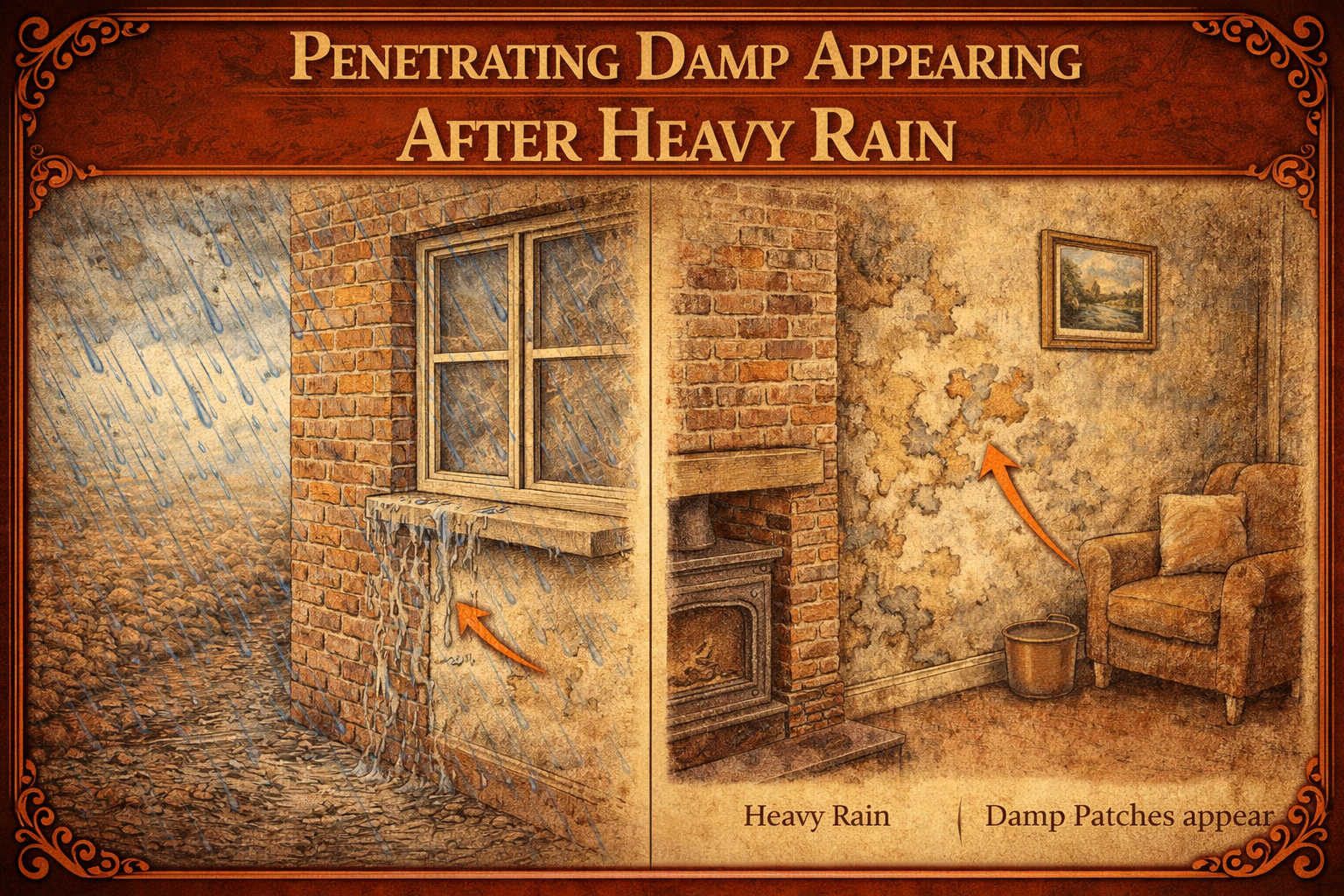
    Penetrating damp that appears after heavy rain is one of the clearest indicators of external water ingress. Unlike other forms of damp, such as condensation or rising damp, this type is directly linked to weather conditions, making it easier to identify but sometimes harder to trace back to its exact source.

    When damp patches appear or worsen following rainfall, it suggests that water is entering the property through a defect in the building’s external envelope. This could be through walls, roofs, windows, or other vulnerable areas. The challenge is that water does not always appear at the point of entry—it can travel through the structure before becoming visible internally.

    Common causes include damaged brickwork, cracked render, leaking gutters, defective roof tiles, and poorly sealed windows. In some cases, multiple small defects can combine to create a significant damp problem.

    Internally, signs include damp patches that darken after rain, peeling paint, bubbling plaster, and sometimes mould growth. The affected areas may dry out during periods of dry weather, only to reappear when it rains again. This pattern is a strong indicator of penetrating damp.

    Diagnosing the issue requires a systematic approach. Start by inspecting the most exposed parts of the property, such as the roof, gutters, and external walls. Look for visible defects, including cracks, gaps, or areas of deterioration. It may also be helpful to monitor the property during rainfall to identify where water is accumulating or entering.

    Repairing the problem involves addressing the source of the water ingress. This may include repointing brickwork, repairing render, clearing gutters, resealing windows, or replacing damaged roof tiles. In some cases, multiple repairs may be necessary to fully resolve the issue.

    Once repairs have been carried out, it is important to monitor the affected area to ensure the damp does not return. Acting quickly when signs first appear can prevent more serious structural damage and reduce the cost of repairs.
  • Penetrating Damp from Blocked Wall Cavities

    Penetrating Damp from Blocked Wall Cavities

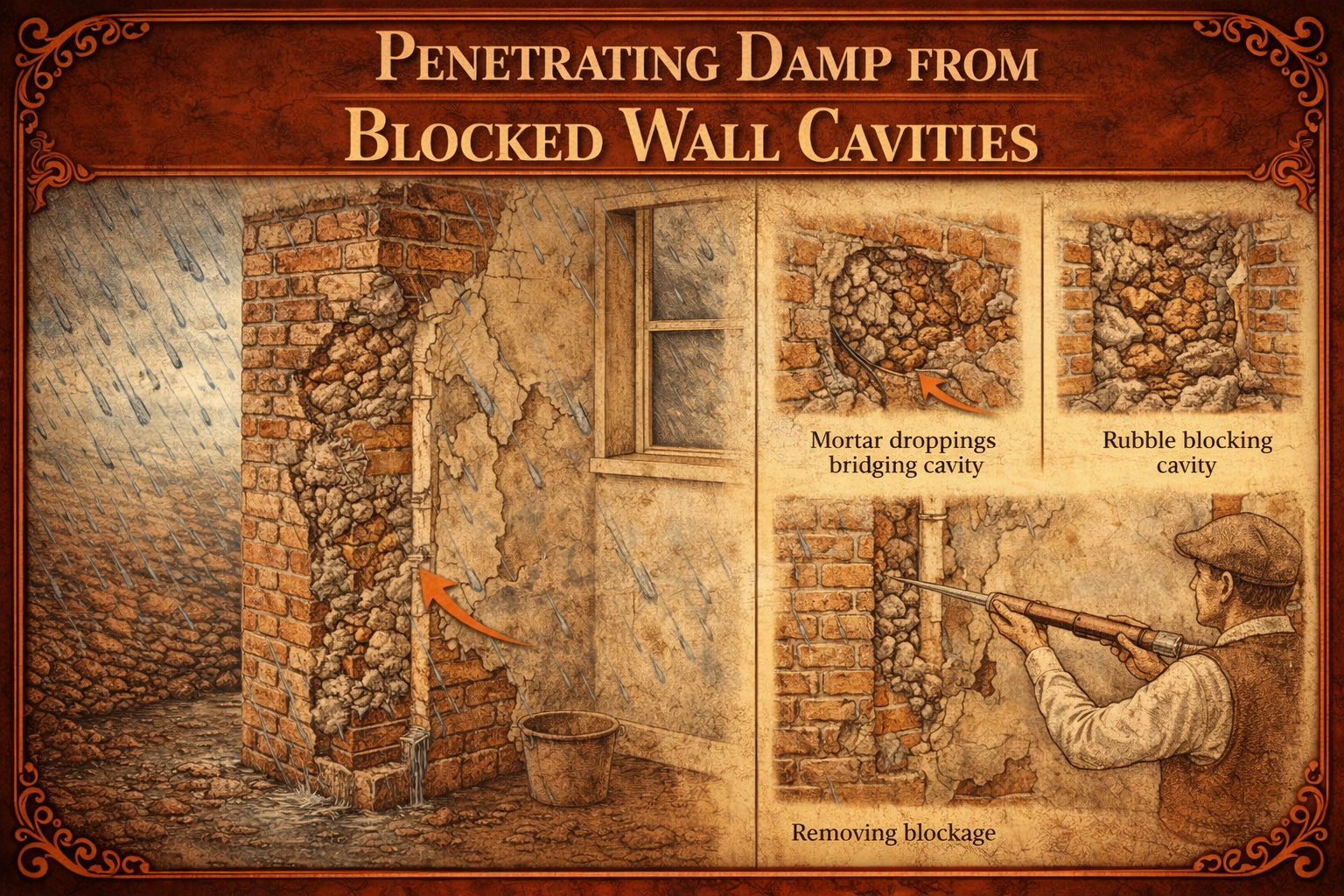
    Wall cavities play a crucial role in protecting a building from moisture ingress. They are designed to act as a drainage space, allowing any water that penetrates the outer leaf of masonry to run down and exit safely without reaching the inner wall. However, when these cavities become blocked, this protective function can fail, leading to penetrating damp.

    Blocked cavities can occur for several reasons. During construction, mortar droppings can fall into the cavity and accumulate over time, creating a bridge between the outer and inner walls. Retrofitted cavity wall insulation can also slump or become dislodged, causing obstructions. In some cases, external debris or even vegetation can find its way into the cavity and contribute to blockages.

    When a cavity becomes blocked, water that would normally drain away can build up and transfer across to the inner wall. This creates a direct pathway for moisture to enter the property, resulting in damp patches internally.

    Internally, this type of damp often appears as persistent patches on external walls, sometimes with no obvious external defect. The damp may worsen during periods of heavy rain and remain even during dry conditions due to trapped moisture within the wall structure. In some cases, salts may appear on the surface of the plaster, and finishes such as paint or wallpaper may begin to deteriorate.

    Diagnosing blocked cavities can be difficult because the problem is hidden within the wall. A professional survey is usually required, often involving the use of a borescope to inspect inside the cavity.

    Fixing the issue typically involves removing the obstruction. This may require drilling access points into the wall and using specialist equipment to clear debris. In more severe cases, sections of the wall may need to be opened up to fully resolve the problem.

    Preventing blocked cavities involves good construction practices and ensuring that any retrofit work, such as insulation installation, is carried out correctly. Regular inspection of external walls can also help identify potential issues before they develop into serious damp problems.

  • Penetrating Damp Through Cavity Wall Insulation

    Penetrating Damp Through Cavity Wall Insulation

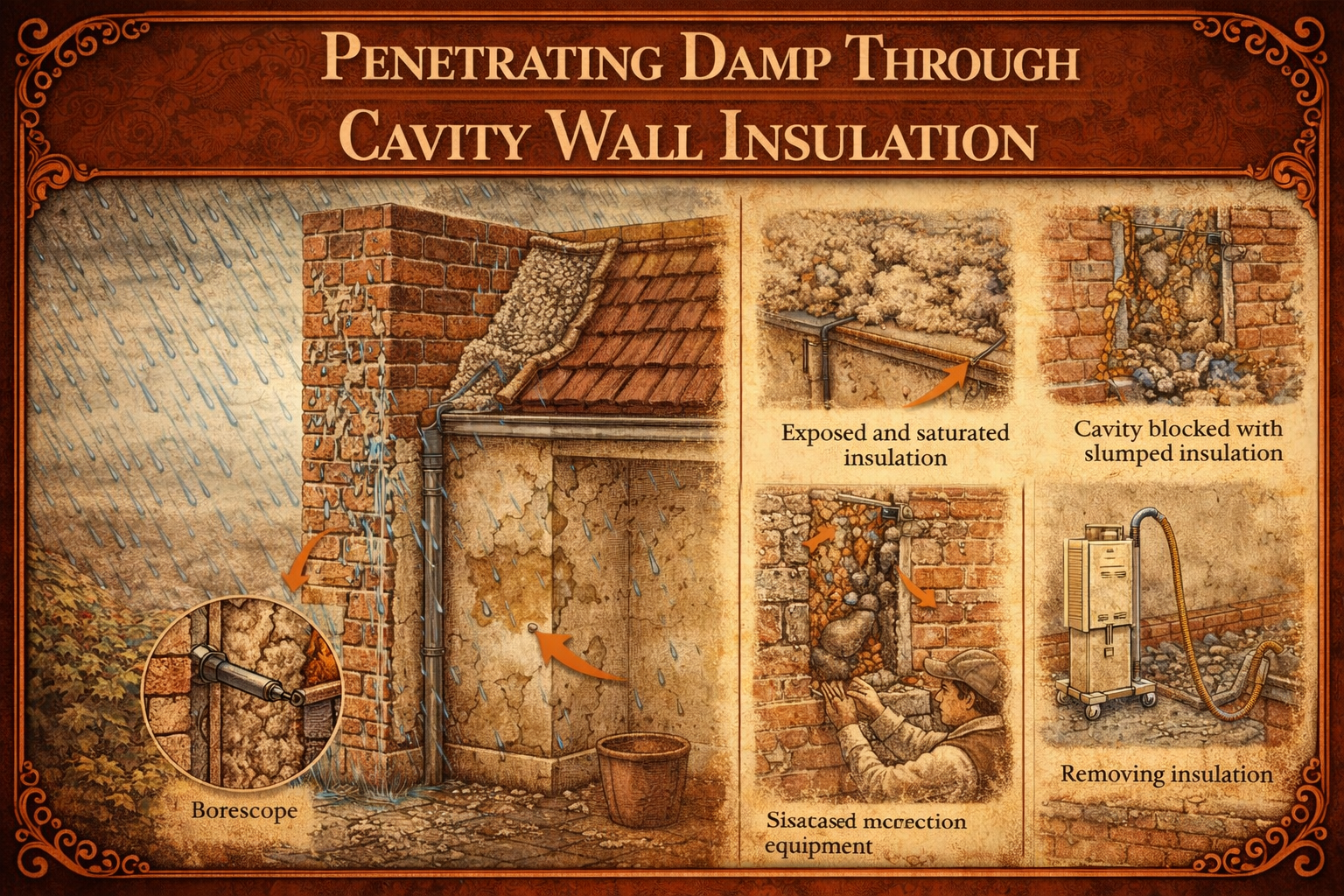
    Cavity wall insulation is designed to improve a property’s thermal efficiency by reducing heat loss, but in some cases, it can contribute to penetrating damp. This issue is more common than many homeowners realise and often occurs when insulation is either poorly installed or unsuitable for the building’s exposure level.

    In a traditional cavity wall construction, there is a gap between the outer and inner leaf of masonry. This cavity acts as a barrier, preventing rainwater that penetrates the outer wall from reaching the interior. However, when insulation is introduced, this gap is partially filled. If the insulation becomes saturated or acts as a bridge, it can allow moisture to transfer across the cavity.

    This is particularly problematic in exposed locations where the property is subjected to driving rain. Certain insulation materials, such as some fibre-based products, can absorb and retain moisture. Once wet, they can hold water against the inner wall, leading to persistent damp issues internally.

    Internally, penetrating damp caused by cavity wall insulation often appears as widespread damp patches on external walls. Unlike isolated defects, this type of damp can affect large sections of a room and may not have a clearly defined source. You may also notice peeling paint, bubbling plaster, and in some cases, mould growth due to the increased moisture levels.

    Diagnosing this issue can be challenging because there may be no obvious external defects. The walls may appear to be in good condition, leading to confusion about the cause of the damp. A specialist survey is often required, which may include borescope inspections to assess the condition of the insulation within the cavity.

    Solutions typically involve removing the problematic insulation. This is usually done using specialist extraction equipment. Once removed, the cavity can be assessed and, if appropriate, re-insulated with a more suitable material that is less prone to moisture retention.

    In some cases, particularly in very exposed properties, it may be better to leave the cavity uninsulated to prevent future damp problems.

    Preventative measures include ensuring that cavity wall insulation is only installed where appropriate and by qualified professionals. A proper assessment of the property’s exposure to weather should always be carried out beforehand.

  • Penetrating Damp Below Window Sills

    Penetrating Damp Below Window Sills

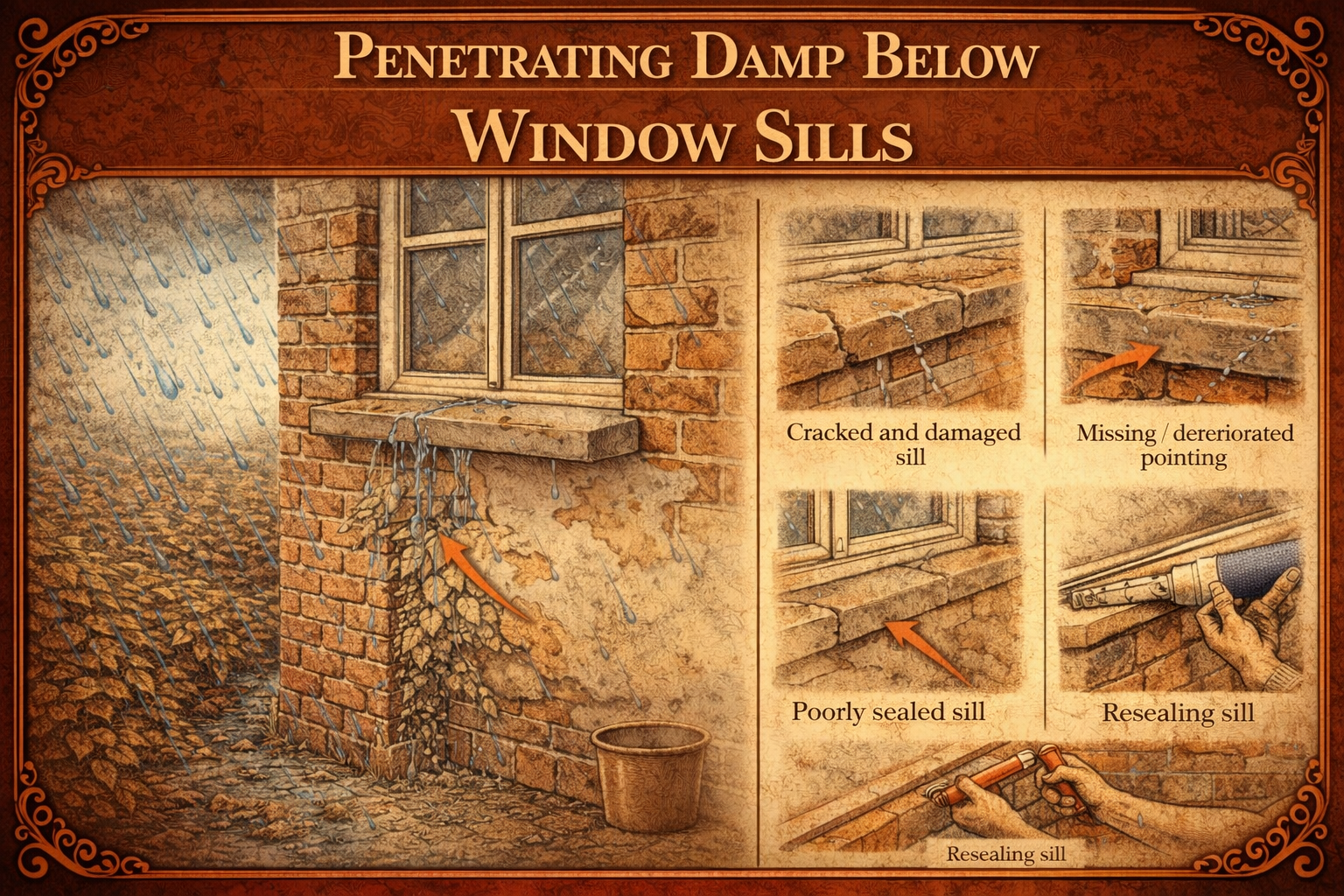
    Penetrating damp below window sills is a common problem that can affect properties of all ages. The window sill is designed to direct rainwater away from the wall, but if it fails to perform this function correctly, water can enter the structure and cause damp issues internally.

    One of the most common causes is poor sill design. If the sill does not project far enough beyond the wall or lacks a proper drip groove underneath, water can run back toward the building rather than being shed away. Over time, this repeated exposure allows moisture to penetrate the wall below.

    Damage to the sill itself can also be a factor. Cracks, chips, or deterioration in materials such as stone, concrete, or uPVC can create entry points for water. Additionally, failed sealant between the sill and the wall can allow water to seep into gaps and reach the internal structure.

    Externally, poor installation or lack of maintenance can worsen the issue. If the sill is not correctly angled, water may not drain effectively. Blocked drainage paths or debris buildup can also contribute to water pooling around the sill area.

    Internally, damp below window sills typically appears as staining, discolouration, or damp patches directly beneath the window. You may also notice peeling paint, bubbling plaster, or mould growth in more severe cases. The problem is often more noticeable after rainfall.

    To fix the issue, a thorough inspection of the sill and surrounding area is required. Damaged sills may need to be repaired or replaced, while failed sealant should be removed and reapplied using a suitable weather-resistant product. Ensuring the sill has a proper drip edge and adequate projection is essential.

    In some cases, additional measures such as installing a new sill or improving external drainage may be necessary to fully resolve the problem.

    Regular maintenance, including checking sealant and ensuring water is draining correctly, can help prevent penetrating damp from developing below window sills.

  • Penetrating Damp Caused by Damaged Roof Tiles

    Penetrating Damp Caused by Damaged Roof Tiles

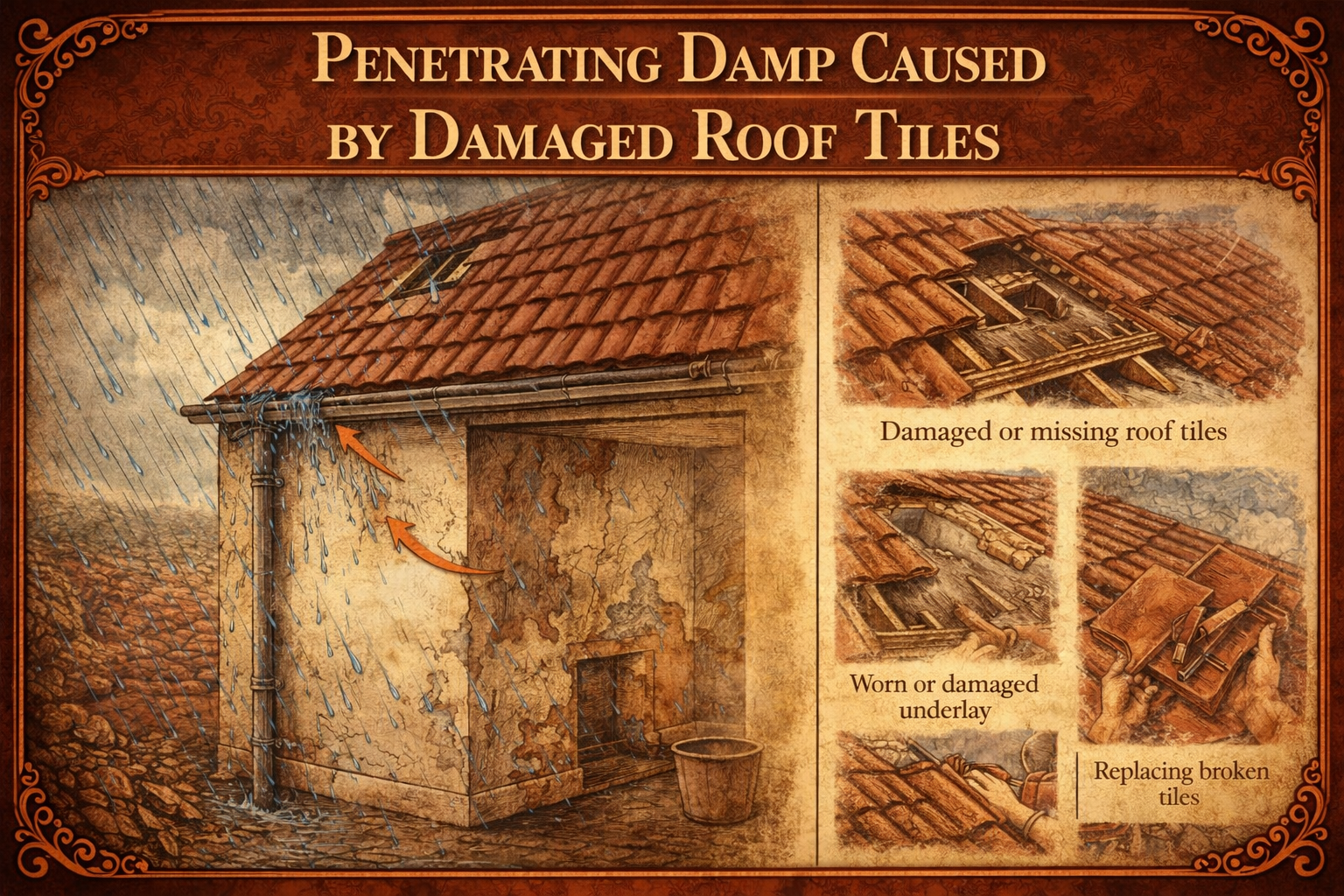
    The roof is the primary defence against rain, and any damage to roof tiles can quickly lead to penetrating damp. Even a single missing or cracked tile can allow water to enter the roof structure and eventually affect the interior of the property.

    Roof tiles can become damaged due to age, weather conditions, or physical impact. Strong winds can dislodge tiles, while frost can cause cracking over time. Once a tile is compromised, rainwater can pass through and reach the underlay and structural timbers.

    Internally, this often results in damp patches on ceilings or upper walls. You may notice water stains, discolouration, or even dripping in severe cases. In loft spaces, damp insulation, wet timbers, or visible daylight through the roof are clear warning signs.

    One of the challenges with roof-related damp is that water can travel before becoming visible. The source of the leak may not be directly above the affected area, making diagnosis more difficult.

    Repairing the issue involves inspecting the roof and replacing any damaged or missing tiles. It is also important to check the condition of the underlay and battens, as prolonged exposure to moisture can cause deterioration.

    Flashing around chimneys, vents, and valleys should also be inspected, as defects in these areas can contribute to water ingress.

    Regular roof inspections, particularly after storms, can help identify problems early and prevent more serious damp issues from developing.

  • Penetrating Damp on Chimney Breast Walls

    Penetrating Damp on Chimney Breast Walls

    Chimney breast walls are particularly vulnerable to penetrating damp due to their exposed position and complex construction. Unlike standard walls, chimneys are subjected to weather from multiple directions and contain several potential entry points for water.

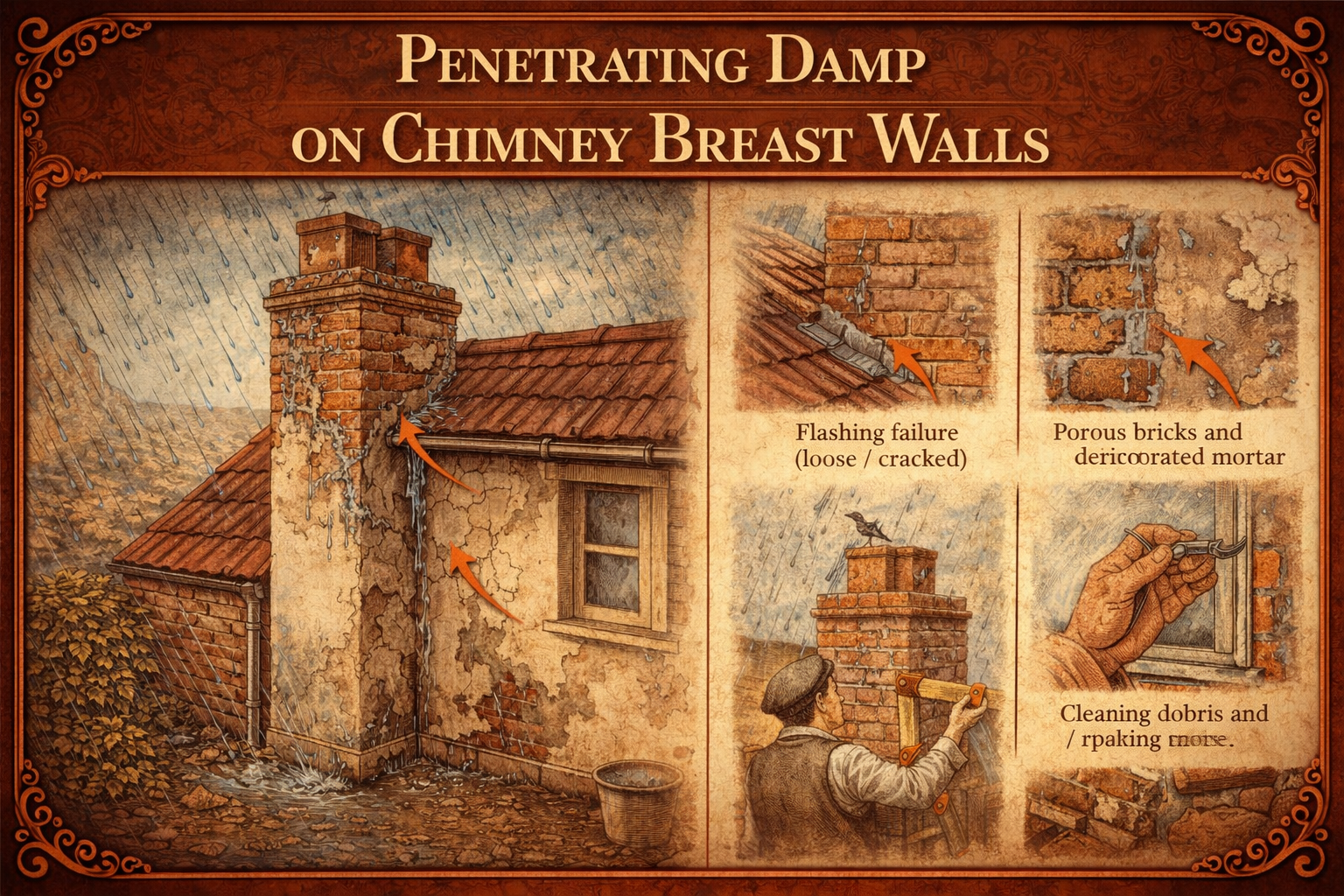
    A common cause of damp in chimney breasts is defective flashing. Flashing is used to seal the joint between the chimney and the roof. If it becomes loose, cracked, or improperly installed, water can enter at this junction and travel down into the chimney structure.

    Porous brickwork and deteriorated mortar joints are also frequent issues. Over time, exposure to the elements can cause chimney masonry to become highly absorbent. Missing or damaged chimney pots, caps, or cowls can allow rainwater to enter directly from above.

    Internally, penetrating damp on chimney breast walls often appears as staining, discolouration, or damp patches. Salt deposits may also form on the surface, and wallpaper or plaster may begin to deteriorate. The problem is often more noticeable after heavy rain.

    Unused chimneys can make the issue worse. Without proper ventilation, moisture can become trapped within the flue, leading to condensation and damp problems internally.

    Repairing chimney-related damp involves addressing the external defects. This may include repairing or replacing flashing, repointing brickwork, and installing chimney caps or cowls to prevent water ingress while maintaining ventilation.

    Regular inspection and maintenance of chimneys are essential to prevent damp problems and ensure long-term structural integrity.

  • Penetrating Damp from Leaking Gutters

    Penetrating Damp from Leaking Gutters

    Leaking or defective gutters are one of the most common and preventable causes of penetrating damp. Gutters play a crucial role in managing rainwater by directing it away from the building. When they fail, water can overflow or run down external walls, leading to prolonged saturation and eventual moisture penetration.

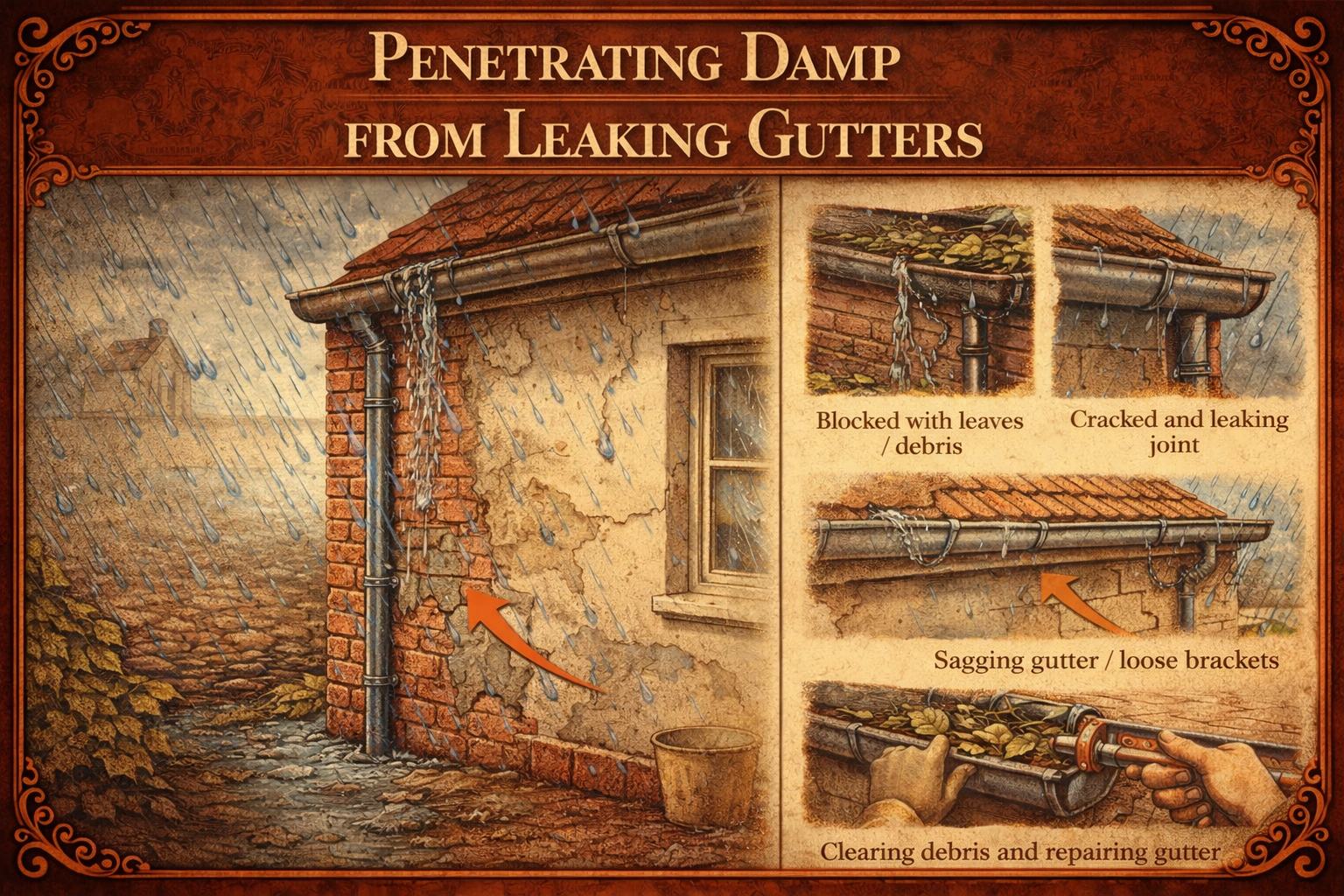
    One of the main causes of gutter failure is blockage. Leaves, moss, and debris can accumulate over time, particularly in autumn, preventing water from flowing freely. When this happens, rainwater spills over the edge of the gutter and repeatedly soaks the wall below. Over time, this constant exposure allows water to penetrate through brickwork or render.

    Other issues include cracked or leaking joints, loose brackets, and sagging sections of guttering. If the gutter is not correctly aligned or lacks the proper fall, water may pool instead of draining efficiently. This increases the likelihood of overflow during heavy rainfall.

    Internally, penetrating damp caused by leaking gutters often appears as vertical damp patches on walls. These patches are typically aligned with the position of the gutter or downpipe. You may also notice staining, peeling paint, or mould growth in affected areas.

    Externally, signs can include staining on the wall, algae growth, or visible water marks after rainfall. In severe cases, the constant flow of water can even erode mortar joints and accelerate deterioration of the wall.

    To fix the issue, start by clearing any blockages from the gutter and downpipes. Inspect the system for damage, including cracks, leaks, or loose joints. Repairs may involve resealing joints, replacing damaged sections, or realigning the gutter to ensure proper drainage.

    Regular maintenance is essential to prevent this issue. Cleaning gutters at least once or twice a year, especially after autumn, can significantly reduce the risk of penetrating damp.

  • Penetrating Damp Through Cracked Render

    Penetrating Damp Through Cracked Render

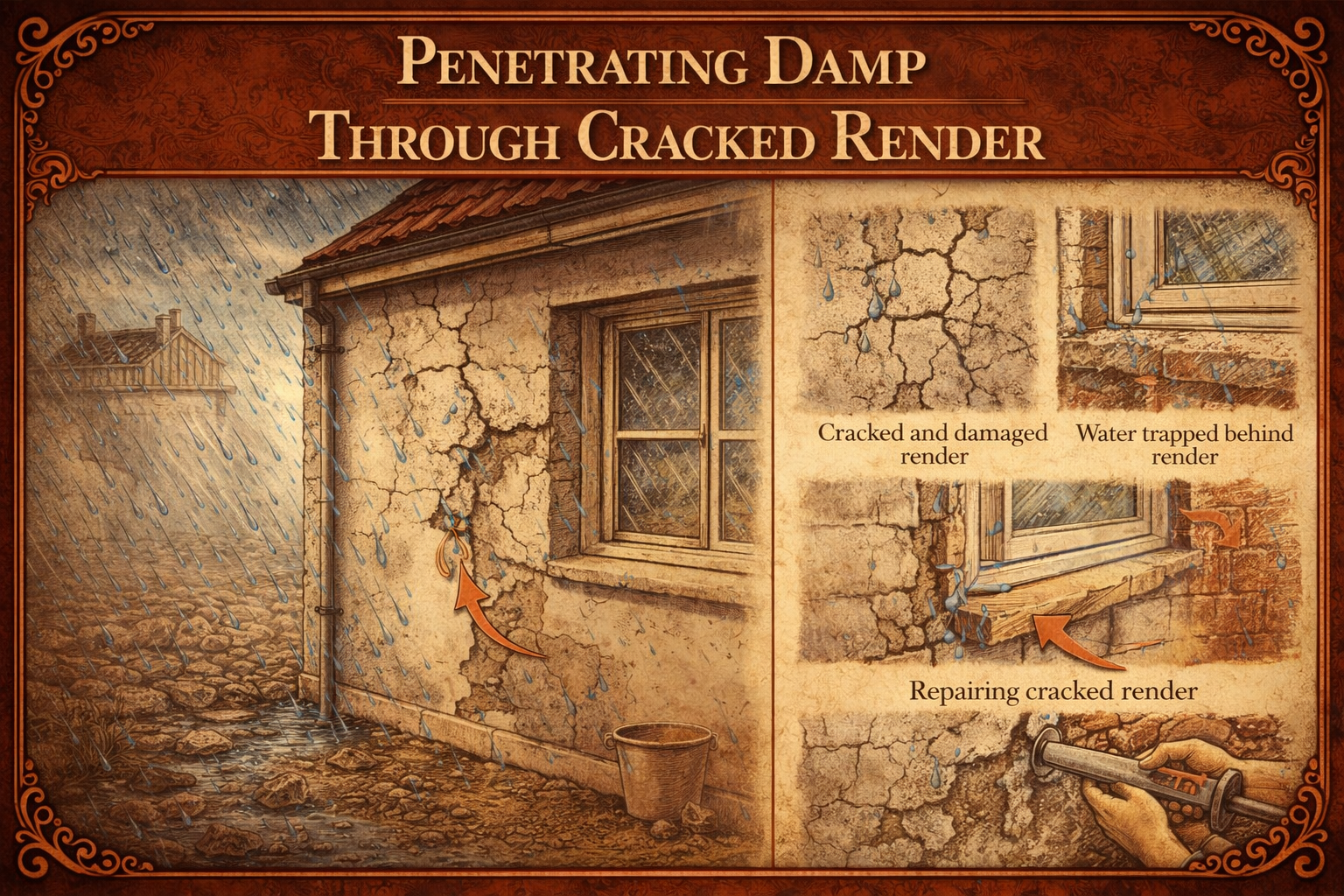
    Render is designed to act as a protective outer layer for a property, shielding the underlying masonry from rain and weather exposure. However, once render becomes cracked or damaged, it can quickly become one of the most direct routes for penetrating damp to develop.

    Cracks in render can occur for several reasons. One of the most common is thermal movement, where temperature changes cause materials to expand and contract. Over time, this repeated movement creates stress within the render, leading to cracks. Structural movement in the building can also contribute, particularly around windows, doors, or areas of weakness. In some cases, poor application, incorrect mix ratios, or low-quality materials can result in render that is more prone to failure.

    Even small hairline cracks should not be ignored. While they may appear minor, they can allow significant amounts of water to enter over time, especially during prolonged rainfall. Once water penetrates the render, it can become trapped behind the surface and soak into the masonry beneath. This often results in damp patches appearing internally, sometimes at a distance from the original crack, making diagnosis more difficult.

    Internally, the signs of penetrating damp from cracked render include damp patches on walls, peeling paint, bubbling plaster, and occasionally mould growth. The damp often worsens after rainfall and may reduce during dry periods, which is a key indicator of external water ingress.

    Repairing cracked render depends on the severity of the damage. Hairline cracks can often be filled using flexible exterior fillers designed to accommodate movement. Larger cracks may require cutting out and patch repairing sections of render. In cases where the damage is widespread, a full re-render may be necessary.

    When repairing or replacing render, it is important to use breathable materials, particularly on older properties. Traditional lime render or modern silicone-based systems can allow moisture to escape while still providing protection against rain.

    Regular inspection of rendered walls is essential. Addressing cracks early can prevent water ingress and avoid more extensive repairs in the future.

  • Penetrating Damp Around Window Frames

    Penetrating Damp Around Window Frames

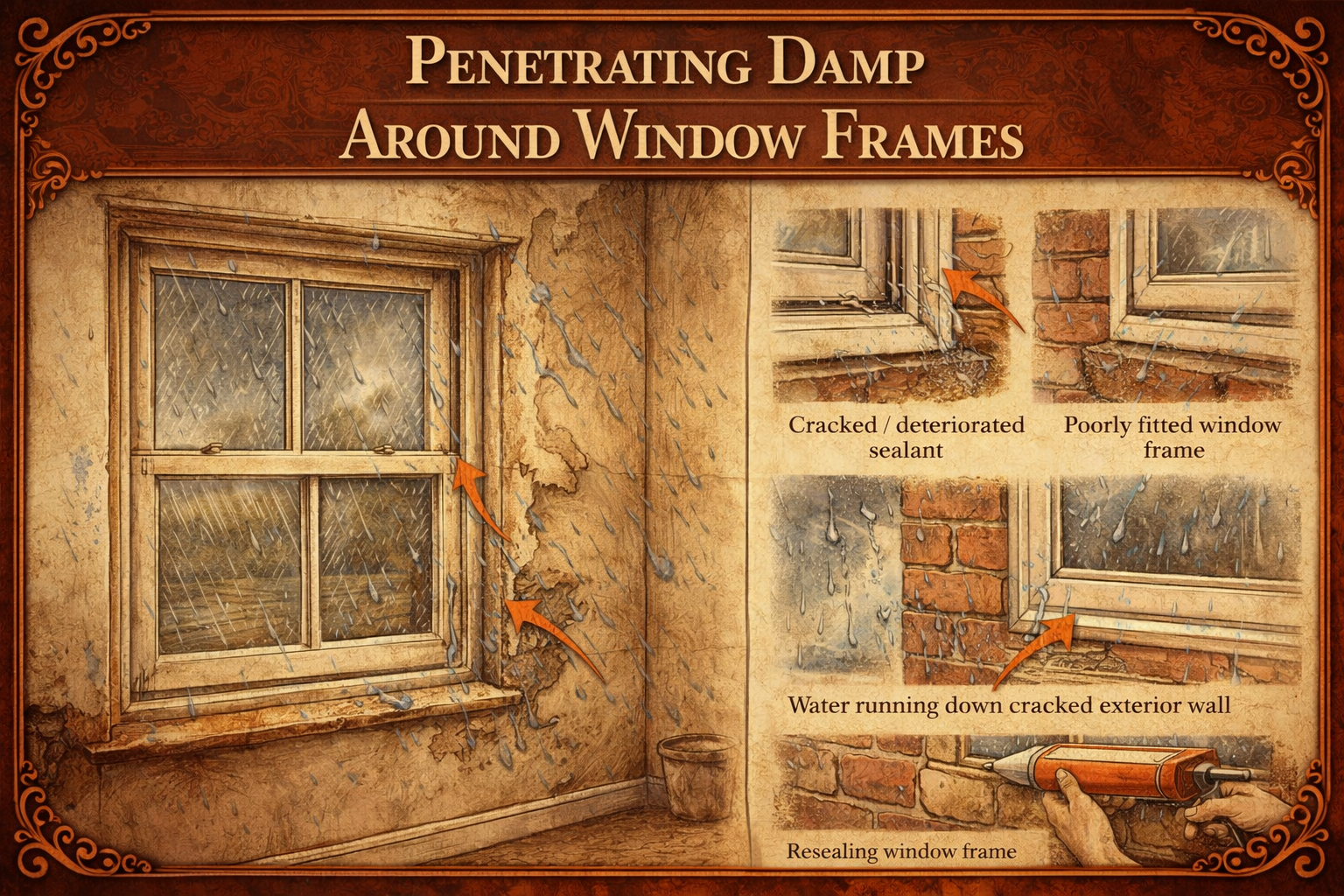
    Penetrating damp around window frames is a common issue that affects both modern and traditional properties. Windows are natural weak points in the building envelope, and even small defects can allow water to enter and cause internal damage.

    One of the most frequent causes is failed sealant around the window frame. Over time, silicone or mastic can degrade due to weather exposure, UV light, and natural movement in the building. As it cracks or separates, gaps form that allow rainwater to penetrate.

    Poor installation is another common issue. If a window has not been correctly fitted, there may be gaps between the frame and the surrounding wall. In some cases, missing or defective cavity trays above the window can allow water to track into the structure and appear internally.

    Externally, problems such as cracked render, deteriorated pointing, or poorly designed window sills can contribute to water ingress. If the sill does not project far enough or lacks a proper drip edge, water can run back toward the wall instead of being directed away.

    Inside the property, signs of penetrating damp around windows include damp patches on the reveals, peeling paint, mould growth, and sometimes staining on wallpaper. The damp is often more noticeable after heavy rain or during periods of strong wind.

    To fix the issue, start with a thorough external inspection. Remove any failed sealant and replace it with a high-quality, weather-resistant product. Ensure that all joints around the frame are fully sealed and that there are no gaps.

    Check the condition of the window sill and ensure it is functioning correctly. Repairs or replacements may be necessary if it is damaged or incorrectly installed.

    If problems persist, further investigation may be needed to assess the wall cavity or lintel. In some cases, water may be entering from above and tracking down to the window opening.

    Routine maintenance, including resealing windows every few years and checking external finishes, can significantly reduce the risk of penetrating damp developing in these areas.

  • Penetrating Damp Through External Brick Walls

    Penetrating Damp Through External Brick Walls

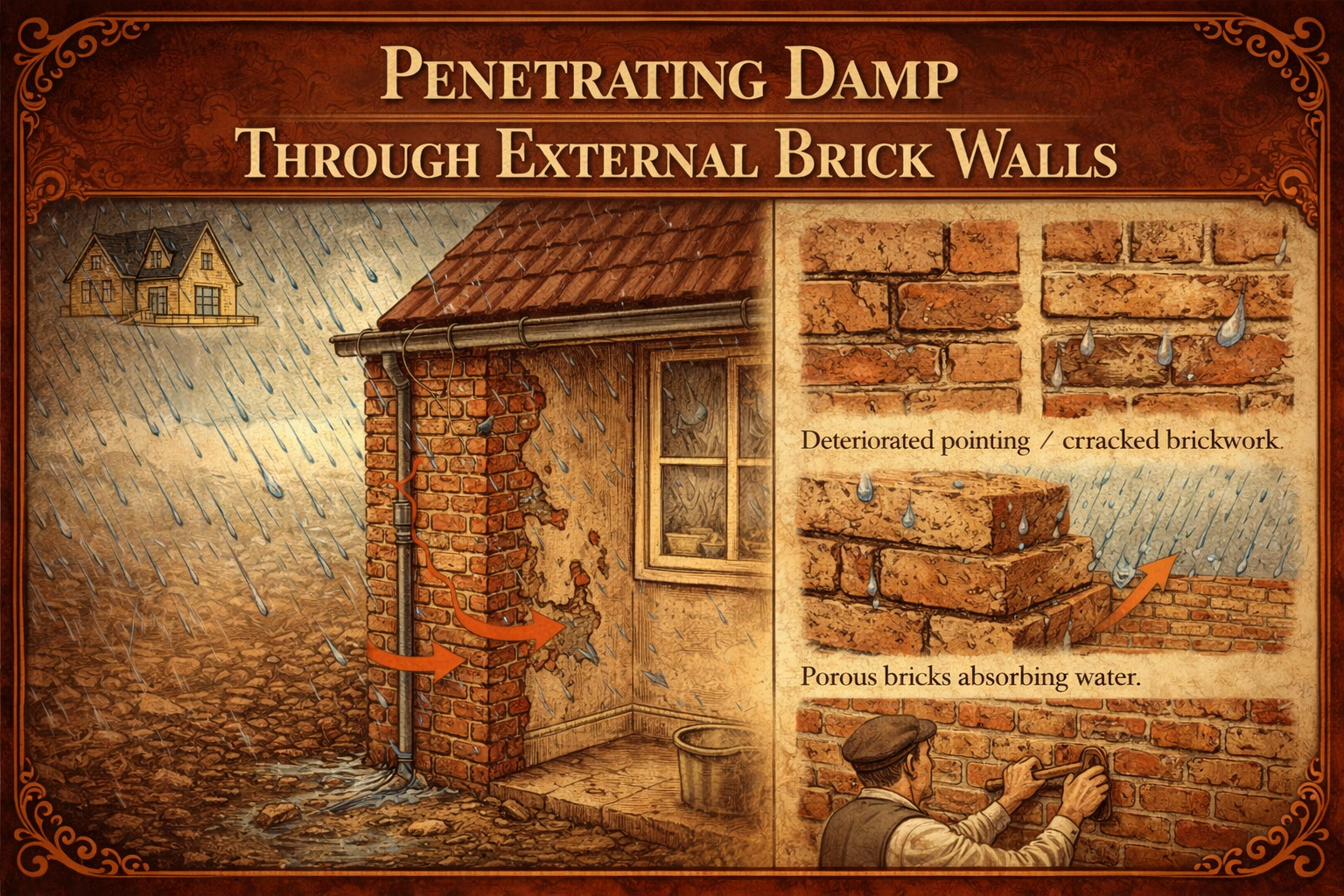
    Penetrating damp through external brick walls is one of the most common forms of moisture ingress found in UK properties, particularly in older buildings with solid wall construction. Unlike rising damp, which travels upward from the ground, penetrating damp moves horizontally through walls when rainwater breaches the external surface.

    The main cause is defects in the external brickwork. Over time, mortar joints begin to deteriorate due to weather exposure, allowing water to seep into the wall. Cracked or spalled bricks can also become highly absorbent, especially after years of frost damage. In some cases, the issue is made worse by previous repairs using incorrect materials, such as hard cement pointing on older lime-built properties, which can trap moisture instead of allowing the wall to breathe.

    Another contributing factor is prolonged exposure to driving rain. Properties located in exposed areas or without adequate protection, such as overhanging roofs or well-maintained render, are more vulnerable. Once water enters the wall, it can travel through the masonry and appear internally as damp patches.

    Internally, penetrating damp typically presents as isolated patches on walls, often darker in appearance and sometimes accompanied by peeling paint, bubbling plaster, or a musty smell. A key diagnostic sign is that the damp worsens after rainfall and may dry out during extended dry periods. This pattern helps distinguish it from condensation or rising damp.

    To resolve penetrating damp in brick walls, the first step is identifying and repairing the external defect. Repointing is often required where mortar joints have failed. This should be carried out using a suitable mortar mix that matches the original construction, particularly in older buildings where lime mortar may be necessary. Damaged bricks should be replaced, and any cracks repaired.

    In some cases, applying a breathable water-repellent treatment to the external wall can help reduce water absorption while still allowing moisture to escape. However, this should only be done after repairs have been completed.

    Internally, damaged plaster may need to be removed and replaced once the wall has dried sufficiently. Using breathable plaster systems can help prevent moisture from becoming trapped.

    Regular maintenance is essential. Inspecting brickwork periodically and addressing minor defects early can prevent more serious damp problems from developing.