
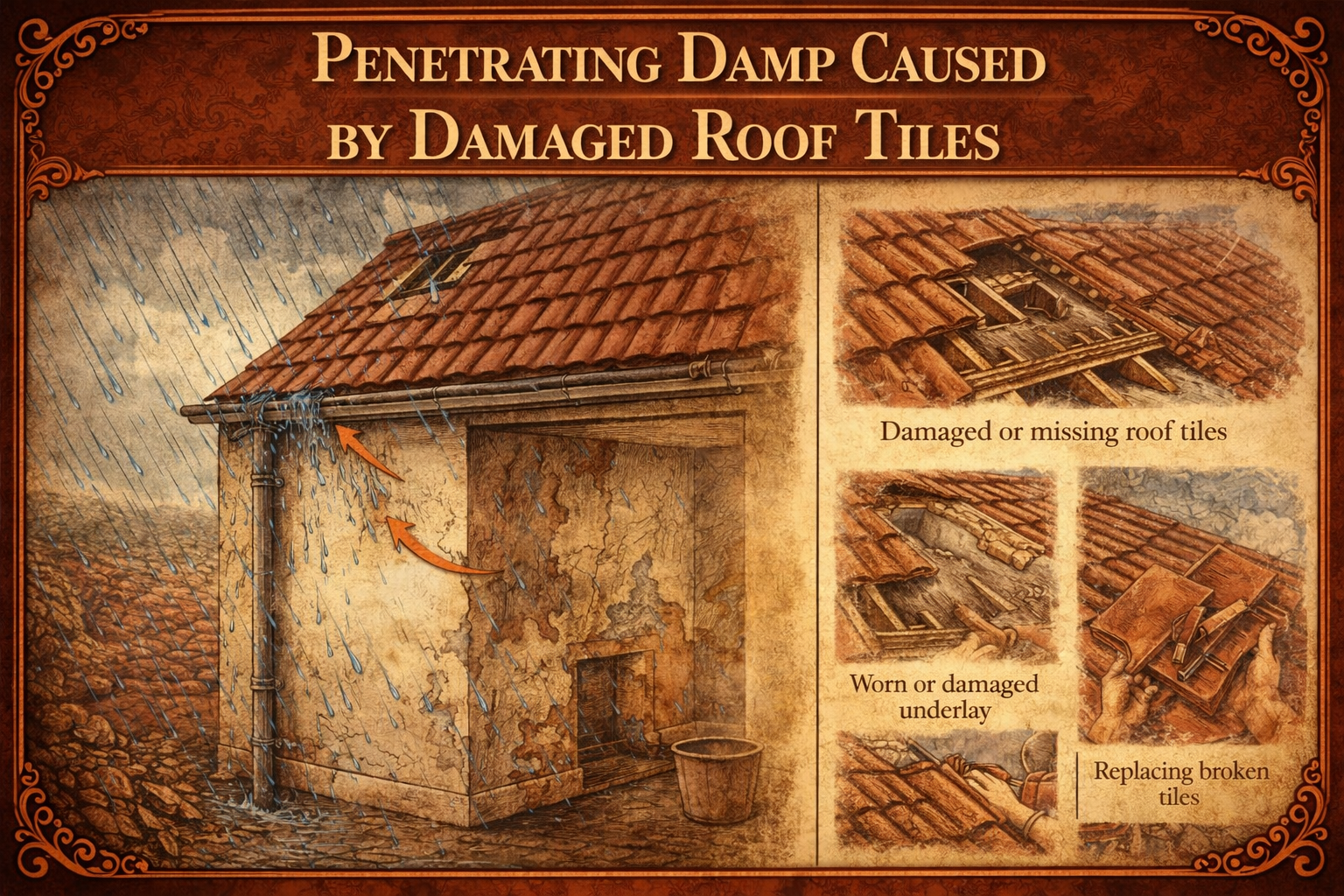
The roof is the primary defence against rain, and any damage to roof tiles can quickly lead to penetrating damp. Even a single missing or cracked tile can allow water to enter the roof structure and eventually affect the interior of the property.
Roof tiles can become damaged due to age, weather conditions, or physical impact. Strong winds can dislodge tiles, while frost can cause cracking over time. Once a tile is compromised, rainwater can pass through and reach the underlay and structural timbers.
Internally, this often results in damp patches on ceilings or upper walls. You may notice water stains, discolouration, or even dripping in severe cases. In loft spaces, damp insulation, wet timbers, or visible daylight through the roof are clear warning signs.
One of the challenges with roof-related damp is that water can travel before becoming visible. The source of the leak may not be directly above the affected area, making diagnosis more difficult.
Repairing the issue involves inspecting the roof and replacing any damaged or missing tiles. It is also important to check the condition of the underlay and battens, as prolonged exposure to moisture can cause deterioration.
Flashing around chimneys, vents, and valleys should also be inspected, as defects in these areas can contribute to water ingress.
Regular roof inspections, particularly after storms, can help identify problems early and prevent more serious damp issues from developing.
Leave a Reply