
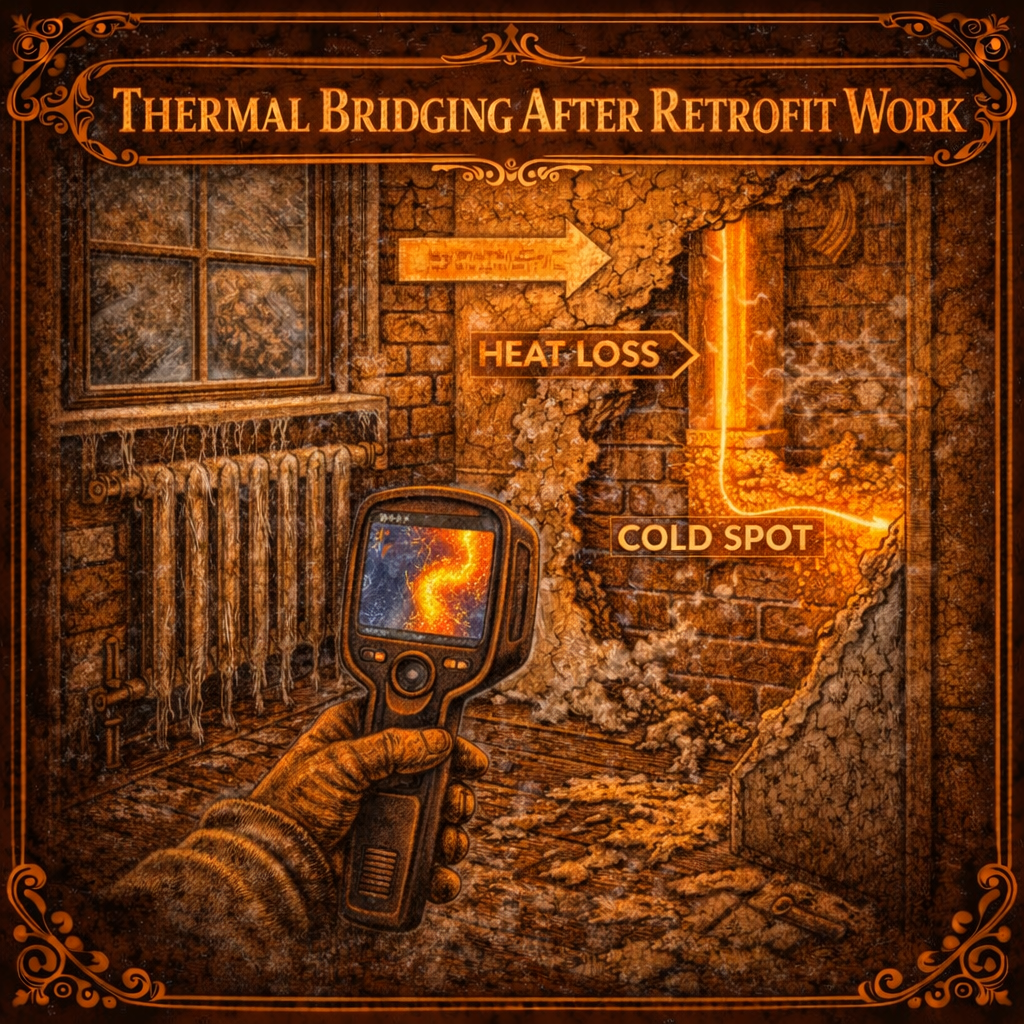
Thermal bridging occurs when heat escapes through parts of a building structure that are not properly insulated. After retrofit work such as insulation upgrades, thermal bridges may develop if insulation is incomplete or poorly installed.
These cold spots can reduce the effectiveness of insulation systems and create areas where condensation forms inside the property.
Thermal bridging is often responsible for localised damp or mould problems that appear even after insulation improvements have been made.
Why Thermal Bridging Happens
Thermal bridges form when heat finds an easier path through materials that conduct heat more easily than the surrounding insulation.
Common locations for thermal bridges include:
- window and door frames
- wall junctions
- floor and ceiling connections
- structural elements such as steel beams
- areas where insulation is missing or poorly fitted
During retrofit projects, thermal bridges can occur when insulation does not fully cover these areas.
Signs of Thermal Bridging in a Home
Thermal bridging often leads to noticeable temperature differences on internal surfaces.
Homeowners may notice:
- cold patches on walls
- condensation forming in specific areas
- mould growth on corners or edges of walls
- uneven temperatures in rooms
- damp smells in affected areas
These problems usually occur in colder parts of the building envelope.
Investigating Thermal Bridges
Professionals often use thermal imaging cameras to detect thermal bridging.
This equipment can identify areas where heat is escaping from the building. Inspections may also involve examining insulation installation to identify gaps or poorly insulated junctions.
Identifying thermal bridges allows targeted repairs to improve the building’s overall thermal performance.
How Thermal Bridging Is Resolved
Solutions typically involve improving insulation around the affected areas.
Possible improvements include:
- adding insulation to exposed structural elements
- sealing insulation gaps around windows and doors
- installing additional internal insulation layers
- improving insulation at wall and roof junctions
Reducing thermal bridging helps maintain consistent indoor temperatures and prevents condensation problems.
Leave a Reply