
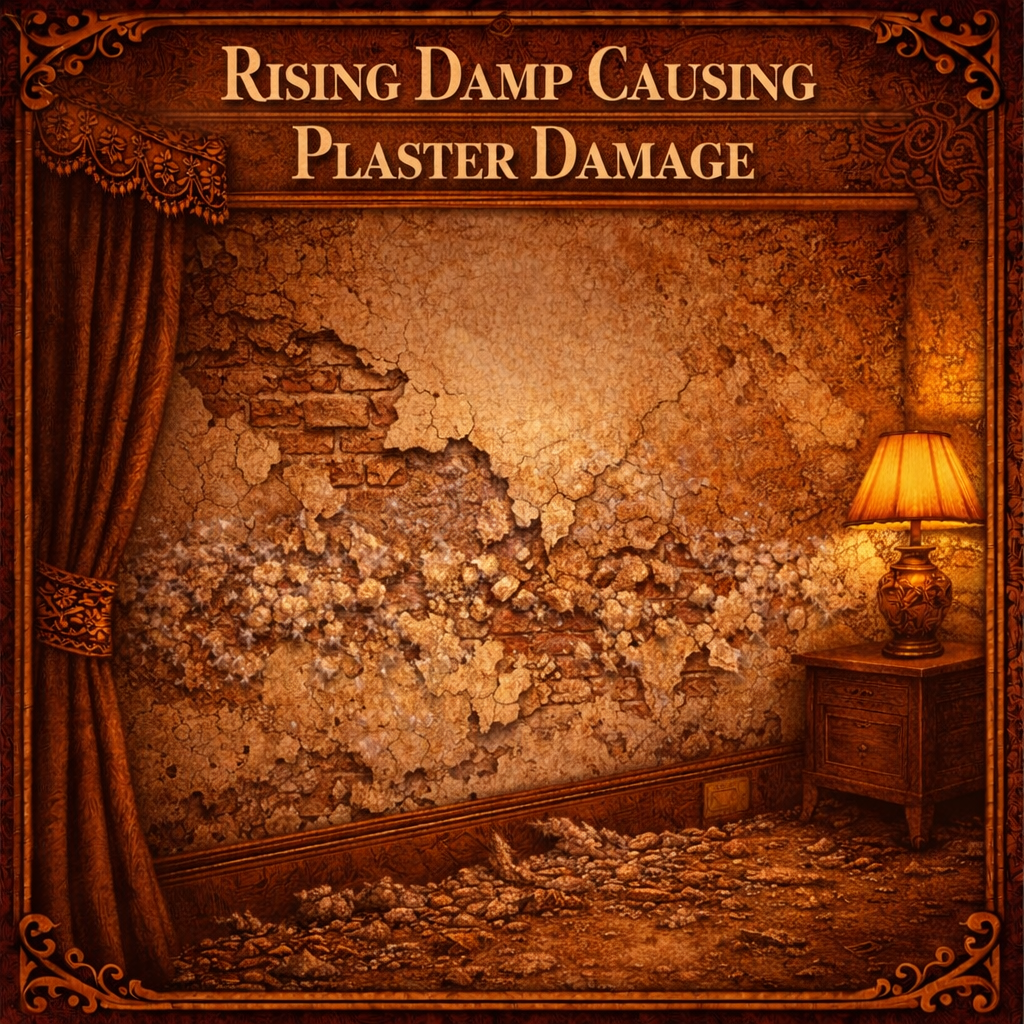
Rising damp is a common cause of plaster damage in older properties, particularly where a damp proof course is missing, failed, or bridged. The effects on internal finishes can be significant, often requiring more than just superficial repair.
As moisture rises through masonry, it carries salts that contaminate the plaster. Over time, this combination of moisture and salts weakens the structure of the plaster, causing it to break down.
One of the first signs of damage is usually cosmetic. Paint may begin to bubble or peel, and decorative finishes can become discoloured. As the problem progresses, the plaster itself starts to deteriorate. It may become soft to the touch, crumble easily, or develop cracks.
In more severe cases, plaster can lose its bond with the wall entirely, leading to hollow-sounding areas or sections falling away. Skirting boards are often affected as well, with timber becoming damp and prone to rot.
A common mistake is attempting to repair damaged plaster without addressing the underlying damp issue. Simply filling cracks or applying a new skim coat will not resolve the problem. In fact, it often makes it worse by trapping moisture behind the surface.
Proper repair starts with identifying and eliminating the source of rising damp. This may involve installing a new damp proof course or addressing external ground levels that are bridging the existing one.
Once the moisture source is controlled, the next step is to remove all affected plaster. This typically means stripping back to at least one metre above the highest visible sign of damp, or higher if required.
Replacement should be carried out using materials designed to resist salt contamination. Standard gypsum plasters are not suitable in these situations, as they are highly vulnerable to moisture and salts. Instead, a sand and cement render with a waterproof additive, or a specialist renovating plaster system, should be used.
It is also important to allow the wall to dry out before redecoration. Applying finishes too early can lead to further failure and recurring issues.
In conclusion, plaster damage caused by rising damp is not just a surface issue. It is a sign of deeper problems within the wall structure. Effective repair requires both damp proofing and the correct choice of materials to ensure a durable, long-term result.
Leave a Reply