
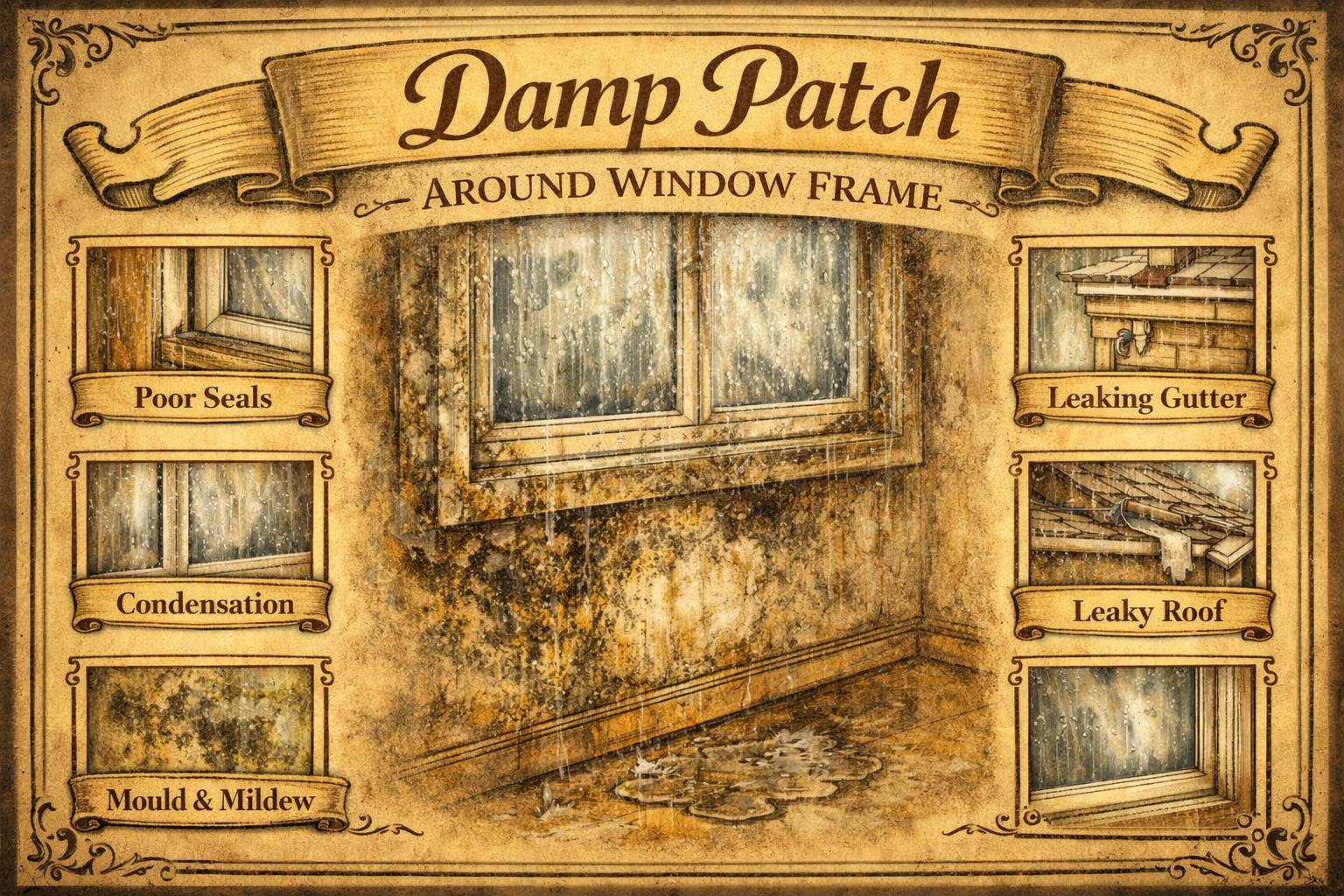
Damp patches around window frames are a very common issue in UK properties, particularly during colder months. While they are often assumed to be caused by leaks, the reality is that condensation is the most frequent culprit — although other causes should never be ruled out without proper inspection.
Condensation forms when warm, moisture-heavy air inside the home meets the colder surface of the window or surrounding wall. Windows are naturally one of the coldest points in a room, especially if they are single glazed or older double glazing units. As moisture condenses, it collects around the frame and can soak into adjacent plaster, leading to visible damp patches.
You’ll often notice:
- Water droplets on glass in the morning
- Black mould forming around the frame or sealant
- Peeling paint or discoloured plaster
- Damp patches that worsen in winter
However, condensation is not the only possible cause. Failed window seals are another major factor. Over time, the external sealant around window frames can crack or degrade, allowing rainwater to penetrate into the wall. This type of damp is more likely to worsen after rainfall and may appear as more localised staining.
Poor installation can also be an issue. Gaps between the window frame and wall, inadequate cavity trays, or missing damp protection can all allow water ingress. In some cases, the problem may have been present since installation but only becomes visible over time.
To diagnose the issue, consider:
- Does the damp worsen after rain? (penetrating damp)
- Is there visible condensation on the glass? (condensation)
- Is mould present? (usually condensation)
- Are external seals cracked or missing?
Fixing condensation-related damp involves improving ventilation and reducing humidity. Opening windows regularly, using extractor fans, and maintaining consistent heating can all help. Upgrading to more efficient glazing or adding insulation around window reveals can also reduce cold surfaces.
For penetrating damp, the solution is external. Replacing or repairing sealant, checking flashing, and ensuring proper installation details are in place will prevent further water ingress.
Preventative maintenance is key. Regularly inspecting window seals, keeping trickle vents open, and managing indoor humidity levels can significantly reduce the likelihood of damp forming around windows.
Leave a Reply