
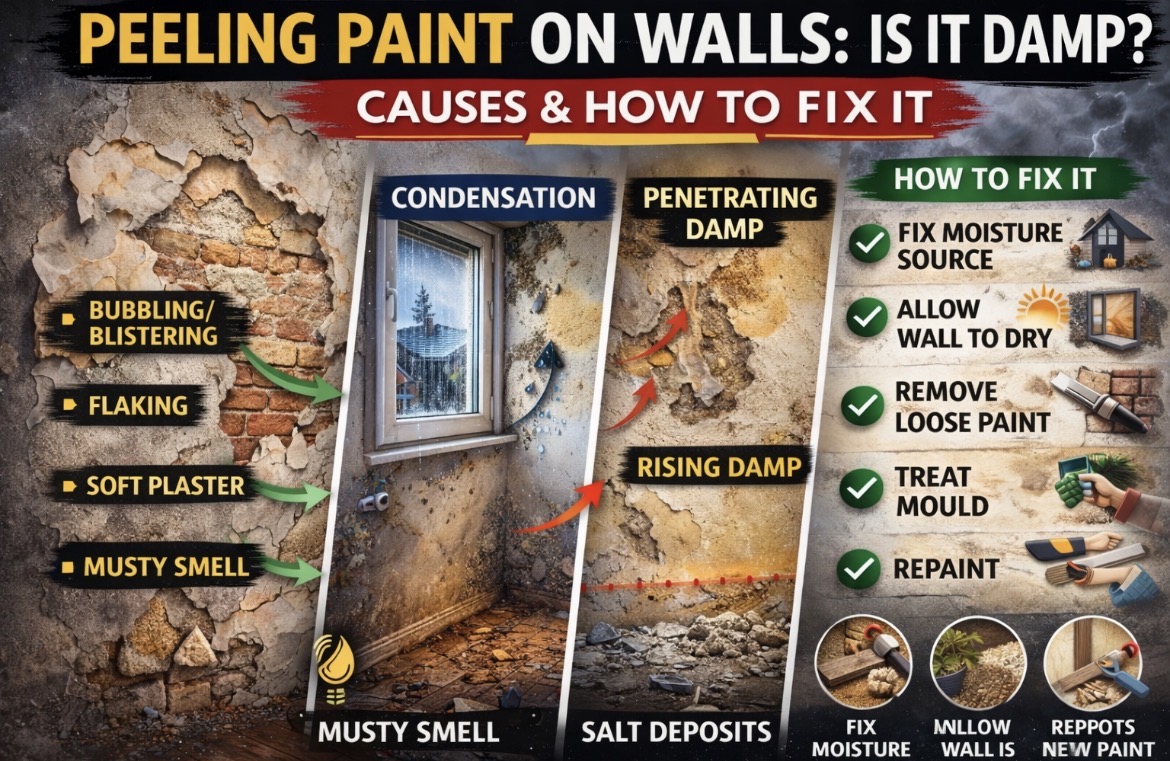
If paint is peeling, bubbling or flaking off your walls, damp may be the underlying cause — but it’s not always the reason.
Paint failure can happen due to moisture problems, poor surface preparation, or condensation. Identifying the cause is key before redecorating.
This guide explains how to tell whether peeling paint is caused by damp and what to do next.
What Does Damp-Related Peeling Paint Look Like?
When moisture is trapped behind paint, it can cause:
- Bubbling or blistering
- Flaking in patches
- Soft or crumbling plaster underneath
- Discolouration or staining
- A musty smell
If the wall feels cold or slightly wet, damp is likely involved.
Common Damp Causes of Peeling Paint
1️⃣ Condensation
Often found on:
- External walls
- Around windows
- Corners of rooms
- Behind furniture
Signs:
- Worse in winter
- Black mould nearby
- Peeling mostly at surface level
Condensation causes repeated surface moisture, weakening the paint bond.
2️⃣ Penetrating Damp
Water entering from outside can push moisture through plaster.
Signs:
- Localised damp patches
- Worse after rain
- Peeling higher up walls
- Staining or water marks
This usually indicates an external defect.
3️⃣ Rising Damp
Less common, but possible.
Signs:
- Peeling at ground-floor level
- Tide marks
- White salt deposits
- Paint failing up to around 1 metre high
If peeling is only at low level, rising damp may be a factor.
When It’s NOT Damp
Paint can also peel due to:
- Painting over dust or grease
- Using the wrong type of paint
- Applying paint to a damp surface during decorating
- No mist coat on fresh plaster
If the wall underneath is completely dry and solid, poor preparation may be the issue.
How to Check Properly
Before repainting:
- Press the wall — is it soft?
- Check for mould or staining
- Look at the height of the damage
- Monitor whether it worsens after rain
- See if it’s worse in winter mornings
Patterns help identify the cause.
How to Fix Peeling Paint Caused by Damp
Step 1: Fix the moisture source first
- Improve ventilation
- Repair external defects
- Clear gutters
- Address leaks
Step 2: Allow the wall to fully dry
Step 3: Remove loose paint
Step 4: Treat any mould
Step 5: Repaint using appropriate primer and breathable paint where necessary
Repainting without fixing damp will only result in repeat failure.
When to Get Professional Advice
Consider inspection if:
- Plaster is crumbling
- Damp keeps returning
- Timber feels soft
- You suspect structural issues
Persistent moisture problems can lead to more serious damage if ignored.
Final Thoughts
Peeling paint is often an early warning sign of a moisture problem.
The key is identifying whether it’s condensation, penetrating damp, rising damp — or simply poor preparation.
Fix the cause before redecorating, and you’ll prevent the issue returning.
Leave a Reply