
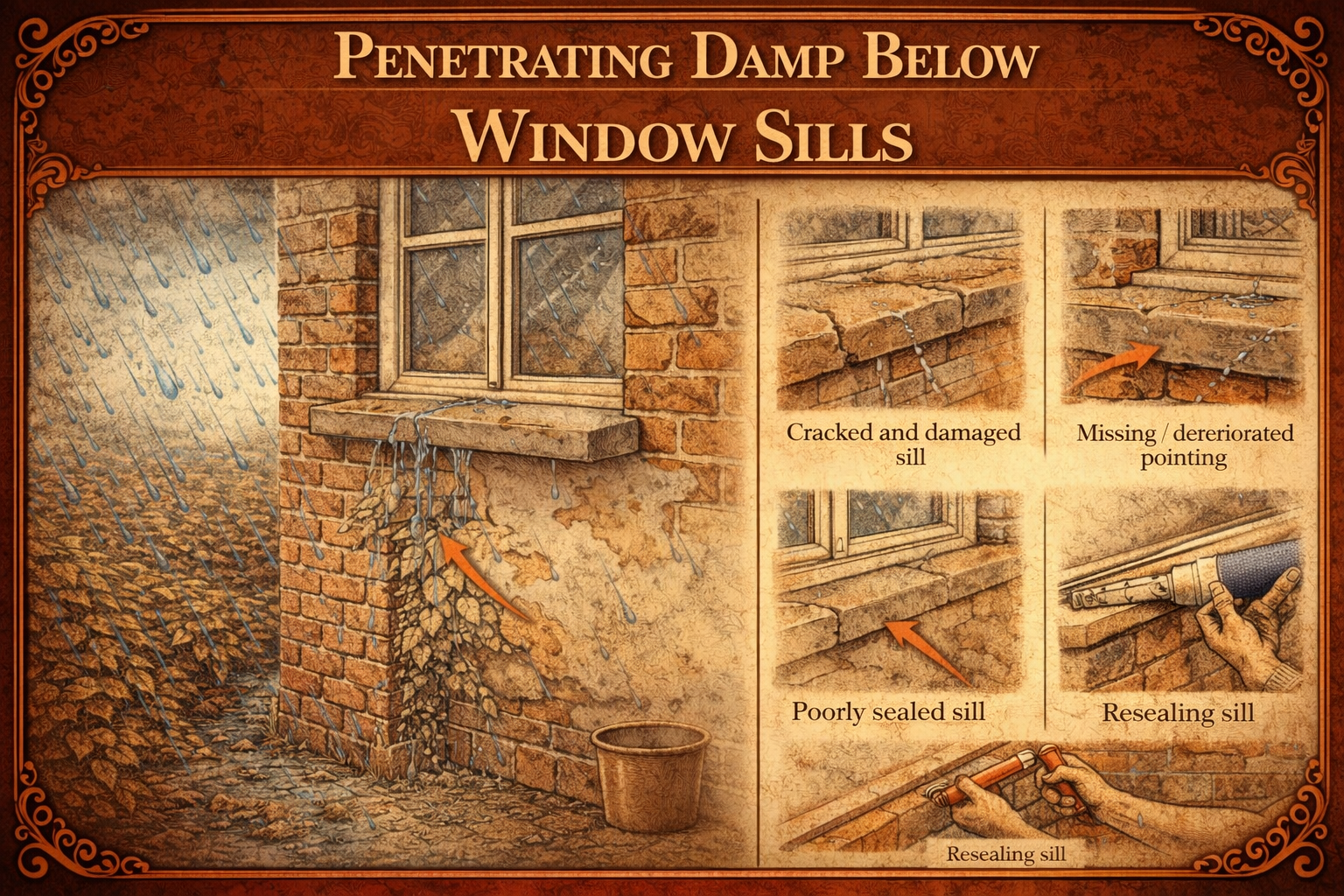
Penetrating damp below window sills is a common problem that can affect properties of all ages. The window sill is designed to direct rainwater away from the wall, but if it fails to perform this function correctly, water can enter the structure and cause damp issues internally.
One of the most common causes is poor sill design. If the sill does not project far enough beyond the wall or lacks a proper drip groove underneath, water can run back toward the building rather than being shed away. Over time, this repeated exposure allows moisture to penetrate the wall below.
Damage to the sill itself can also be a factor. Cracks, chips, or deterioration in materials such as stone, concrete, or uPVC can create entry points for water. Additionally, failed sealant between the sill and the wall can allow water to seep into gaps and reach the internal structure.
Externally, poor installation or lack of maintenance can worsen the issue. If the sill is not correctly angled, water may not drain effectively. Blocked drainage paths or debris buildup can also contribute to water pooling around the sill area.
Internally, damp below window sills typically appears as staining, discolouration, or damp patches directly beneath the window. You may also notice peeling paint, bubbling plaster, or mould growth in more severe cases. The problem is often more noticeable after rainfall.
To fix the issue, a thorough inspection of the sill and surrounding area is required. Damaged sills may need to be repaired or replaced, while failed sealant should be removed and reapplied using a suitable weather-resistant product. Ensuring the sill has a proper drip edge and adequate projection is essential.
In some cases, additional measures such as installing a new sill or improving external drainage may be necessary to fully resolve the problem.
Regular maintenance, including checking sealant and ensuring water is draining correctly, can help prevent penetrating damp from developing below window sills.
Leave a Reply