
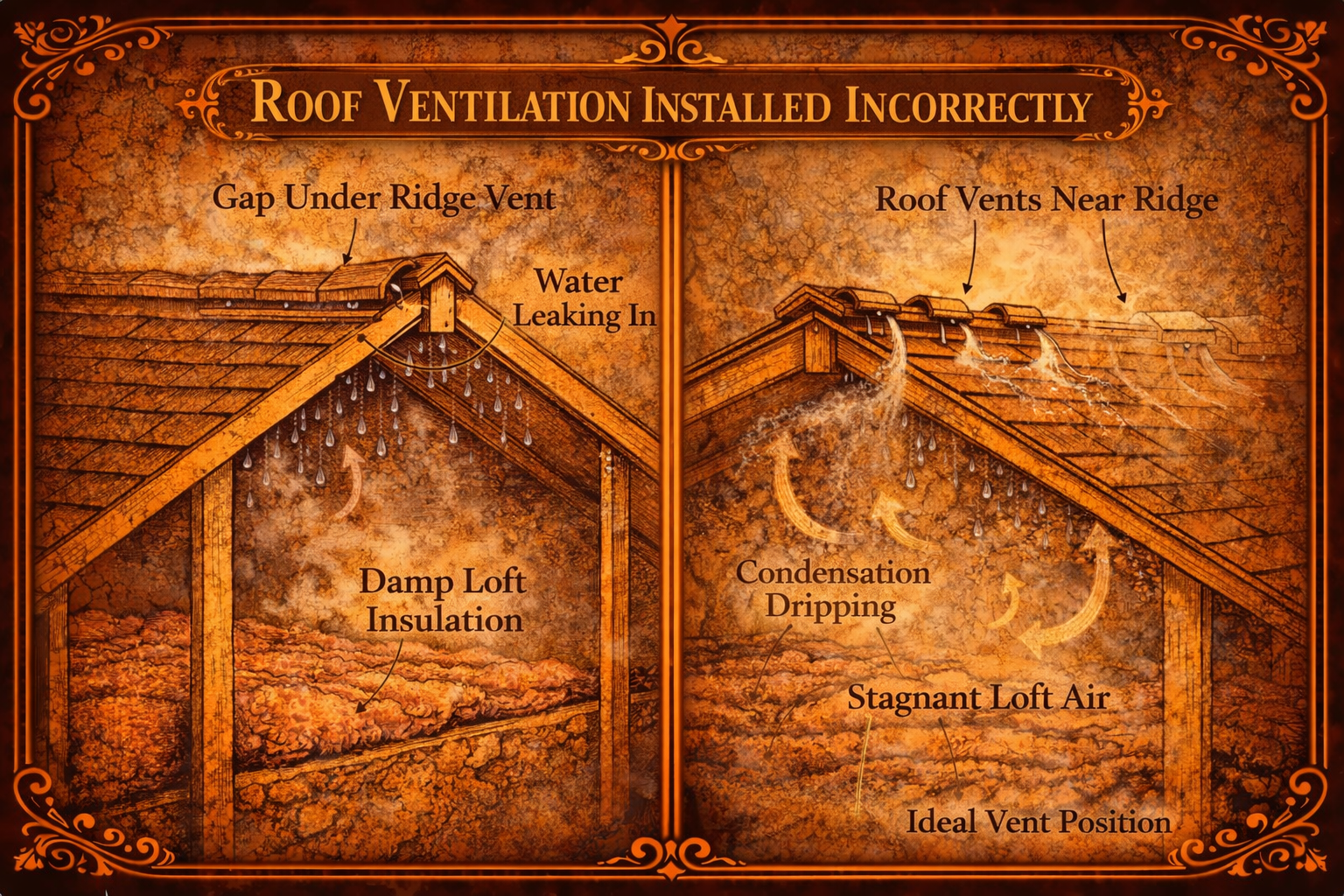
Roof ventilation plays a vital role in maintaining a healthy roof structure by allowing air to circulate through the loft space and preventing the build-up of moisture. However, when roof ventilation systems are installed incorrectly, they may fail to perform as intended and can contribute to condensation, damp problems, and even structural damage over time.
Proper roof ventilation works by allowing cool, fresh air to enter the loft while warm, moist air escapes through higher-level vents. This continuous airflow helps regulate temperature and prevents moisture from accumulating on cold surfaces such as roof felt and timbers. When ventilation components are installed incorrectly, this airflow can become restricted or ineffective.
One common installation issue occurs when roof vents are fitted but do not connect properly with the loft space. In some cases, vents may be blocked by insulation or installed in areas where airflow is limited. This prevents air from circulating freely and reduces the effectiveness of the ventilation system.
Another frequent problem is insufficient ventilation coverage across the roof. Installing only one or two vents may not provide enough airflow for the entire loft area, particularly in larger properties. Ideally, ventilation should be distributed evenly to ensure consistent air movement throughout the roof space.
Poorly positioned vents can also cause problems. For example, vents installed too low on the roof may not allow warm air to escape effectively, while vents placed too high without adequate intake vents at the eaves can disrupt the natural airflow pattern. Effective roof ventilation usually requires a combination of low-level intake vents and high-level exhaust vents.
Incorrect installation may also lead to weather-related issues. If vents are not fitted with proper flashing or weather protection, they may allow rainwater or wind-driven moisture to enter the roof space. This can result in damp insulation, staining, or ceiling damage.
Addressing incorrectly installed roof ventilation usually involves inspecting the existing ventilation layout and identifying areas where airflow is restricted. Additional vents may need to be installed, insulation repositioned, or poorly fitted vents replaced to ensure proper airflow.
When correctly installed, roof ventilation helps extend the lifespan of roofing materials, protects structural timbers, and reduces the risk of condensation-related problems. Ensuring ventilation systems are installed properly is therefore an important part of maintaining a healthy and durable roof structure.
Leave a Reply