
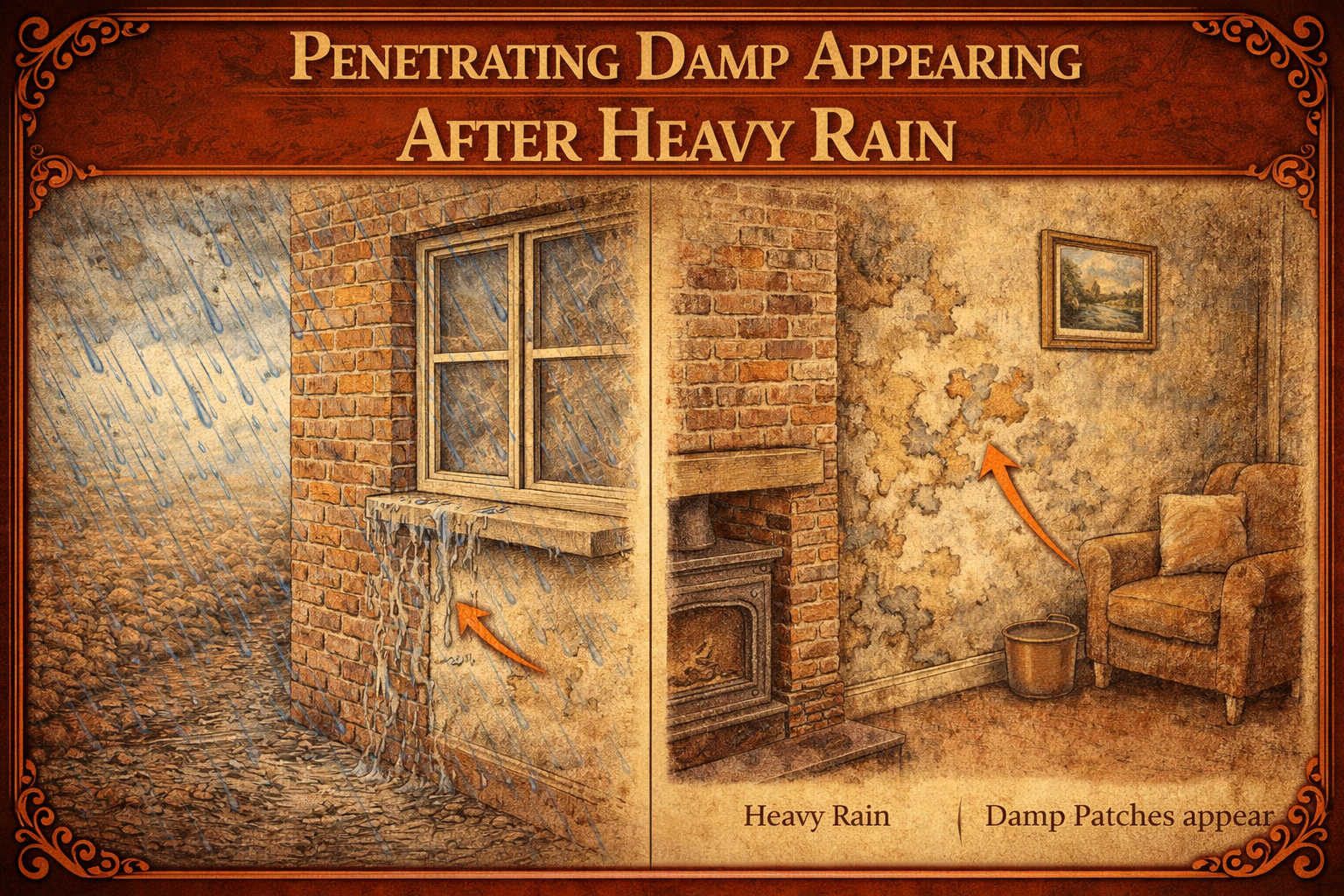
Penetrating damp that appears after heavy rain is one of the clearest indicators of external water ingress. Unlike other forms of damp, such as condensation or rising damp, this type is directly linked to weather conditions, making it easier to identify but sometimes harder to trace back to its exact source.
When damp patches appear or worsen following rainfall, it suggests that water is entering the property through a defect in the building’s external envelope. This could be through walls, roofs, windows, or other vulnerable areas. The challenge is that water does not always appear at the point of entry—it can travel through the structure before becoming visible internally.
Common causes include damaged brickwork, cracked render, leaking gutters, defective roof tiles, and poorly sealed windows. In some cases, multiple small defects can combine to create a significant damp problem.
Internally, signs include damp patches that darken after rain, peeling paint, bubbling plaster, and sometimes mould growth. The affected areas may dry out during periods of dry weather, only to reappear when it rains again. This pattern is a strong indicator of penetrating damp.
Diagnosing the issue requires a systematic approach. Start by inspecting the most exposed parts of the property, such as the roof, gutters, and external walls. Look for visible defects, including cracks, gaps, or areas of deterioration. It may also be helpful to monitor the property during rainfall to identify where water is accumulating or entering.
Repairing the problem involves addressing the source of the water ingress. This may include repointing brickwork, repairing render, clearing gutters, resealing windows, or replacing damaged roof tiles. In some cases, multiple repairs may be necessary to fully resolve the issue.
Once repairs have been carried out, it is important to monitor the affected area to ensure the damp does not return. Acting quickly when signs first appear can prevent more serious structural damage and reduce the cost of repairs.
Leave a Reply