
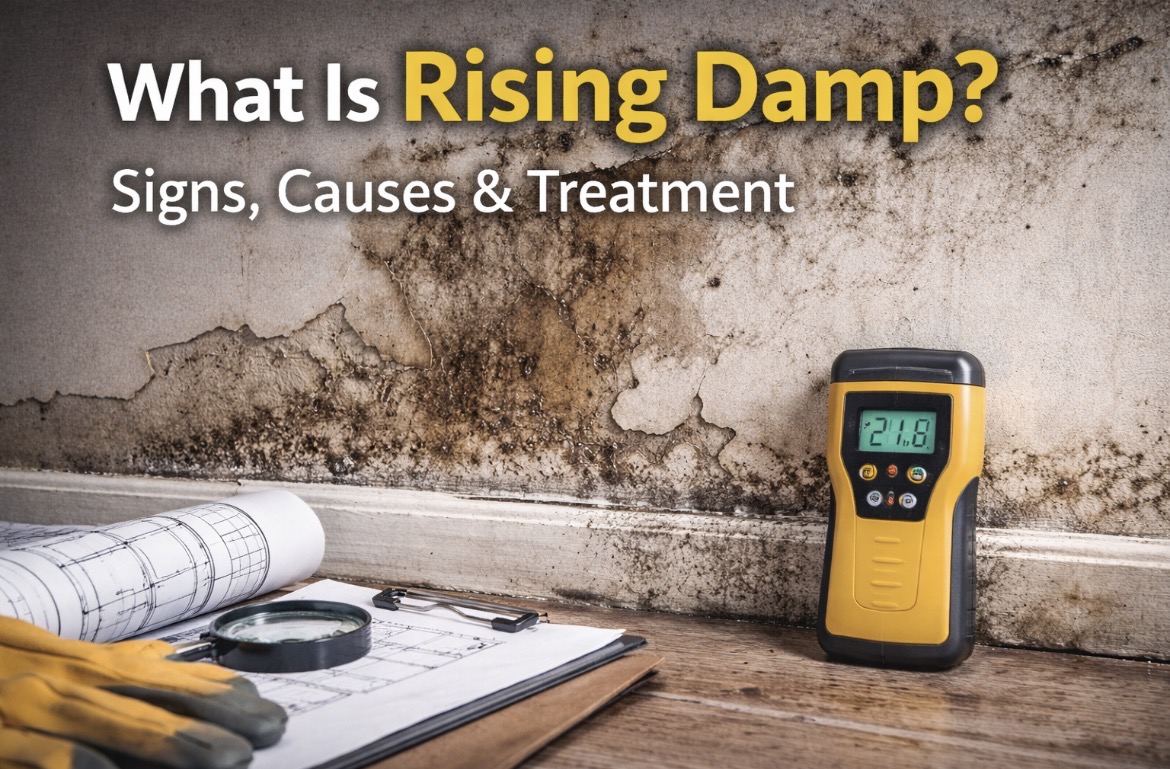
Rising damp is a form of moisture that moves up through walls from the ground. It occurs when groundwater travels through porous building materials such as brick and mortar.
Although less common than condensation, rising damp can cause serious damage if left untreated.
What Causes Rising Damp?
Rising damp occurs when:
- A damp proof course (DPC) is missing
- The damp proof course has failed
- Ground levels are too high
- External paths bridge the DPC
- Older properties lack modern damp protection
Moisture rises through capillary action, moving upward through brickwork.
Common signs include:
- Damp patches at the bottom of walls
- Peeling paint or wallpaper
- Crumbling plaster
- White powdery deposits (salts)
- “Tide marks” up to one metre high
- Musty smells
Rising damp usually affects the lower section of walls.
How Is Rising Damp Different from Condensation?
Rising damp:
- Appears low on walls
- Leaves salt deposits
- Causes plaster damage
Condensation:
- Appears in corners or upper walls
- Worsens in winter
- Often forms behind furniture
Correct diagnosis is essential before treatment.
How Is Rising Damp Treated?
Treatment may involve:
- Installing a new damp proof course
- Injecting chemical DPC
- Removing contaminated plaster
- Lowering external ground levels
- Improving drainage
Professional assessment is usually required.
Can Rising Damp Cause Mould?
Yes.
Persistent moisture can eventually lead to mould growth, particularly near skirting boards.
However, rising damp primarily causes structural damage before visible mould appears.
When to Seek Professional Advice
If you notice:
- Ongoing damp at wall base
- Salt deposits
- Damaged plaster
- Recurring mould in the same low area
A damp survey may be necessary.
Final Thoughts
Rising damp is a structural moisture issue caused by groundwater moving upward through walls. While less common than condensation, it requires proper diagnosis and treatment to prevent long-term damage.
Addressing the root cause is essential for lasting results.
Leave a Reply