
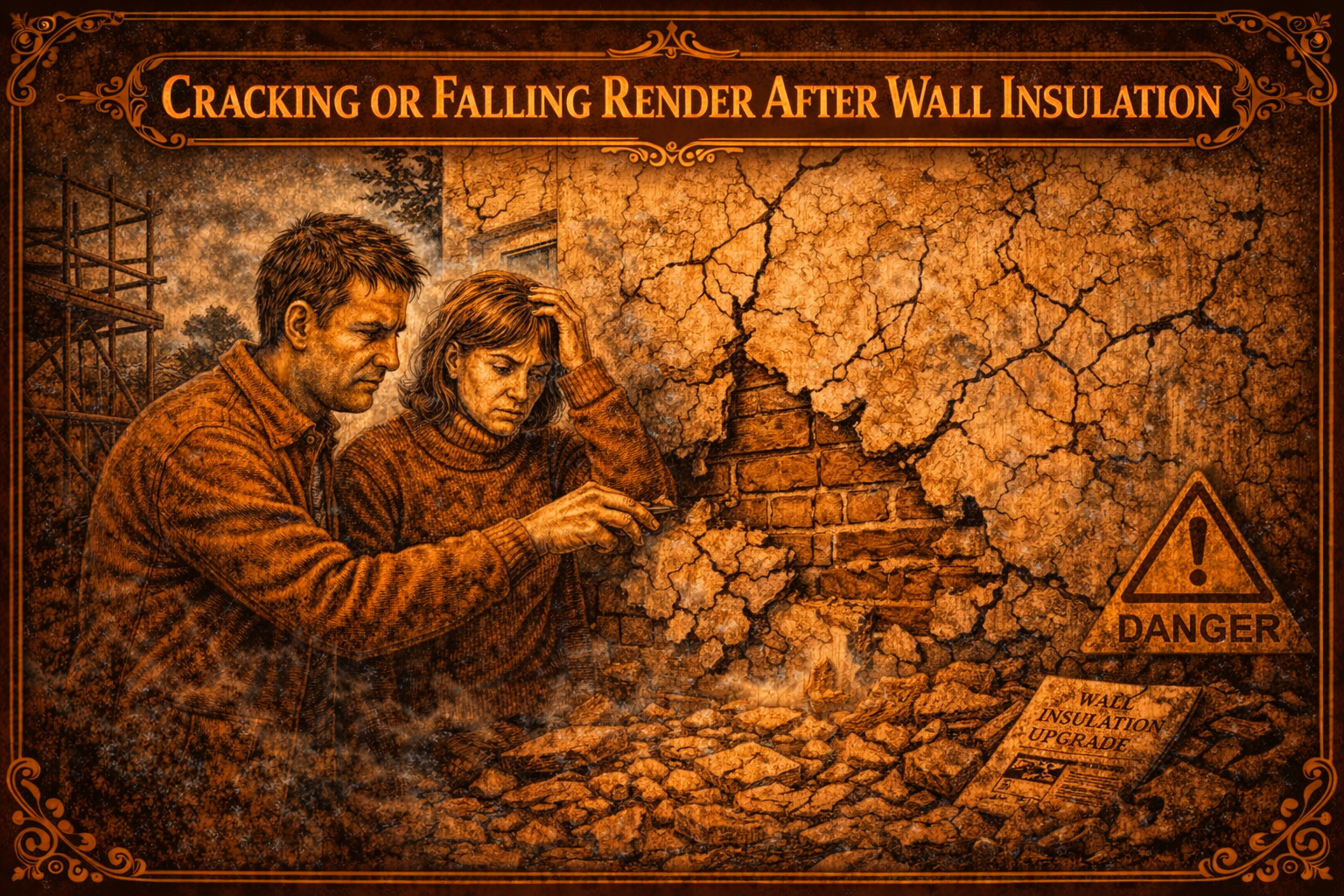
External wall insulation (EWI) systems are designed to improve a building’s thermal performance by adding insulation boards and a protective render layer to the outside of the property. While these systems can significantly improve energy efficiency, problems sometimes develop when the render layer begins to crack, blister or fall away from the wall.
Cracking or detached render can occur when insulation systems are poorly installed or when moisture becomes trapped behind the insulation. Over time, these defects may allow water to penetrate the structure of the building and cause further damage.
When render begins to fail, it is important to investigate the cause to prevent additional structural or moisture problems.
Why Render Can Crack After Insulation Work
External wall insulation systems rely on several layers working together correctly. If any of these layers are incorrectly installed, the render surface may become unstable.
Common causes include:
- poor bonding between insulation boards and the wall
- inadequate fixing of insulation boards
- incorrect render mixtures or application techniques
- thermal movement causing stress in the render layer
- moisture trapped behind the insulation system
Weather conditions during installation can also affect the durability of the render finish.
Warning Signs of Render Failure
Homeowners may notice several signs that the render system is failing.
Typical symptoms include:
- cracks appearing across the render surface
- pieces of render falling away from the wall
- bulging or uneven render surfaces
- discolouration or staining on the render
- damp patches appearing inside the property
If left unresolved, these issues can allow water to penetrate behind the insulation system.
How the Problem Is Diagnosed
A building professional will usually inspect the external wall insulation system to identify the cause of the render failure.
This inspection may include:
- examining the render for cracking patterns
- checking the stability of insulation boards
- identifying signs of trapped moisture
- assessing whether the system was installed correctly
In some cases sections of render may need to be removed to inspect the underlying layers.
How Cracking Render Is Repaired
Repair solutions depend on the severity of the damage.
Possible repairs include:
- patching small cracks in the render
- replacing damaged sections of render
- reinforcing insulation boards and fixings
- removing and reinstalling parts of the insulation system
Proper repairs should address the underlying cause rather than simply covering the cracks.
Leave a Reply