
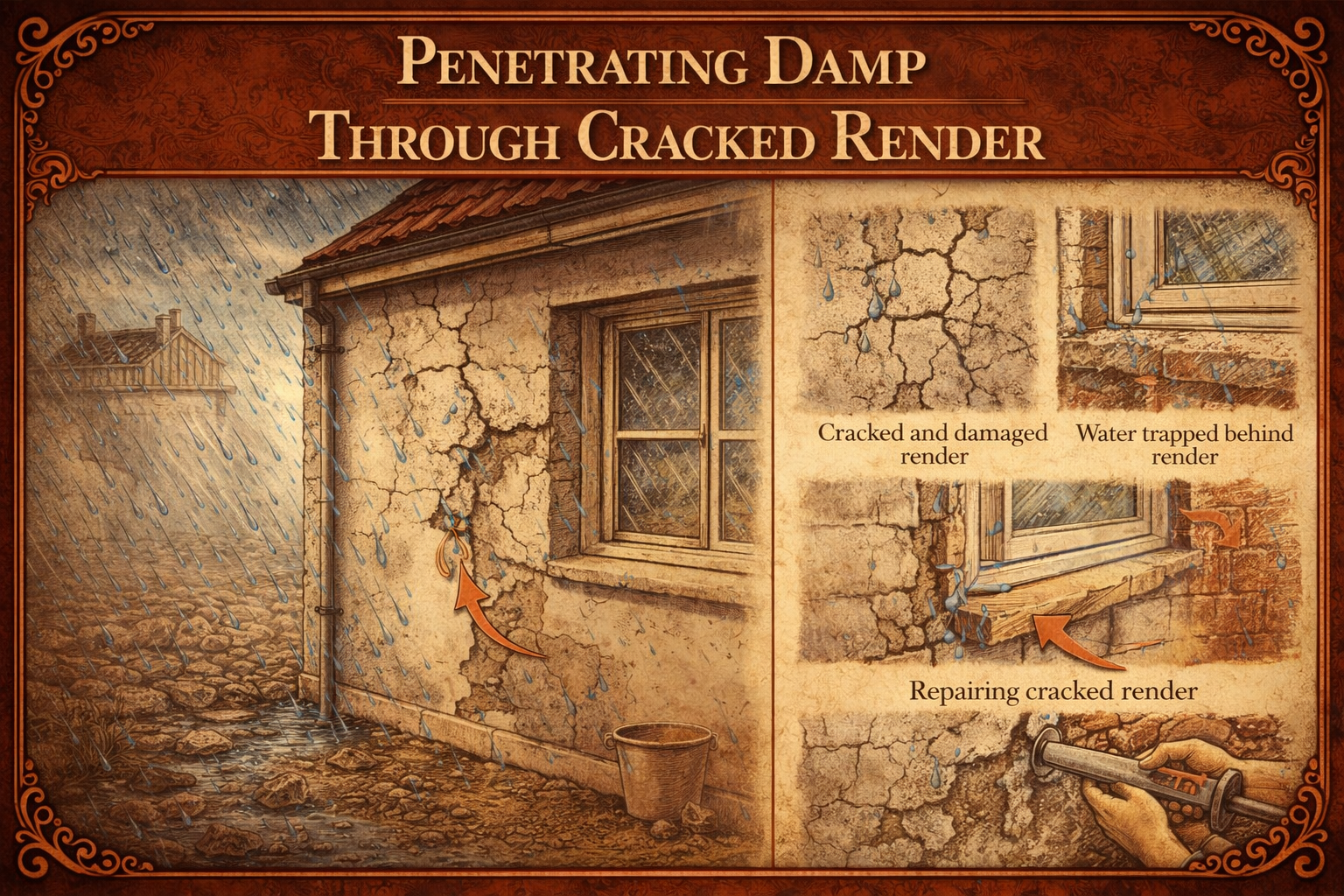
Render is designed to act as a protective outer layer for a property, shielding the underlying masonry from rain and weather exposure. However, once render becomes cracked or damaged, it can quickly become one of the most direct routes for penetrating damp to develop.
Cracks in render can occur for several reasons. One of the most common is thermal movement, where temperature changes cause materials to expand and contract. Over time, this repeated movement creates stress within the render, leading to cracks. Structural movement in the building can also contribute, particularly around windows, doors, or areas of weakness. In some cases, poor application, incorrect mix ratios, or low-quality materials can result in render that is more prone to failure.
Even small hairline cracks should not be ignored. While they may appear minor, they can allow significant amounts of water to enter over time, especially during prolonged rainfall. Once water penetrates the render, it can become trapped behind the surface and soak into the masonry beneath. This often results in damp patches appearing internally, sometimes at a distance from the original crack, making diagnosis more difficult.
Internally, the signs of penetrating damp from cracked render include damp patches on walls, peeling paint, bubbling plaster, and occasionally mould growth. The damp often worsens after rainfall and may reduce during dry periods, which is a key indicator of external water ingress.
Repairing cracked render depends on the severity of the damage. Hairline cracks can often be filled using flexible exterior fillers designed to accommodate movement. Larger cracks may require cutting out and patch repairing sections of render. In cases where the damage is widespread, a full re-render may be necessary.
When repairing or replacing render, it is important to use breathable materials, particularly on older properties. Traditional lime render or modern silicone-based systems can allow moisture to escape while still providing protection against rain.
Regular inspection of rendered walls is essential. Addressing cracks early can prevent water ingress and avoid more extensive repairs in the future.
Leave a Reply