
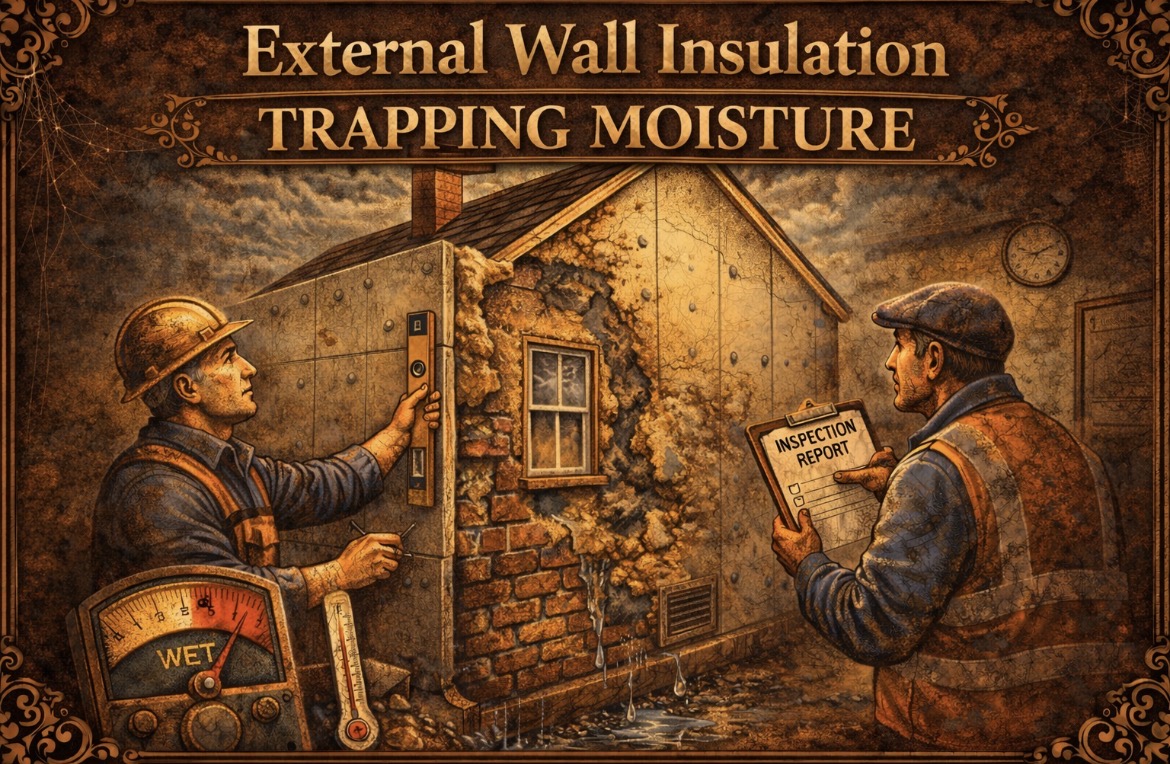
External wall insulation (EWI) is commonly installed as part of retrofit energy efficiency schemes. While it can improve thermal performance, poor installation or unsuitable buildings can result in moisture becoming trapped within the wall.
This trapped moisture can lead to damp problems, mould growth and damage to internal walls.
How External Wall Insulation Works
External wall insulation involves attaching insulation boards to the outside of a property before covering them with render or cladding.
The system typically includes:
- insulation boards
- reinforcing mesh
- render coating
- adhesive fixings
When installed correctly, the system protects the building from weather while improving heat retention.
Why Moisture Can Become Trapped
Problems usually occur when the wall cannot dry out properly.
This can happen if:
- the render system is poorly installed
- moisture was already present before installation
- the wall structure is not breathable
- ventilation around the wall is reduced
Once the insulation is installed, moisture can become trapped between the insulation layer and the original wall.
Signs External Wall Insulation Is Causing Damp
Some homeowners notice new damp problems after retrofit work.
Common signs include:
- damp patches appearing internally
- mould on external walls inside rooms
- condensation forming on colder parts of the wall
- cracking or bulging render
These symptoms may indicate moisture is building up behind the insulation.
Long Term Risks
If moisture remains trapped, it can cause:
- internal damp problems
- structural timber decay
- mould growth
- deterioration of render systems
Over time this can lead to expensive repairs.
Investigating External Wall Insulation Problems
If damp appears after external insulation has been installed, a professional inspection may be needed.
Surveyors may check:
- moisture levels in the wall
- render condition
- ventilation and drainage around the building
Identifying the source of trapped moisture is essential before repairs are attempted.
Leave a Reply