
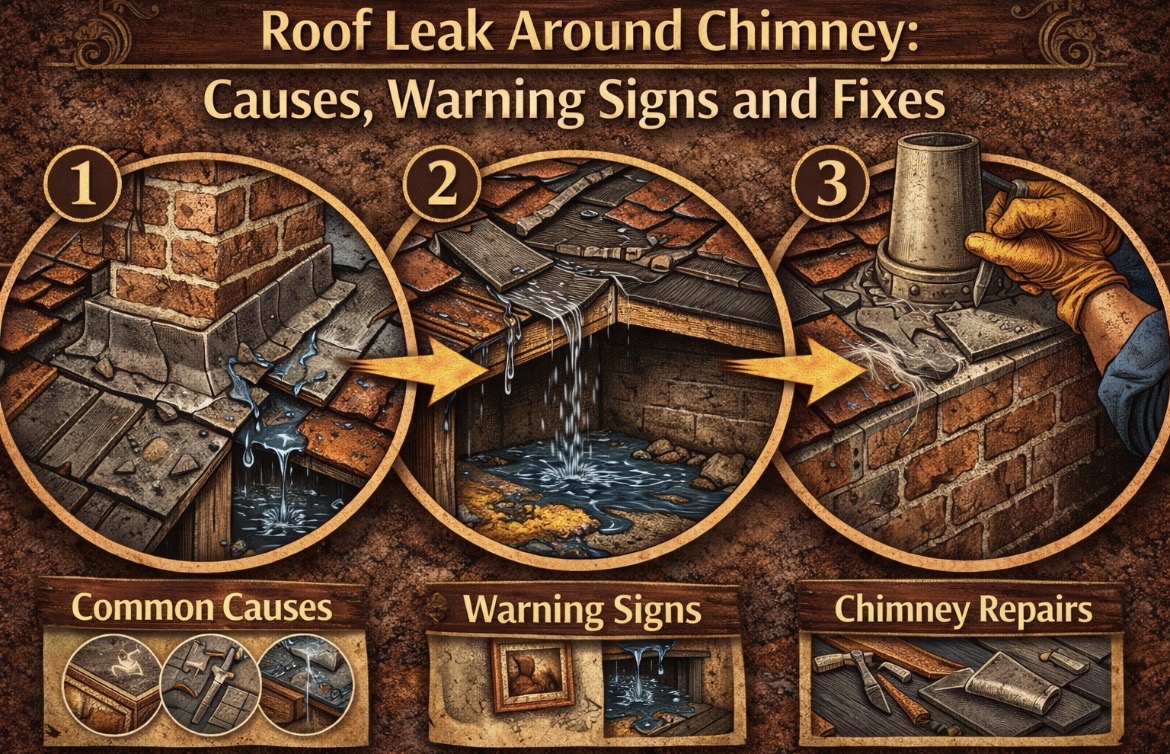
A roof leak around a chimney is a common problem in many UK homes. Because a chimney passes directly through the roof structure, several materials must work together to keep the joint watertight. When flashing becomes damaged or mortar begins to deteriorate, rainwater can easily enter the roof space and eventually appear inside the property.
Leaks around chimneys often show up as damp patches on ceilings, staining on chimney breasts, or water dripping during heavy rainfall. If left untreated, even a small leak can lead to timber decay, mould growth, and costly internal repairs.
Understanding the causes of chimney roof leaks can help homeowners identify the issue early and arrange repairs before more serious damage occurs.
Common Causes of Roof Leaks Around Chimneys
Several issues can cause water to penetrate around a chimney. In many cases, the problem develops gradually as materials age or weather conditions damage parts of the roof structure.
Damaged or Loose Flashing
Flashing is the waterproof material installed where the chimney meets the roof. In many UK homes this flashing is made from lead, which is durable but can eventually become loose, cracked, or poorly sealed.
If flashing lifts away from the chimney or roofing tiles, rainwater can enter the gap and travel into the roof structure below.
Over time, the mortar joints in chimney brickwork can deteriorate due to weather exposure. Cracks in the mortar allow water to enter the chimney structure and work its way down into the loft or ceilings below.
Freeze and thaw cycles during winter can make this problem worse by gradually widening existing cracks.
Damaged Chimney Crown
The chimney crown sits at the top of the chimney stack and helps prevent water entering from above. If the crown becomes cracked or damaged, rainwater can seep into the masonry and travel down through the chimney.
This can sometimes appear as a roof leak even though the water is entering higher up the chimney structure.
Missing or Damaged Roof Tiles
Tiles or slates around the chimney are particularly vulnerable to damage due to the complex shape of the roof junction. If these tiles become cracked, slipped, or dislodged, rainwater can penetrate the roof covering and appear inside the property near the chimney area.
Signs of a Chimney Roof Leak
A chimney leak may not always be immediately obvious. In many cases, the first signs appear inside the property.
Common warning signs include:
- Damp patches on ceilings near the chimney breast
- Brown or yellow water stains on plaster
- Water dripping during heavy rainfall
- Crumbling mortar on the chimney stack
- Damp or mould appearing around the chimney inside the home
If these signs appear, it is important to investigate the roof and chimney area as soon as possible.
How Roof Leaks Around Chimneys Are Fixed
The correct repair depends on the underlying cause of the leak. A roofing professional will usually inspect the chimney and surrounding roof area to identify where water is entering.
Common repairs include:
Replacing damaged flashing
If flashing has deteriorated or lifted, new lead flashing may be installed to create a watertight seal between the chimney and roof.
Repointing chimney brickwork
If mortar joints are cracked or eroded, repointing can restore the structural integrity of the chimney and prevent water penetration.
Replacing damaged tiles or slates
Loose or broken tiles around the chimney may need replacing to restore the roof covering.
Repairing or rebuilding the chimney crown
If the crown at the top of the chimney is damaged, it may need sealing or rebuilding to stop water entering the masonry.
Preventing Roof Leaks Around Chimneys
Regular roof maintenance can help prevent leaks from developing around chimneys.
Homeowners should:
- Inspect flashing and chimney brickwork periodically
- Replace damaged roof tiles promptly
- Check mortar joints for cracks or deterioration
- Arrange roof inspections after severe weather
Addressing small problems early can prevent water damage and expensive structural repairs later.
Conclusion
Roof leaks around chimneys are usually caused by damaged flashing, deteriorating mortar, or broken roofing materials. Because chimneys create a vulnerable point where the roof structure is interrupted, this area requires proper sealing and regular inspection.
If water stains or damp patches appear near the chimney inside a property, the roof and chimney stack should be checked as soon as possible. Prompt repairs can prevent further damage to ceilings, insulation, and roof timbers.
Leave a Reply