
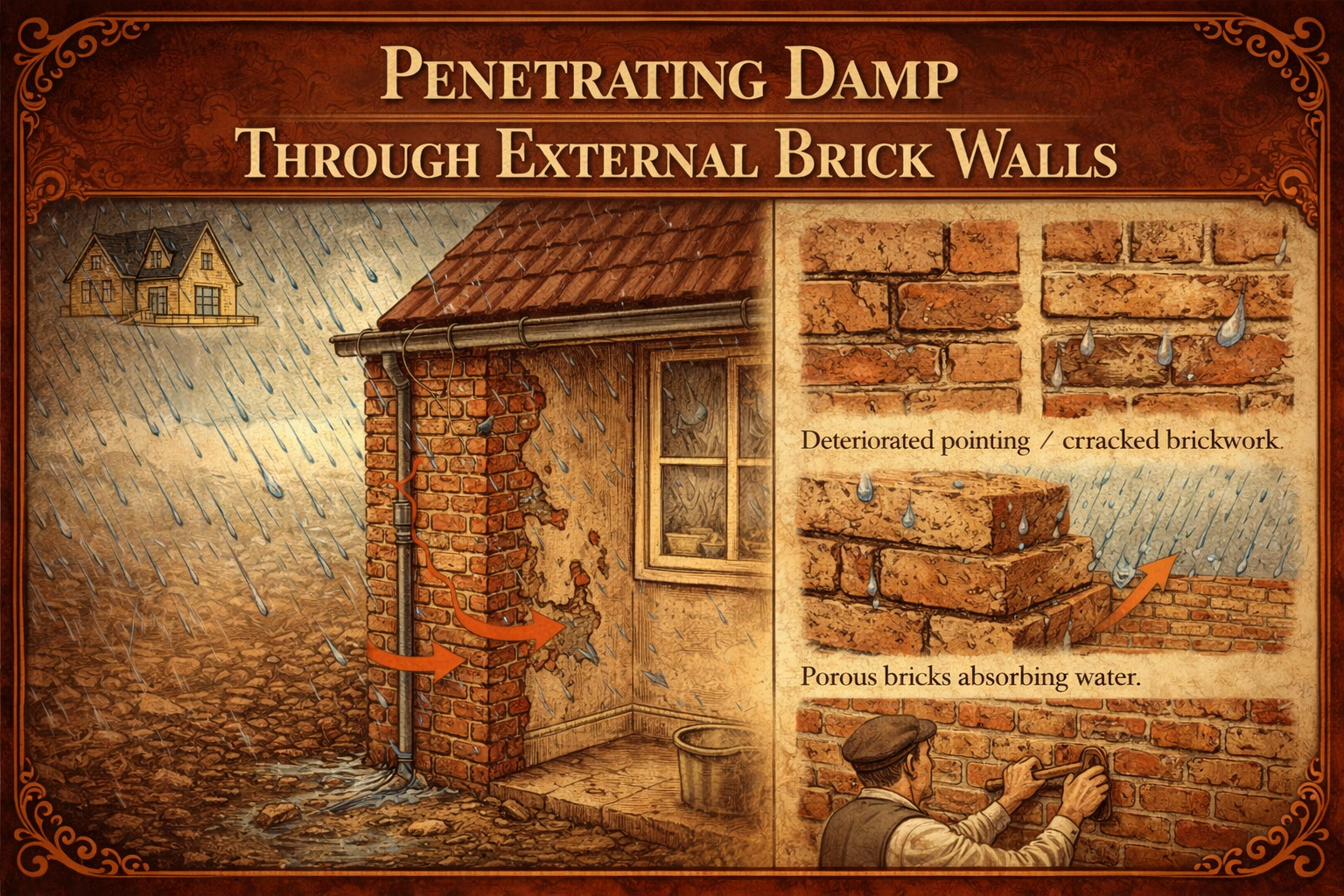
Penetrating damp through external brick walls is one of the most common forms of moisture ingress found in UK properties, particularly in older buildings with solid wall construction. Unlike rising damp, which travels upward from the ground, penetrating damp moves horizontally through walls when rainwater breaches the external surface.
The main cause is defects in the external brickwork. Over time, mortar joints begin to deteriorate due to weather exposure, allowing water to seep into the wall. Cracked or spalled bricks can also become highly absorbent, especially after years of frost damage. In some cases, the issue is made worse by previous repairs using incorrect materials, such as hard cement pointing on older lime-built properties, which can trap moisture instead of allowing the wall to breathe.
Another contributing factor is prolonged exposure to driving rain. Properties located in exposed areas or without adequate protection, such as overhanging roofs or well-maintained render, are more vulnerable. Once water enters the wall, it can travel through the masonry and appear internally as damp patches.
Internally, penetrating damp typically presents as isolated patches on walls, often darker in appearance and sometimes accompanied by peeling paint, bubbling plaster, or a musty smell. A key diagnostic sign is that the damp worsens after rainfall and may dry out during extended dry periods. This pattern helps distinguish it from condensation or rising damp.
To resolve penetrating damp in brick walls, the first step is identifying and repairing the external defect. Repointing is often required where mortar joints have failed. This should be carried out using a suitable mortar mix that matches the original construction, particularly in older buildings where lime mortar may be necessary. Damaged bricks should be replaced, and any cracks repaired.
In some cases, applying a breathable water-repellent treatment to the external wall can help reduce water absorption while still allowing moisture to escape. However, this should only be done after repairs have been completed.
Internally, damaged plaster may need to be removed and replaced once the wall has dried sufficiently. Using breathable plaster systems can help prevent moisture from becoming trapped.
Regular maintenance is essential. Inspecting brickwork periodically and addressing minor defects early can prevent more serious damp problems from developing.
Leave a Reply