
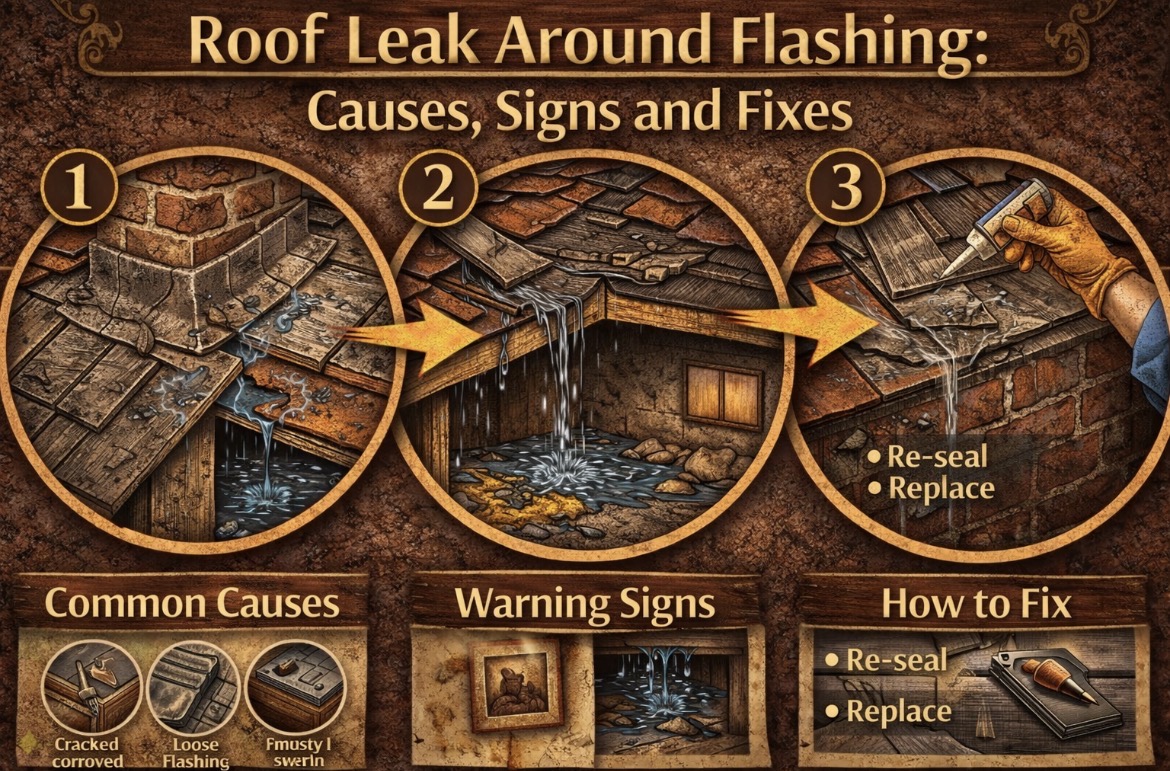
A roof leak around flashing is a common cause of water entering a property. Flashing is designed to create a watertight seal where different parts of the roof meet, such as around chimneys, walls, skylights and valleys. When flashing becomes damaged, loose or poorly installed, rainwater can penetrate the roof structure and appear as damp patches, stains or drips inside the home.
Because flashing is often hidden beneath roof tiles or slates, problems may develop slowly before becoming noticeable inside the property.
What Is Roof Flashing?
Roof flashing is usually made from metal such as lead, aluminium or steel. It is installed at vulnerable points on a roof to prevent water from entering gaps between building materials.
Common locations where flashing is installed include:
- Around chimneys
- Where a roof meets a wall
- Around skylights or roof windows
- In roof valleys
- Around roof vents and pipes
Flashing works by directing rainwater away from joints and safely down the roof surface.
Common Causes of Flashing Leaks
Damaged or cracked flashing
Over time flashing can crack, split or corrode due to weather exposure. Once the metal becomes damaged, water can seep underneath roof tiles and into the roof structure.
Loose flashing
Flashing can sometimes lift or become loose due to strong winds or poor installation. Even small gaps can allow rainwater to enter.
Failed sealant
Some flashing systems rely on sealant to maintain a watertight joint. Sealant can deteriorate over time, especially after years of exposure to sunlight and changing temperatures.
Incorrectly installed flashing is a frequent cause of roof leaks. If flashing is not properly integrated with roof tiles or slates, water may bypass the protective layer and enter the building.
Movement in the roof structure
Buildings naturally expand and contract with temperature changes. Over time this movement can loosen flashing joints or create gaps where water can penetrate.
Warning Signs of a Flashing Leak
Homeowners may notice several signs if flashing has started to fail:
- Water stains on ceilings or walls
- Damp patches near chimneys or roof junctions
- Dripping during heavy rainfall
- Mould or musty smells in the loft
- Visible gaps or lifted metal flashing on the roof
Leaks may not always appear directly below the damaged flashing because water can travel along rafters before becoming visible inside the property.
How to Fix Roof Flashing Leaks
Re-sealing flashing
If flashing is still in good condition but the seal has failed, applying a suitable roofing sealant may resolve the issue.
Re-securing loose flashing
Loose flashing can sometimes be repaired by re-fixing it securely and ensuring it overlaps correctly with surrounding roof materials.
Replacing damaged flashing
If flashing is cracked or severely corroded, replacement may be required. This usually involves removing surrounding tiles or slates to install new flashing.
Professional roof repair
Because flashing repairs often involve working at height and disturbing roof materials, many homeowners choose to have the repair carried out by a qualified roofing professional.
Preventing Flashing Problems
Regular roof inspections can help identify flashing issues before they lead to serious leaks. Homeowners should check their roof after storms or periods of strong wind to ensure flashing remains secure.
Keeping gutters clear and maintaining roof coverings can also help reduce the risk of water penetration.
Conclusion
Roof leaks around flashing are often caused by damaged metal, failed sealants or poor installation. Although the problem may start small, water entering through flashing joints can eventually lead to damp, mould and structural damage if left untreated.
Identifying the signs early and repairing flashing defects promptly can help prevent more serious roofing problems.
Leave a Reply