
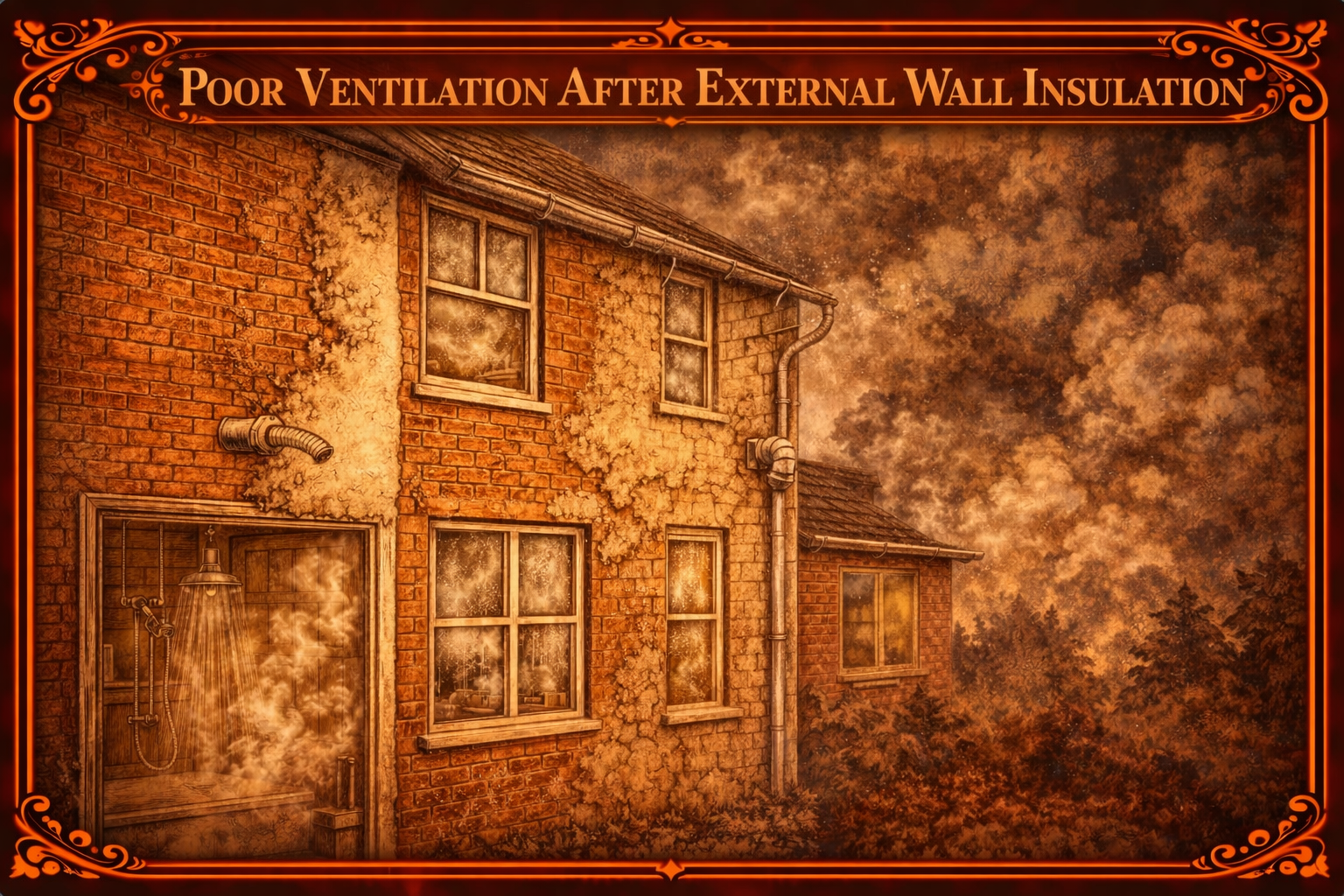
External wall insulation (EWI) is commonly installed to improve a property’s energy efficiency and reduce heat loss. While it can significantly improve thermal performance, it can sometimes create ventilation problems if airflow within the property is reduced.
Homes that previously relied on natural air leakage through walls and gaps may become much more airtight after insulation is installed. When this happens, moisture produced inside the home can become trapped, leading to condensation, damp patches, and mould growth.
Why External Wall Insulation Can Reduce Ventilation
External wall insulation works by adding a thick insulating layer to the outside of the building. This layer is usually finished with render or cladding.
While this helps keep heat inside the home, it can also reduce the small gaps and air pathways that previously allowed moisture to escape. As a result, humid air from everyday activities such as cooking, showering, and drying clothes can build up inside the property.
Without sufficient ventilation, moisture levels rise and condensation may start forming on colder surfaces such as windows, corners of rooms, and behind furniture.
Common Signs of Ventilation Problems After EWI
Poor ventilation after external wall insulation may cause several noticeable issues inside the property.
These can include:
- Condensation forming on windows
- Mould growth on walls or ceilings
- Damp or musty smells indoors
- Black mould in corners of rooms
- Increased humidity levels
These problems are often mistaken for rising damp or penetrating damp, but they are usually caused by trapped moisture and insufficient airflow.
How to Prevent Ventilation Problems
Proper ventilation should always be considered when installing external wall insulation.
Common solutions include:
- Installing extractor fans in kitchens and bathrooms
- Ensuring trickle vents are fitted in windows
- Improving loft ventilation
- Using mechanical ventilation systems in airtight homes
These measures help remove moist air from the property and maintain a healthy indoor environment.
When to Seek Professional Advice
If condensation or mould problems develop after external wall insulation has been installed, it may be necessary to assess the property’s ventilation system.
A building surveyor or ventilation specialist can identify whether airflow improvements are required and recommend suitable solutions.
Addressing ventilation issues early can help prevent long-term damp problems and maintain the benefits of the insulation.
Leave a Reply