Category: Damp & Moisture

Export guides on damp and moisture problems in buildings, including rising damp, penetrating damp, condensation and mould. learn how to identify causes, understand treatment options.

  • Mould in Bathrooms: Causes & How to Prevent It

    Mould in Bathrooms: Causes & How to Prevent It

    Mould in bathrooms is extremely common due to high humidity from showers, baths, and hot water use. It often appears on ceilings, around tiles, on silicone sealant, and near windows.

    Because bathrooms regularly produce steam, they are one of the most vulnerable rooms in the home for mould growth.

    Why Does Mould Grow in Bathrooms?

    Bathrooms create large amounts of warm, moist air. When this steam settles on colder surfaces, condensation forms.

    If moisture does not dry properly, mould spores begin to grow.

    Common causes include:

    • No extractor fan
    • Extractor fan not used
    • Poor ventilation
    • Cold external walls
    • Leaking shower trays or pipework
    • Inadequate heating

    Without airflow, moisture lingers and encourages mould.

    Where Does Bathroom Mould Usually Appear?

    Look for mould:

    • On ceiling corners
    • Around shower trays
    • On tile grout
    • On silicone sealant
    • Around windows
    • Behind bathroom cabinets

    Silicone sealant is particularly vulnerable because it traps moisture.

    Is Bathroom Mould Dangerous?

    Small patches are unlikely to cause serious harm, but prolonged exposure can contribute to:

    • Respiratory irritation
    • Asthma symptoms
    • Allergies
    • Unpleasant damp odours

    Bathrooms connected to bedrooms may allow spores to circulate.

    How to Remove Bathroom Mould

    For small areas:

    1. Wear gloves and a mask
    2. Apply mould remover or vinegar solution
    3. Leave for recommended time
    4. Wipe gently
    5. Dry thoroughly

    If silicone is heavily affected, replacing it may be the best solution.

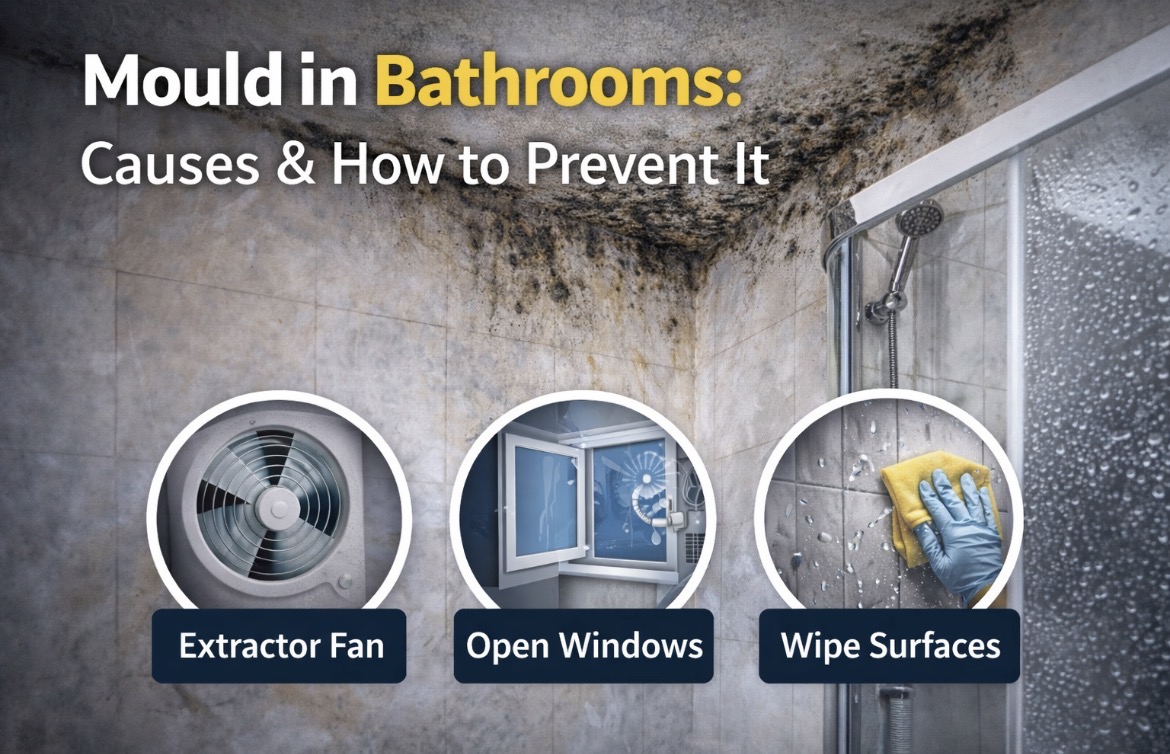
    How to Prevent Bathroom Mould

    1. Use an Extractor Fan

    Run it during and after showers for at least 15–20 minutes.

    2. Open Windows After Showering

    Allow steam to escape.

    3. Wipe Down Wet Surfaces

    Remove moisture from tiles and glass screens.

    4. Keep the Bathroom Warm

    Cold surfaces attract condensation.

    5. Fix Leaks Quickly

    Check under sinks and around shower trays.

    When to Seek Professional Advice

    If mould keeps returning despite good ventilation, there may be hidden leaks or insulation problems.

    Persistent bathroom mould may require further inspection.

    Final Thoughts

    Mould in bathrooms is usually caused by steam and poor ventilation. By improving airflow and drying surfaces properly, most bathroom mould problems can be prevented.

    Managing moisture is the key to long-term control.
  • Mould on Ceilings: What It Means & What to Do

    Mould on Ceilings: What It Means & What to Do

    Mould on ceilings is a common but worrying problem for homeowners. It often appears as black or dark patches in corners, above windows, or across the centre of a ceiling.

    While some cases are caused by condensation, ceiling mould can sometimes indicate a more serious issue such as a roof leak or poor insulation.

    Understanding the pattern helps identify the cause.

    Why Does Mould Grow on Ceilings?

    Mould grows when moisture settles on a surface and remains damp.

    Ceilings can become damp due to:

    Because warm air rises, ceilings are naturally vulnerable to moisture build-up.

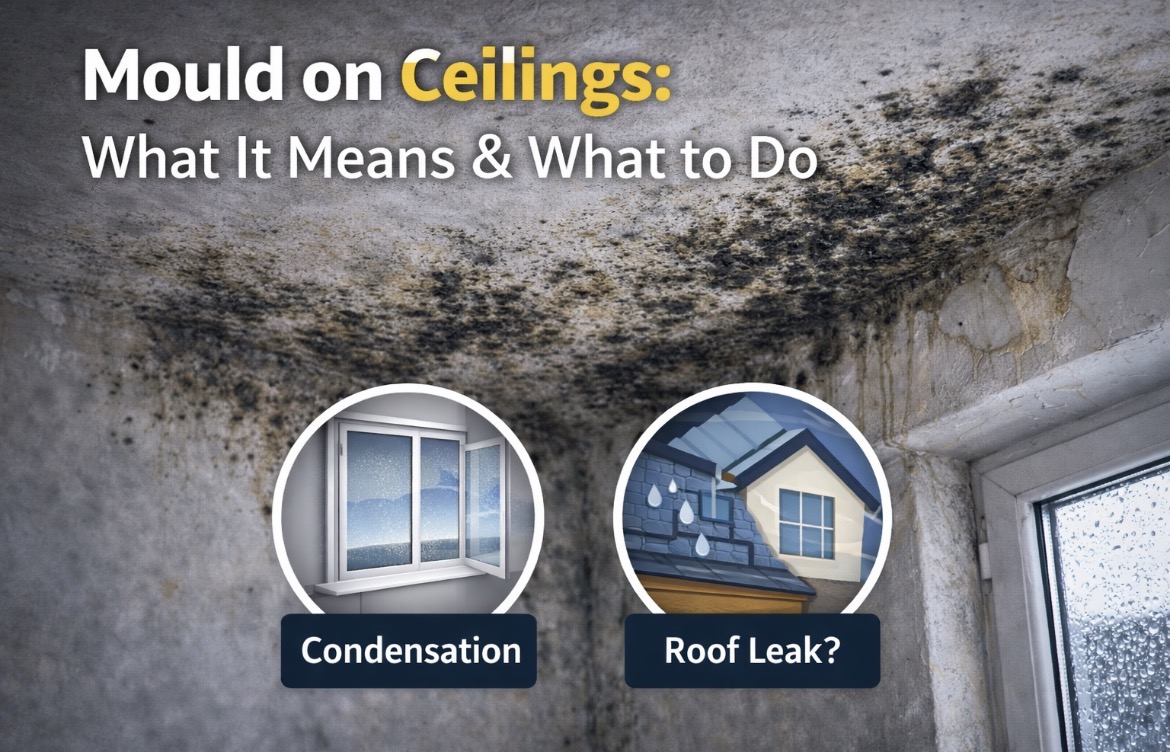
    Condensation vs Roof Leak: How to Tell the Difference

    Likely Condensation If:

    • Mould appears in corners
    • It forms where walls meet the ceiling
    • It worsens in winter
    • It is present in multiple rooms
    • There is no visible staining

    Possible Roof Leak If:

    • Mould is in one concentrated patch
    • There is yellow or brown water staining
    • Paint is bubbling
    • The problem worsens after heavy rain
    • There is damp insulation in the loft

    A leak usually creates a defined damp patch, while condensation spreads more evenly.

    Is Ceiling Mould Dangerous?

    Small amounts are unlikely to cause serious health issues, but long-term exposure may contribute to:

    • Respiratory irritation
    • Asthma flare-ups
    • Allergies

    Because mould spores spread through the air, ceiling mould should not be ignored.

    How to Remove Mould from Ceilings

    For small areas:

    1. Wear gloves and a mask
    2. Use a mould remover or vinegar solution
    3. Avoid dry scrubbing
    4. Wipe gently
    5. Allow the area to dry fully

    If mould covers a large area, professional assessment may be safer.

    How to Prevent Ceiling Mould

    Improve Ventilation

    Install or use extractor fans in kitchens and bathrooms.

    Reduce Indoor Humidity

    Avoid drying clothes indoors.

    Maintain Consistent Heating

    Cold ceilings attract condensation.

    Check Loft Insulation

    Poor insulation makes ceilings colder.

    Inspect the Roof

    If mould is concentrated, check for missing tiles or leaks.

    When to Seek Professional Help

    If mould keeps returning despite improved ventilation, or if there are signs of water damage, further investigation may be required.

    Persistent ceiling mould may indicate structural moisture issues.

    Final Thoughts

    Mould on ceilings is often caused by condensation but can sometimes signal a roof leak or insulation problem. Identifying the pattern and source of moisture is the key to solving it permanently.

    Address the cause, not just the surface mould.

  • Black Mould Around Windows: Causes & How to Stop It

    Black Mould Around Windows: Causes & How to Stop It

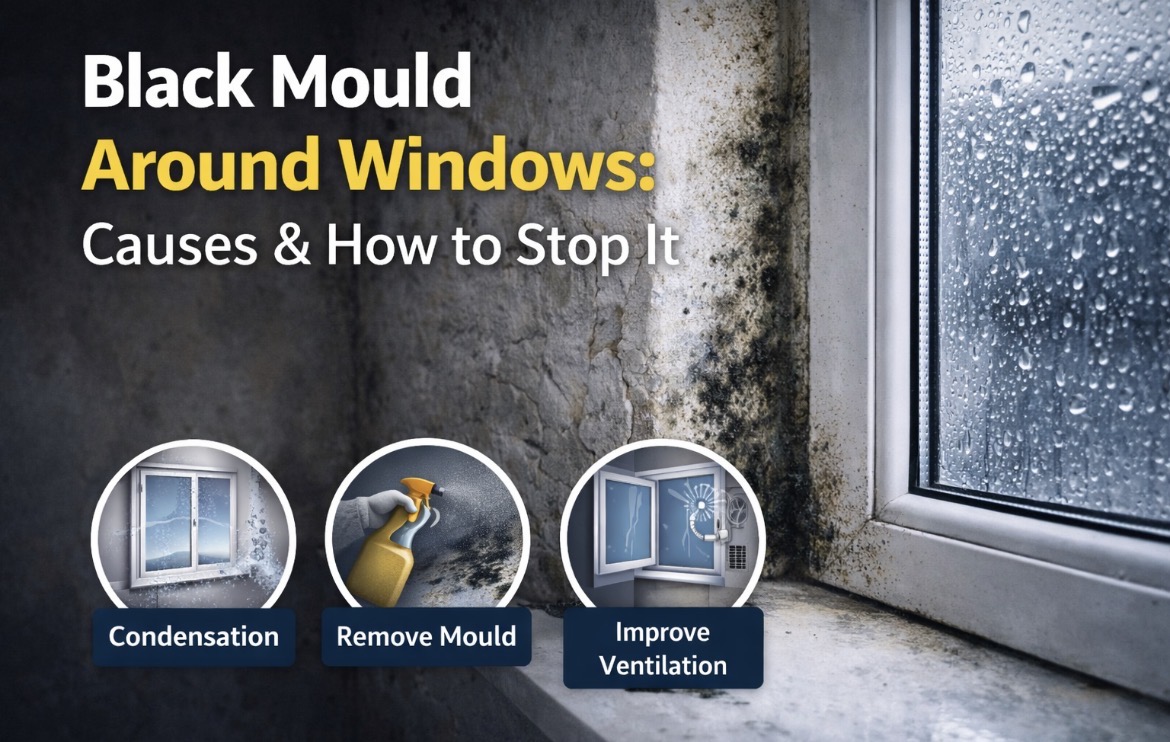
    Black mould around windows is one of the most common mould problems in homes. It usually appears on window frames, silicone seals, surrounding plaster, or in the corners above the window.

    In most cases, mould around windows is caused by condensation.

    Why Does Black Mould Form Around Windows?

    Windows are one of the coldest surfaces in a home. When warm, moist indoor air touches the cold glass or frame, condensation forms.

    If this moisture is not wiped away or ventilated properly, mould spores begin to grow.

    Moisture around windows is often caused by:

    • Poor ventilation
    • High indoor humidity
    • Drying clothes indoors
    • Lack of extractor fans
    • Cold weather

    Repeated condensation creates the perfect conditions for mould.

    Signs It’s a Condensation Problem

    Mould around windows is usually linked to condensation if:

    • It appears during autumn or winter
    • Water droplets form on the glass
    • It wipes away but returns
    • It’s worse in bedrooms or bathrooms
    • There are no visible leaks

    If mould is limited to the window area, condensation is the likely cause.

    Can Window Mould Be Dangerous?

    Small amounts of mould around windows are unlikely to cause serious health problems, but prolonged exposure can contribute to:

    • Coughing
    • Blocked nose
    • Asthma irritation
    • Allergies

    Children and people with respiratory conditions may be more sensitive.

    Because windows are often in bedrooms, regular cleaning and prevention is important.

    How to Remove Black Mould Around Windows

    For small areas:

    1. Wear gloves and a mask
    2. Spray a mould remover or white vinegar solution
    3. Wipe gently with a cloth
    4. Dry the area thoroughly

    Avoid dry brushing, as this can release spores into the air.

    If mould has penetrated silicone sealant, it may need replacing.

    How to Stop It Coming Back

    1. Improve Ventilation

    Open windows daily, even for 10–15 minutes.

    2. Use Extractor Fans

    Especially after showering or cooking.

    3. Wipe Condensation Daily

    Remove moisture from glass and frames each morning.

    4. Maintain Consistent Heating

    Cold rooms increase condensation.

    5. Reduce Indoor Moisture

    Avoid drying clothes indoors where possible.

    When to Investigate Further

    If mould appears alongside:

    • Peeling paint
    • Water staining
    • Damp patches on walls
    • Crumbling plaster

    There may be a leak or insulation issue rather than simple condensation.

    Persistent problems may require professional advice.

    Final Thoughts

    Black mould around windows is usually caused by condensation and poor airflow. While it can often be cleaned easily, long-term prevention depends on reducing moisture and improving ventilation.

    Managing condensation is the key to stopping window mould permanently.

  • Black Mould in Bedrooms: Causes, Health Risks & How to Stop It

    Black Mould in Bedrooms: Causes, Health Risks & How to Stop It

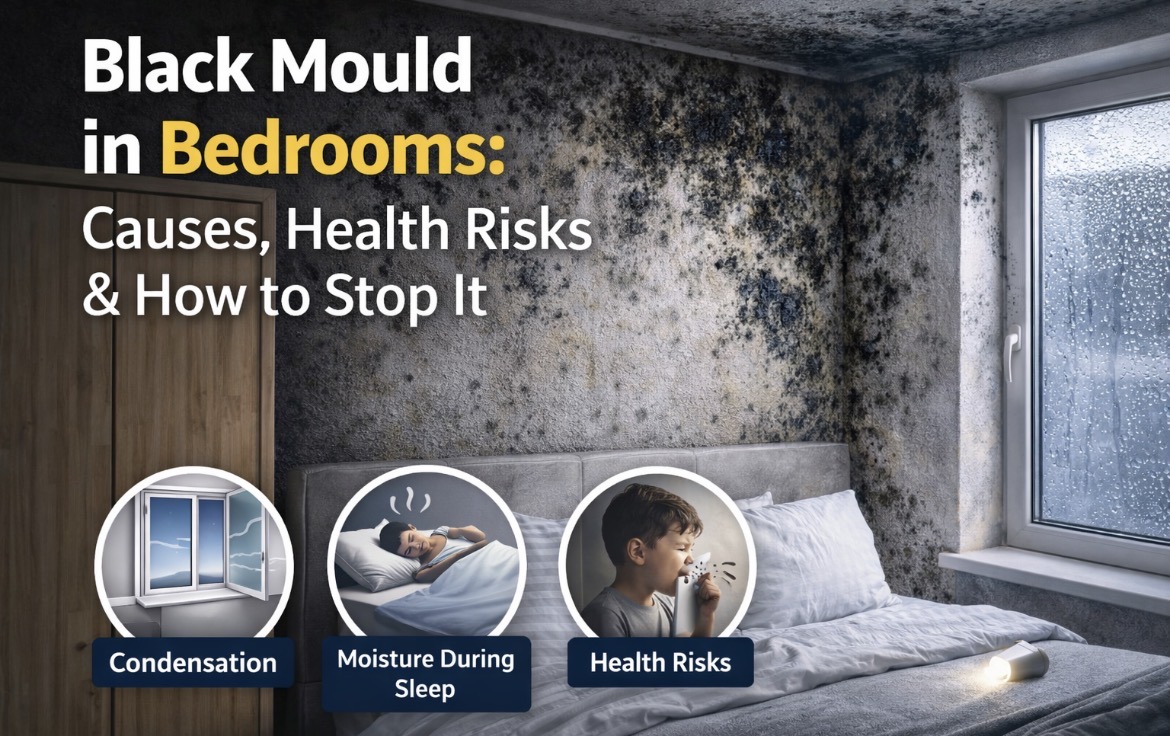
    Black mould in bedrooms is one of the most common household problems, particularly during colder months. It often appears in corners, behind wardrobes, around windows or on external walls.

    Because bedrooms are enclosed spaces where people spend many hours sleeping, mould in this area should never be ignored.

    Why Does Black Mould Appear in Bedrooms?

    Bedrooms naturally produce moisture through breathing overnight. Two adults can release significant moisture into the air while sleeping.

    When this warm air meets cold walls or windows, condensation forms — creating ideal conditions for mould growth.

    Common causes include:

    • Poor ventilation
    • Cold external walls
    • Windows rarely opened
    • Furniture pushed against walls
    • Inconsistent heating

    Is Bedroom Mould Dangerous?

    Mould exposure in bedrooms can be more concerning because of prolonged exposure during sleep.

    Possible symptoms include:

    • Night-time coughing
    • Worsened asthma
    • Blocked nose in the morning
    • Headaches
    • Irritated eyes

    Children and people with respiratory conditions may be more affected.

    If symptoms improve when away from the room, mould may be contributing.

    Where Does Bedroom Mould Usually Form?

    Look for:

    • Upper corners of external walls
    • Around window frames
    • Behind wardrobes
    • Along ceiling edges
    • On cold north-facing walls

    Mould behind furniture is particularly common due to trapped air.

    How to Stop Mould in Bedrooms

    1. Improve Airflow

    Open windows daily, even during winter, for short periods.

    2. Keep Furniture Slightly Away from Walls

    Leave a small gap to allow circulation.

    3. Maintain Consistent Heating

    Avoid letting rooms get very cold overnight.

    4. Reduce Moisture in the Home

    Avoid drying clothes in bedrooms.

    5. Use a Dehumidifier if Needed

    Especially during colder months.

    Should You Clean It Yourself?

    Small areas can usually be treated safely with appropriate mould cleaner.

    However, if mould covers a large area or keeps returning, the underlying cause must be addressed.

    Cleaning alone will not solve condensation-related mould.

    When to Seek Professional Advice

    If mould spreads rapidly, has a strong damp smell, or is linked to visible water damage, further investigation may be required.

    Persistent mould may indicate insulation or ventilation problems.

    Final Thoughts

    Black mould in bedrooms is usually caused by condensation and poor ventilation. Because people spend many hours sleeping in these rooms, it’s important to address both the mould and the moisture causing it.

    Improving airflow and maintaining consistent warmth are often the most effective long-term solutions.

  • What Causes Condensation Mould?

    What Causes Condensation Mould?

    Condensation happens when warm, moist air meets a cold surface and turns into water droplets.

    Everyday activities create moisture indoors, including:

    • Cooking
    • Showering
    • Drying clothes inside
    • Breathing
    • Boiling kettles

    If that moisture cannot escape, it settles on cold walls and allows mould to grow.

    Signs It’s Condensation Mould

    Condensation mould typically:

    • Appears in upper corners of rooms
    • Forms around windows
    • Develops behind wardrobes
    • Gets worse in winter
    • Wipes away but returns

    If mould keeps coming back in these areas, condensation is likely the cause.

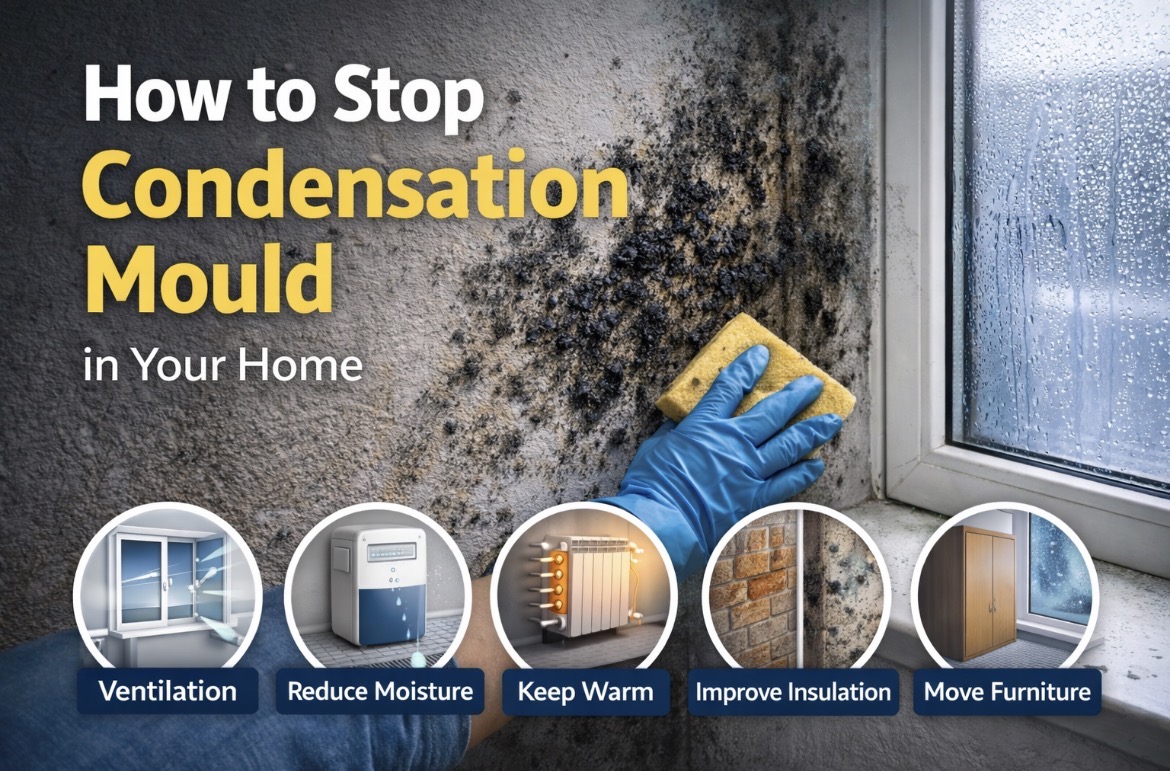
    How to Stop Condensation Mould

    1. Improve Ventilation

    Air circulation is essential.

    2. Reduce Moisture Levels

    • Avoid drying clothes indoors
    • Use lids when cooking
    • Wipe condensation from windows each morning
    • Consider using a dehumidifier

    Lower humidity means less surface moisture.

    3. Keep Rooms Warm Consistently

    Cold walls attract condensation.

    Instead of heating rooms occasionally at high temperatures, maintain steady, moderate warmth during colder months.

    Consistent heating helps prevent moisture settling.

    4. Improve Insulation

    If mould appears on external walls:

    • Check wall insulation
    • Insulate loft spaces
    • Seal draughts
    • Consider thermal lining paint

    Warmer wall surfaces reduce condensation risk.

    5. Move Furniture Away From External Walls

    Wardrobes and beds pushed tightly against cold walls block airflow.

    Leave a small gap to allow air circulation.

    Why Bleach Alone Won’t Fix It

    Cleaning mould without reducing moisture only provides temporary results.

    Unless ventilation and heating are improved, mould will return.

    Prevention is more effective than repeated cleaning.

    When to Seek Professional Advice

    If mould persists despite improving ventilation and heating, there may be:

    • Hidden leaks
    • Structural damp issues
    • Insulation problems

    In those cases, a professional inspection may be necessary.

    Final Thoughts

    Condensation mould is preventable. By improving airflow, reducing indoor moisture, and maintaining consistent heating, you can significantly reduce the risk of mould returning.

    The key is managing moisture — not just cleaning the surface.

  • What Causes Black Mould on Walls?

    What Causes Black Mould on Walls?

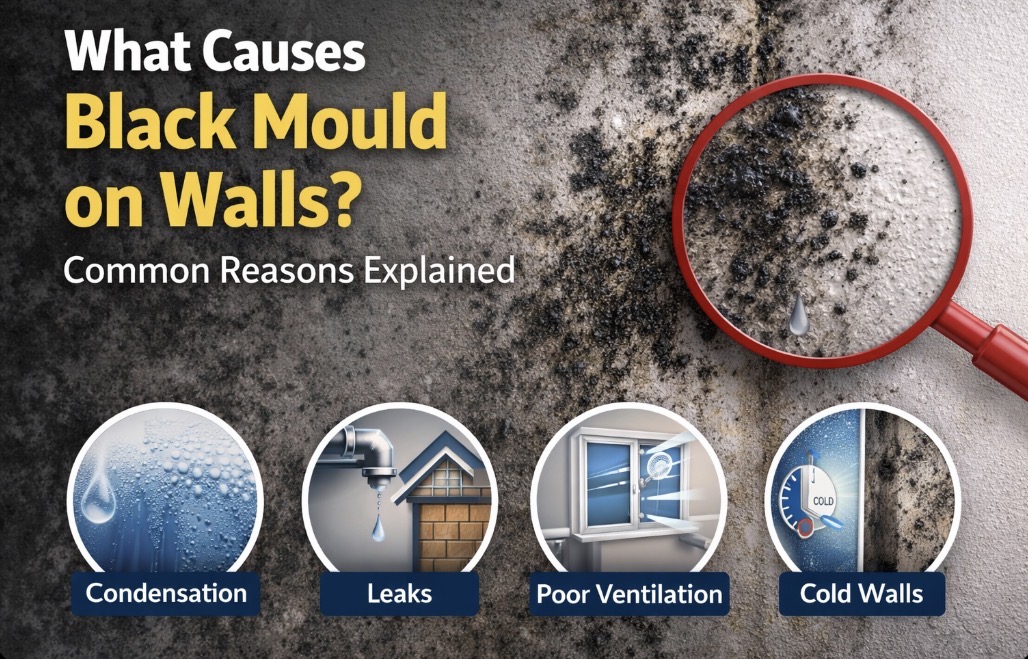
    Black mould on walls is almost always caused by excess moisture. While it may appear suddenly, mould growth is the result of ongoing damp conditions that allow spores to settle and multiply.

    Understanding the cause is the key to stopping it permanently.

    The Main Cause: Moisture

    Mould spores are present in the air all the time. They only begin to grow when they land on a damp surface.

    Walls become damp due to:

    • Condensation
    • Poor ventilation
    • Leaking pipes
    • Roof or gutter leaks
    • Rising damp
    • Poor insulation

    Without moisture, mould cannot grow.

    1. Condensation (Most Common Cause)

    Condensation is the biggest cause of black mould in UK homes.

    It happens when warm, moist air hits a cold wall and turns into water droplets. Over time, this repeated moisture creates the perfect conditions for mould.

    Condensation is common in:

    • Bedrooms
    • Bathrooms
    • Kitchens
    • Corners of external walls
    • Around windows

    If mould appears in upper corners or behind furniture, condensation is usually the reason.

    2. Poor Ventilation

    Homes that are tightly sealed trap moisture inside.

    Common ventilation issues include:

    • No extractor fans
    • Blocked air vents
    • Windows rarely opened
    • Drying clothes indoors

    Without airflow, moisture builds up and settles on colder surfaces.

    3. Cold Walls and Poor Insulation

    External walls that lack insulation stay colder than the rest of the room.

    Cold surfaces attract condensation, especially in winter. This is why mould often appears on:

    • North-facing walls
    • External corners
    • Behind wardrobes

    Insulation improvements can significantly reduce mould growth.

    4. Plumbing or Roof Leaks

    If mould appears in one concentrated area or spreads rapidly, a leak may be the cause.

    Look for:

    • Water staining
    • Peeling paint
    • Bubbling plaster
    • Damp smells

    Leaks must be repaired before mould treatment will work long term.

    5. Rising Damp (Less Common)

    If mould appears near the bottom of walls and paint is flaking or crumbling, rising damp may be involved.

    This is less common than condensation but requires professional assessment.

    Why Cleaning Alone Doesn’t Work

    Many homeowners remove visible mould but do not address the moisture source.

    If the wall remains damp, mould will return within weeks.

    Permanent prevention always involves fixing the cause.

    How to Identify the Likely Cause

    Ask yourself:

    • Does it appear in winter? (Likely condensation)
    • Is it near a bathroom or kitchen? (Ventilation issue)
    • Is it low on the wall? (Possible rising damp)
    • Is there visible water staining? (Leak)

    The pattern usually tells the story.

    Final Thoughts

    Black mould does not grow without moisture. Identifying and eliminating the source of damp is the only way to stop it returning.

    Before focusing on removal, always ask: why is this wall damp?

    Solve that, and the mould problem will usually disappear.

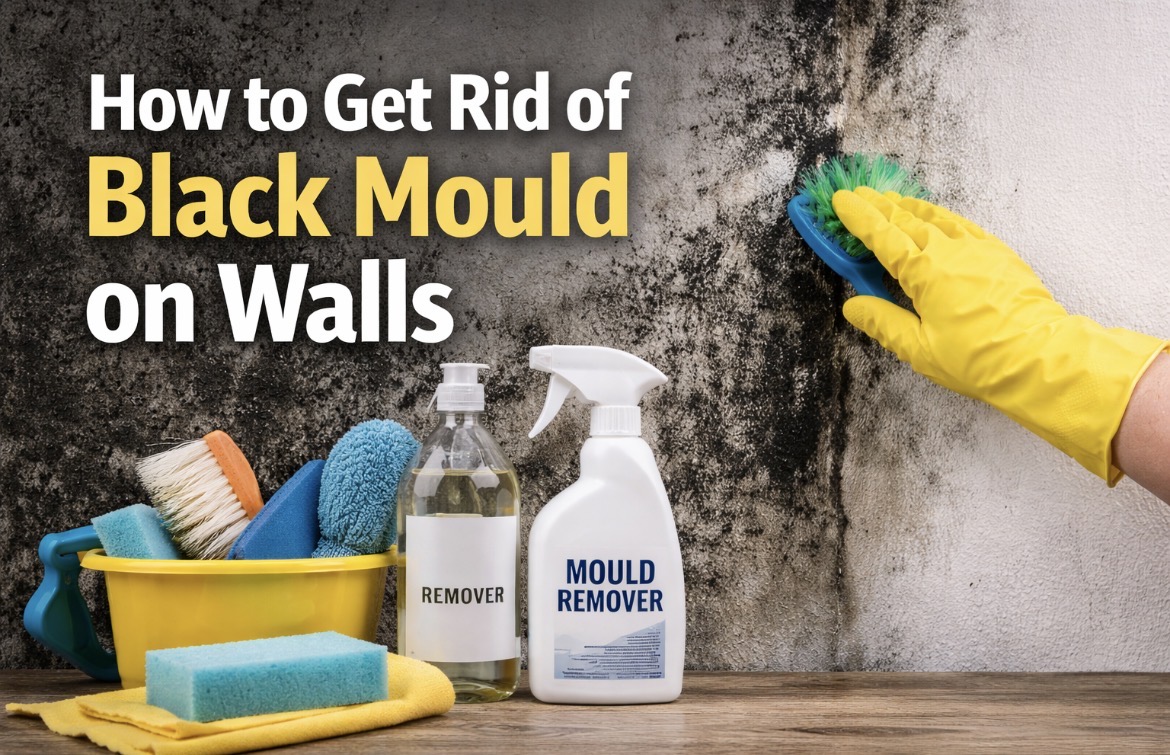
  • How to Get Rid of Black Mould on Walls Permanently

    How to Get Rid of Black Mould on Walls Permanently

    Black mould on walls is a common problem in homes, especially in bedrooms, bathrooms and poorly ventilated areas. While it can often be wiped away, many homeowners find that it keeps coming back.

    To remove black mould permanently, you must not only clean the surface but also fix the moisture problem causing it.

    Why Does Black Mould Keep Coming Back?

    Mould grows where there is:

    • Excess moisture
    • Poor ventilation
    • Cold surfaces
    • Condensation
    • Leaks or damp issues

    If you only clean the visible marks but do not address the underlying cause, mould will return within weeks.

    Permanent removal always means treating the root cause.

    Is Bleach the Right Solution?

    Bleach is commonly used, but it is not always the best long-term solution.

    Bleach can:

    • Remove surface staining
    • Kill mould on non-porous surfaces

    However, on painted walls and plaster, mould roots can penetrate beneath the surface. Bleach may not fully eliminate it and can sometimes add extra moisture.

    For porous surfaces, a specialist mould treatment spray is usually more effective.

    Step-by-Step: Removing Black Mould Safely

    1. Protect Yourself

    Wear:

    • Gloves
    • A mask (preferably an FFP2 or similar)
    • Eye protection

    Open windows to ventilate the room.

    2. Prepare the Area

    • Remove furniture if possible
    • Lay down old sheets or towels
    • Keep children and pets away

    3. Apply Mould Treatment

    Use:

    • A specialist mould remover spray
      OR
    • A mixture of white vinegar and water (for mild cases)

    Apply directly to the affected area and leave for the recommended time.

    4. Gently Scrub

    Use a soft brush or cloth. Avoid dry brushing, as this can release spores into the air.

    5. Wipe and Dry Thoroughly

    Ensure the wall is completely dry after cleaning.

    Fixing the Root Cause (This Is the Most Important Step)

    If you skip this step, mould will return.

    Check for:

    Condensation

    • Improve ventilation
    • Use extractor fans
    • Open windows daily
    • Consider a dehumidifier

    Cold Walls

    • Improve insulation
    • Keep rooms consistently heated

    Leaks

    • Check plumbing
    • Inspect gutters
    • Repair roof issues

    Rising Damp

    If mould appears low on walls and paint is flaking, professional assessment may be needed.

    When Should You Call a Professional?

    You may need expert help if:

    • The mould covers a large area
    • It keeps returning despite treatment
    • There is a strong damp smell
    • You suspect structural damp issues

    Professionals can identify hidden moisture problems that are not obvious.

    How to Prevent Black Mould in the Future

    • Maintain consistent indoor heating
    • Ventilate daily
    • Avoid drying clothes indoors
    • Leave space between furniture and external walls
    • Wipe condensation from windows

    Prevention is always easier than repeated removal.

    Final Thoughts

    Black mould can be removed, but permanent results only happen when moisture problems are addressed. Cleaning alone is not enough.

    If you tackle both the mould and the cause, you can stop it returning and protect your home from ongoing damage.

  • Can Black Mould Cause Long-Term Health Problems?

    Can Black Mould Cause Long-Term Health Problems?

    Prolonged exposure to damp and mouldy environments has been linked to:

    • Development of asthma
    • Increased asthma attacks
    • Chronic respiratory irritation
    • Increased risk of allergies

    In rare cases, certain types of mould can produce toxins (mycotoxins), but most health issues in UK homes are caused by long-term exposure to high levels of mould spores rather than toxic poisoning.

    The biggest risk is ongoing respiratory irritation rather than sudden severe illness.

    When Should You Seek Medical Advice?

    You should speak to a GP if:

    • Your child has ongoing breathing difficulties
    • Asthma symptoms worsen
    • They develop repeated chest infections
    • Symptoms do not improve after cleaning the mould

    A doctor can assess whether mould exposure may be affecting their health.

    What Should Parents Do Immediately?

    If you discover black mould in a child’s bedroom:

    1. Do not ignore it
    2. Increase ventilation (open windows daily)
    3. Avoid drying clothes in the room
    4. Clean small affected areas safely
    5. Identify the underlying cause (condensation, leaks, poor insulation)

    Simply wiping mould away without solving the moisture problem will not stop it from returning.

    Preventing Mould in Children’s Bedrooms

    To reduce risk:

    • Keep bedrooms warm and ventilated
    • Leave space between furniture and external walls
    • Use extractor fans in kitchens and bathrooms
    • Address leaks or damp issues quickly
    • Consider a dehumidifier if condensation is persistent

    Prevention is far safer than repeated exposure.

    Final Thoughts

    Black mould should never be ignored in a home with children. While it does not usually cause immediate serious illness, long-term exposure can contribute to respiratory problems and worsen existing conditions like asthma.

    If you spot mould in your child’s bedroom, act early. Removing the cause of damp is the key to protecting your child’s health.

  • Rising Damp in UK Homes: Signs, Causes & Treatment

    Rising Damp in UK Homes: Signs, Causes & Treatment

    Rising damp is a moisture problem that occurs when groundwater travels upward through masonry by capillary action. Although often misdiagnosed, genuine rising damp can cause significant damage to plaster, skirting boards and internal finishes if left untreated.

    In the UK, rising damp is most commonly found in older properties where the damp proof course (DPC) has failed, been bridged, or was never installed.

    This guide explains how to identify rising damp, how it differs from condensation, and the correct treatment options.

    What Causes Rising Damp?

    Rising damp occurs when moisture from the ground moves upward through porous building materials such as brick, mortar and blockwork.

    Common causes include:

    • Failed damp proof course
    • No damp proof course (common in pre-1875 properties)
    • Bridged DPC due to raised ground levels
    • Blocked cavity walls
    • High external ground levels

    Modern UK buildings are required to include a damp proof course under Building Regulations, but defects can still occur.

    Signs of Rising Damp

    Typical indicators include:

    Rising damp usually affects ground floor walls and rarely extends above one metre.

    Rising Damp vs Condensation

    Rising damp:

    • Affects lower wall areas only
    • Leaves salt deposits
    • Damages skirting boards

    Condensation:

    • Appears on windows and cold surfaces
    • Often found in corners or ceilings
    • Linked to ventilation issues

    Correct diagnosis is essential before treatment.

    How to Treat Rising Damp

    Treatment depends on the cause.

    1. Repair or Install a Damp Proof Course

    If the original DPC has failed, a chemical injection system may be installed to create a moisture barrier.

    2. Lower External Ground Levels

    If soil or paving bridges the DPC, reducing ground levels can resolve the issue.

    3. Remove Contaminated Plaster

    Salt-contaminated plaster must be removed and replaced with a suitable render system.

    4. Improve Drainage

    Ensure external drainage and gutters are functioning properly.

    Is Rising Damp Common?

    True rising damp is less common than condensation but does occur in older UK housing stock. Misdiagnosis is common, particularly where ventilation issues are present.

    A professional damp survey may be required for confirmation.

    Cost of Rising Damp Treatment (UK)

    Typical costs vary depending on severity but may include:

    • Chemical DPC injection: £800–£2,500
    • Replastering affected walls: £500–£1,500
    • Ground level adjustments: Variable

    Costs depend on property size and damage extent.

    When Should You Worry?

    You should seek professional advice if:

    • Skirting boards are rotting
    • Plaster is breaking down
    • Damp patches remain constant regardless of weather
    • The issue is spreading

    Ignoring rising damp can lead to timber decay and further structural issues.

  • Is It Rising Damp or Condensation? How to Tell the Difference

    Is It Rising Damp or Condensation? How to Tell the Difference

    Damp patches on internal walls are one of the most common concerns for UK homeowners. But before assuming the worst, it’s important to understand that not all damp is rising damp.

    In many cases, what appears to be rising damp is actually condensation — and the correct diagnosis makes a significant difference to both cost and repair approach.

    Understanding the difference prevents unnecessary treatment and expense.

    What Is Rising Damp?

    Rising damp occurs when groundwater travels upward through masonry via capillary action. It typically affects ground-floor walls and is limited by gravity.

    True rising damp is less common than many homeowners believe, but it does occur — particularly in older properties.

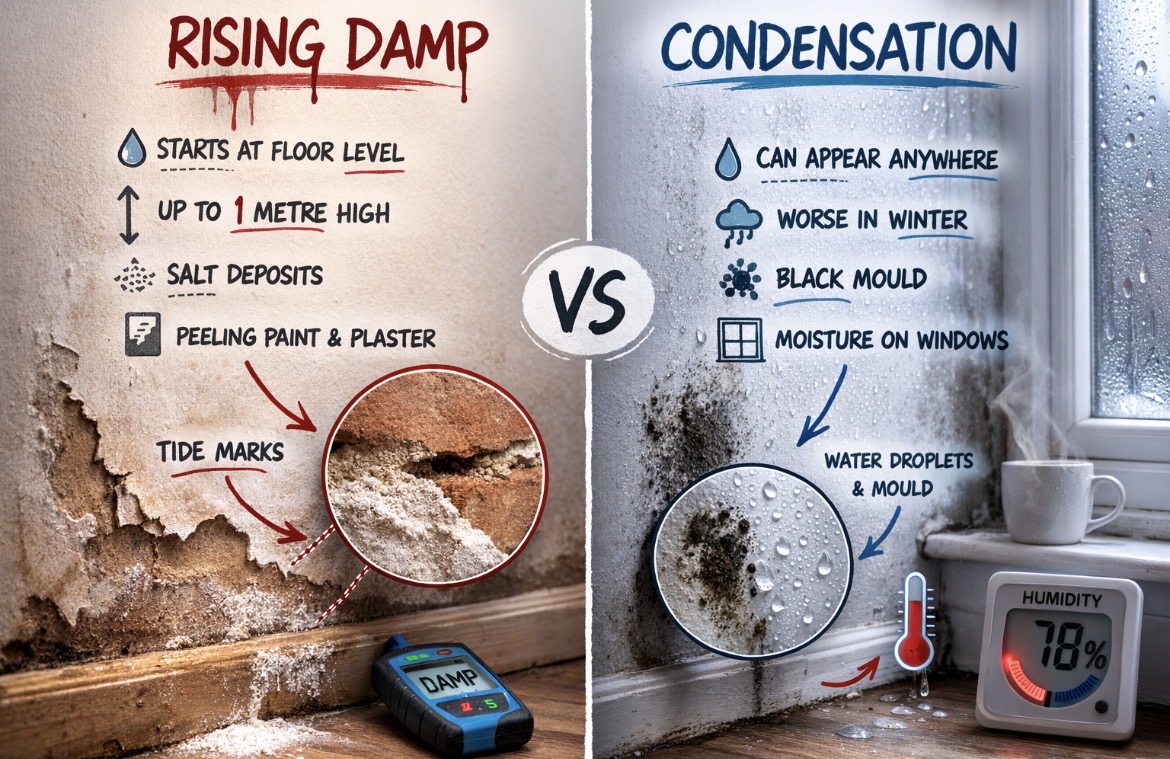
    Typical signs of rising damp:

    • Damp patches starting at floor level
    • “Tide marks” up to around 1 metre high
    • Salt deposits on plaster (white powdery residue)
    • Peeling paint or bubbling plaster
    • Skirting boards rotting or decaying

    It usually appears on external walls and is consistent along the base of the wall.

    What Is Condensation?

    Condensation forms when warm, moisture-laden air meets a cold surface. It is extremely common in UK homes, especially during colder months.

    Modern living habits — showers, cooking, drying clothes indoors — all increase internal humidity.

    Typical signs of condensation:

    • Black mould spots (especially in corners)
    • Damp patches higher up walls
    • Moisture on windows in the morning
    • Problems worse in winter
    • Mould behind furniture or wardrobes

    Condensation is often worse in poorly ventilated rooms such as bedrooms, bathrooms and kitchens.

    Key Differences at a Glance

    Location

    • Rising damp starts at the base of walls
    • Condensation can appear anywhere cold surfaces exist

    Height

    • Rising damp rarely rises above 1 metre
    • Condensation can affect upper walls and ceilings

    Seasonality

    • Rising damp is consistent year-round
    • Condensation worsens in colder months

    Mould Type

    Why Rising Damp Is Often Misdiagnosed

    Many damp issues are labelled as rising damp without proper investigation.

    Common alternative causes include:

    Chemical damp proof injections are sometimes recommended when the underlying issue is actually ventilation-related.

    Accurate diagnosis is critical before any invasive work is carried out.

    How Is Rising Damp Properly Diagnosed?

    Professional assessment may involve:

    • Moisture meter readings
    • Salt analysis of plaster
    • Checking the damp proof course externally
    • Inspecting external ground levels

    It should not rely solely on visual inspection.

    How Are They Treated?

    Rising Damp Treatment

    • Repair or install damp proof course
    • Remove contaminated plaster
    • Replaster with salt-resistant render
    • Address external ground levels

    Condensation Treatment

    • Improve ventilation (trickle vents, extractor fans)
    • Increase heating consistency
    • Reduce internal moisture production
    • Consider dehumidifiers

    Condensation solutions are usually far less invasive and less expensive.

    When Should You Be Concerned?

    You should seek further investigation if:

    • Damp consistently rises from floor level
    • Skirting boards are deteriorating
    • Tide marks are visible
    • Damp persists despite improved ventilation

    Early assessment prevents unnecessary treatments.

    Final Thoughts

    Damp can look alarming, but understanding the cause is essential before committing to costly repairs.

    In the UK, condensation is statistically far more common than true rising damp.

    The key is identifying the pattern.

    Correct diagnosis leads to practical, cost-effective solutions — not guesswork.