
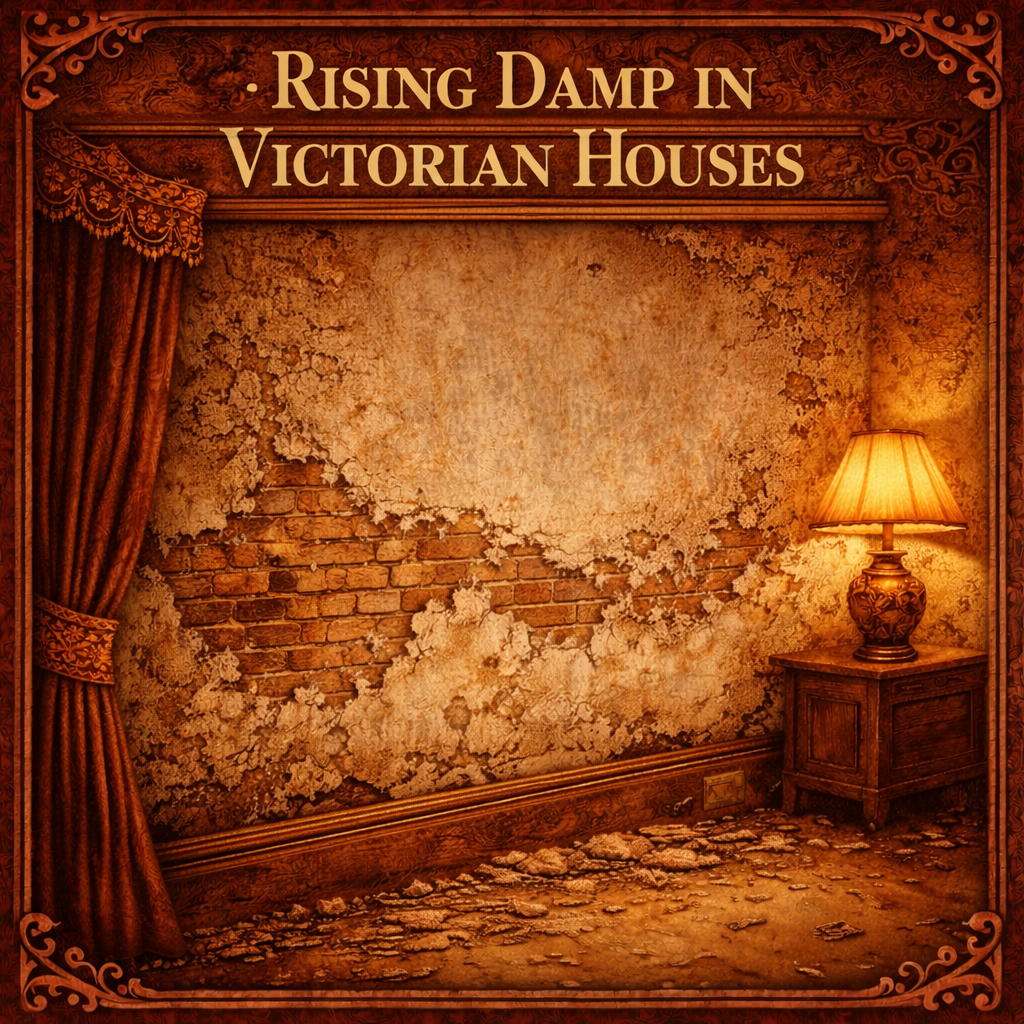
Rising damp is frequently reported in Victorian houses, largely due to the way these properties were originally constructed. Many Victorian homes were built between 1837 and 1901 using solid brick walls and traditional lime-based materials. While these materials allowed buildings to breathe, they can also make walls vulnerable to moisture movement from the ground.
One of the key reasons rising damp occurs in Victorian houses is the absence or deterioration of a damp proof course (DPC). Damp proof courses were not widely used in residential construction until the late 19th century. Even when they were installed, they were often made from materials such as slate or bitumen, which may degrade over time.
In some Victorian homes, the damp proof course may still exist but has become ineffective due to bridging. Bridging occurs when external ground levels are raised above the level of the DPC. This can happen when patios, driveways, or flower beds are added next to the property. When this happens, moisture can bypass the DPC and enter the wall above the protective barrier.
Solid wall construction is another factor contributing to rising damp. Unlike modern cavity walls, Victorian walls are usually built with solid brickwork that allows moisture to move more easily through the masonry. Once moisture enters the wall, it can travel upward through the porous brick and mortar.
Victorian houses are also more likely to have breathable lime plaster and lime mortar. While these materials allow moisture to evaporate naturally, they can become damaged when modern impermeable materials such as cement render or gypsum plaster are introduced during renovations. These materials trap moisture inside the wall, which can make damp problems worse.
Common signs of rising damp in Victorian homes include tide marks on internal walls, peeling paint, deteriorating plaster, and white salt deposits known as efflorescence. Skirting boards may also show signs of decay if the moisture levels remain high over time.
Proper diagnosis is essential before undertaking any remedial work. Many damp problems in Victorian houses are incorrectly attributed to rising damp when they are actually caused by condensation or penetrating damp. A thorough inspection of external ground levels, drainage, and ventilation is necessary to identify the true cause.
Treatment usually involves lowering external ground levels where possible, repairing drainage issues, and installing a modern damp proof course if one is missing or damaged. After the source of moisture is addressed, salt-contaminated plaster may need to be removed and replaced with appropriate breathable materials.
With correct repairs and sympathetic materials, Victorian houses can remain dry and structurally sound for many years.
Leave a Reply