
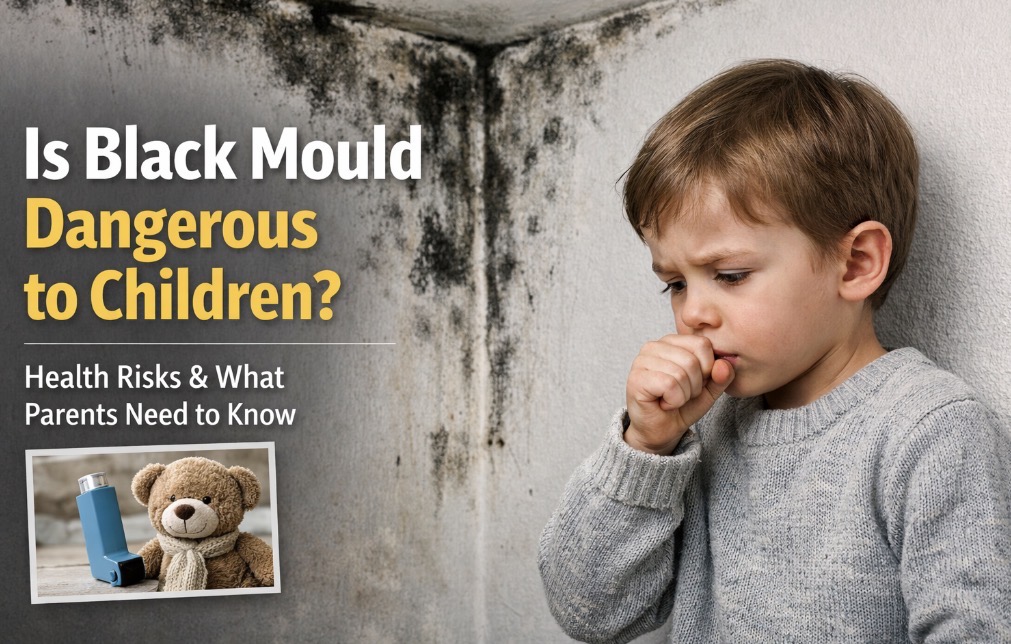
Prolonged exposure to damp and mouldy environments has been linked to:
- Development of asthma
- Increased asthma attacks
- Chronic respiratory irritation
- Increased risk of allergies
In rare cases, certain types of mould can produce toxins (mycotoxins), but most health issues in UK homes are caused by long-term exposure to high levels of mould spores rather than toxic poisoning.
The biggest risk is ongoing respiratory irritation rather than sudden severe illness.
When Should You Seek Medical Advice?
You should speak to a GP if:
- Your child has ongoing breathing difficulties
- Asthma symptoms worsen
- They develop repeated chest infections
- Symptoms do not improve after cleaning the mould
A doctor can assess whether mould exposure may be affecting their health.
What Should Parents Do Immediately?
If you discover black mould in a child’s bedroom:
- Do not ignore it
- Increase ventilation (open windows daily)
- Avoid drying clothes in the room
- Clean small affected areas safely
- Identify the underlying cause (condensation, leaks, poor insulation)
Simply wiping mould away without solving the moisture problem will not stop it from returning.
Preventing Mould in Children’s Bedrooms
To reduce risk:
- Keep bedrooms warm and ventilated
- Leave space between furniture and external walls
- Use extractor fans in kitchens and bathrooms
- Address leaks or damp issues quickly
- Consider a dehumidifier if condensation is persistent
Prevention is far safer than repeated exposure.
Final Thoughts
Black mould should never be ignored in a home with children. While it does not usually cause immediate serious illness, long-term exposure can contribute to respiratory problems and worsen existing conditions like asthma.
If you spot mould in your child’s bedroom, act early. Removing the cause of damp is the key to protecting your child’s health.
Leave a Reply