
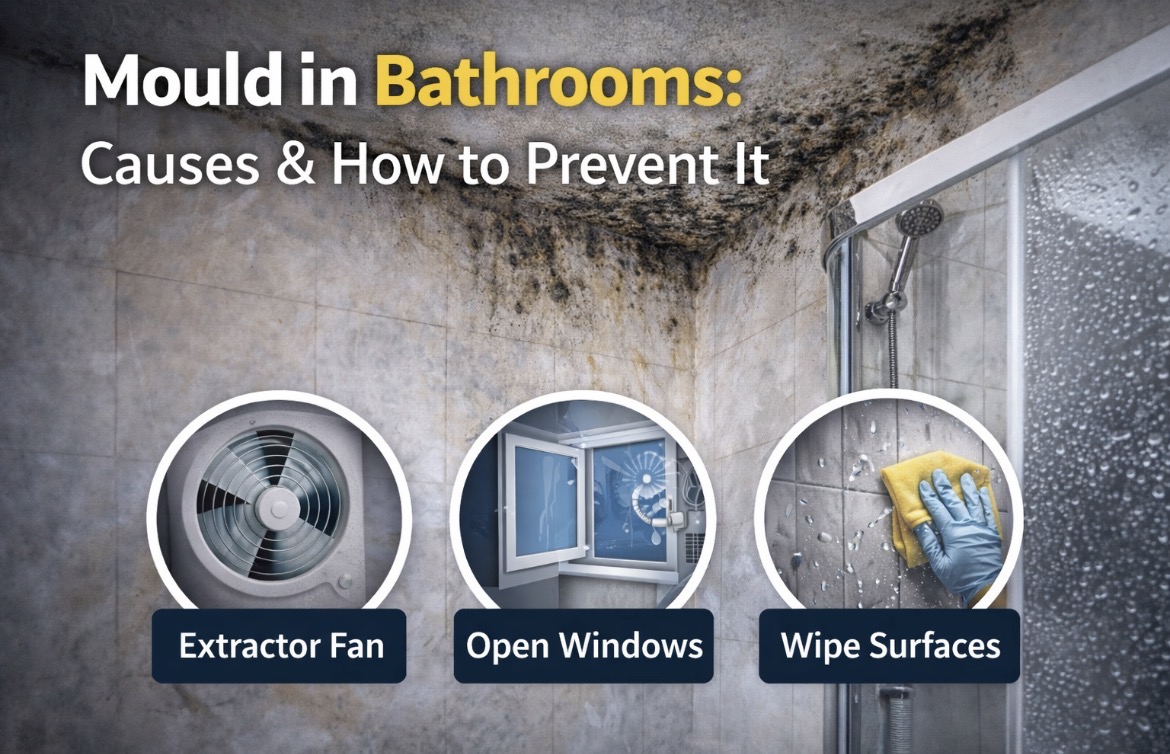
Mould in bathrooms is extremely common due to high humidity from showers, baths, and hot water use. It often appears on ceilings, around tiles, on silicone sealant, and near windows.
Because bathrooms regularly produce steam, they are one of the most vulnerable rooms in the home for mould growth.
Why Does Mould Grow in Bathrooms?
Bathrooms create large amounts of warm, moist air. When this steam settles on colder surfaces, condensation forms.
If moisture does not dry properly, mould spores begin to grow.
Common causes include:
- No extractor fan
- Extractor fan not used
- Poor ventilation
- Cold external walls
- Leaking shower trays or pipework
- Inadequate heating
Without airflow, moisture lingers and encourages mould.
Where Does Bathroom Mould Usually Appear?
Look for mould:
- On ceiling corners
- Around shower trays
- On tile grout
- On silicone sealant
- Around windows
- Behind bathroom cabinets
Silicone sealant is particularly vulnerable because it traps moisture.
Is Bathroom Mould Dangerous?
Small patches are unlikely to cause serious harm, but prolonged exposure can contribute to:
- Respiratory irritation
- Asthma symptoms
- Allergies
- Unpleasant damp odours
Bathrooms connected to bedrooms may allow spores to circulate.
How to Remove Bathroom Mould
For small areas:
- Wear gloves and a mask
- Apply mould remover or vinegar solution
- Leave for recommended time
- Wipe gently
- Dry thoroughly
If silicone is heavily affected, replacing it may be the best solution.
1. Use an Extractor Fan
Run it during and after showers for at least 15–20 minutes.
2. Open Windows After Showering
Allow steam to escape.
3. Wipe Down Wet Surfaces
Remove moisture from tiles and glass screens.
4. Keep the Bathroom Warm
Cold surfaces attract condensation.
5. Fix Leaks Quickly
Check under sinks and around shower trays.
When to Seek Professional Advice
If mould keeps returning despite good ventilation, there may be hidden leaks or insulation problems.
Persistent bathroom mould may require further inspection.
Final Thoughts
Mould in bathrooms is usually caused by steam and poor ventilation. By improving airflow and drying surfaces properly, most bathroom mould problems can be prevented.
Managing moisture is the key to long-term control.
Leave a Reply