
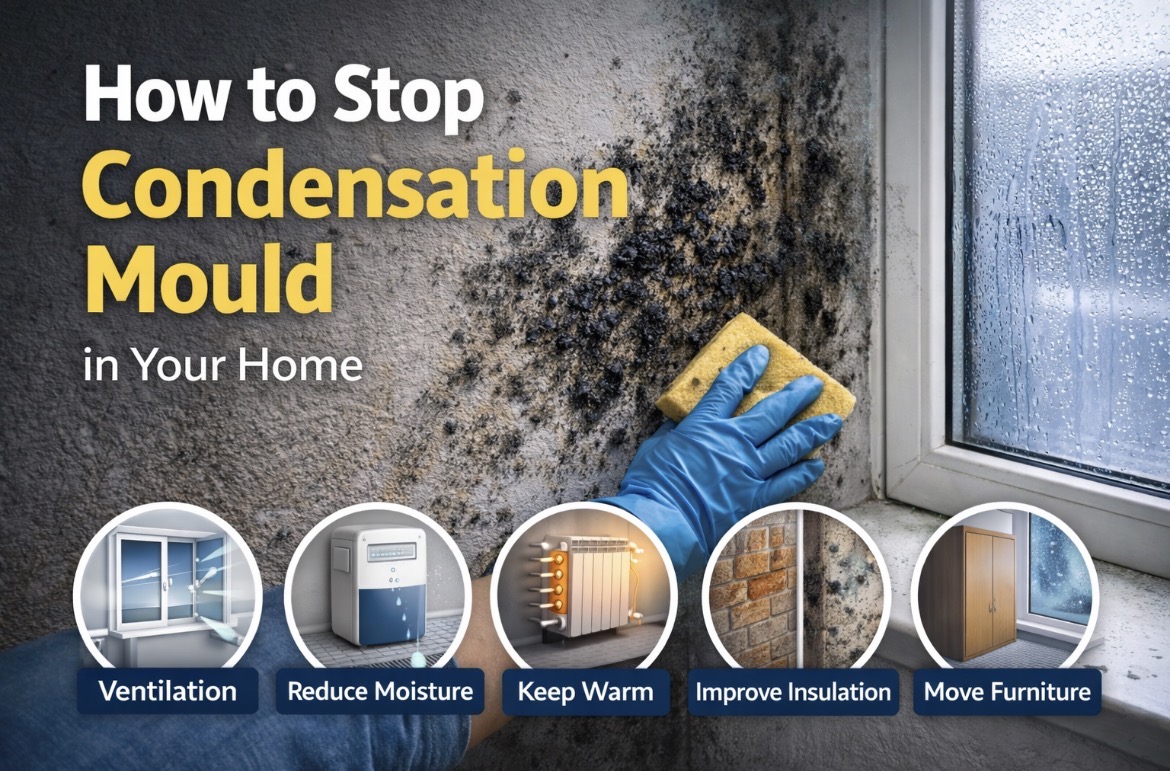
Condensation happens when warm, moist air meets a cold surface and turns into water droplets.
Everyday activities create moisture indoors, including:
- Cooking
- Showering
- Drying clothes inside
- Breathing
- Boiling kettles
If that moisture cannot escape, it settles on cold walls and allows mould to grow.
Signs It’s Condensation Mould
Condensation mould typically:
- Appears in upper corners of rooms
- Forms around windows
- Develops behind wardrobes
- Gets worse in winter
- Wipes away but returns
If mould keeps coming back in these areas, condensation is likely the cause.
How to Stop Condensation Mould
1. Improve Ventilation
- Open windows daily for airflow
- Use extractor fans in bathrooms and kitchens
- Keep air vents clear
- Leave internal doors slightly open
Air circulation is essential.
2. Reduce Moisture Levels
- Avoid drying clothes indoors
- Use lids when cooking
- Wipe condensation from windows each morning
- Consider using a dehumidifier
Lower humidity means less surface moisture.
3. Keep Rooms Warm Consistently
Cold walls attract condensation.
Instead of heating rooms occasionally at high temperatures, maintain steady, moderate warmth during colder months.
Consistent heating helps prevent moisture settling.
4. Improve Insulation
If mould appears on external walls:
- Check wall insulation
- Insulate loft spaces
- Seal draughts
- Consider thermal lining paint
Warmer wall surfaces reduce condensation risk.
5. Move Furniture Away From External Walls
Wardrobes and beds pushed tightly against cold walls block airflow.
Leave a small gap to allow air circulation.
Why Bleach Alone Won’t Fix It
Cleaning mould without reducing moisture only provides temporary results.
Unless ventilation and heating are improved, mould will return.
Prevention is more effective than repeated cleaning.
When to Seek Professional Advice
If mould persists despite improving ventilation and heating, there may be:
- Hidden leaks
- Structural damp issues
- Insulation problems
In those cases, a professional inspection may be necessary.
Final Thoughts
Condensation mould is preventable. By improving airflow, reducing indoor moisture, and maintaining consistent heating, you can significantly reduce the risk of mould returning.
The key is managing moisture — not just cleaning the surface.
Leave a Reply