
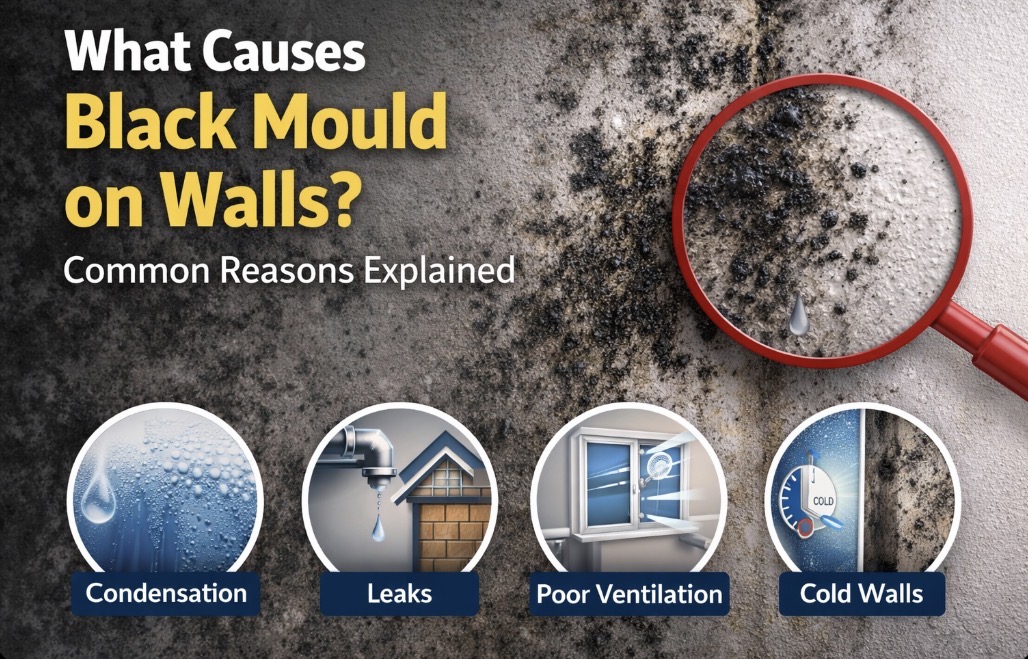
Black mould on walls is almost always caused by excess moisture. While it may appear suddenly, mould growth is the result of ongoing damp conditions that allow spores to settle and multiply.
Understanding the cause is the key to stopping it permanently.
The Main Cause: Moisture
Mould spores are present in the air all the time. They only begin to grow when they land on a damp surface.
Walls become damp due to:
- Condensation
- Poor ventilation
- Leaking pipes
- Roof or gutter leaks
- Rising damp
- Poor insulation
Without moisture, mould cannot grow.
1. Condensation (Most Common Cause)
Condensation is the biggest cause of black mould in UK homes.
It happens when warm, moist air hits a cold wall and turns into water droplets. Over time, this repeated moisture creates the perfect conditions for mould.
Condensation is common in:
- Bedrooms
- Bathrooms
- Kitchens
- Corners of external walls
- Around windows
If mould appears in upper corners or behind furniture, condensation is usually the reason.
2. Poor Ventilation
Homes that are tightly sealed trap moisture inside.
Common ventilation issues include:
- No extractor fans
- Blocked air vents
- Windows rarely opened
- Drying clothes indoors
Without airflow, moisture builds up and settles on colder surfaces.
3. Cold Walls and Poor Insulation
External walls that lack insulation stay colder than the rest of the room.
Cold surfaces attract condensation, especially in winter. This is why mould often appears on:
- North-facing walls
- External corners
- Behind wardrobes
Insulation improvements can significantly reduce mould growth.
4. Plumbing or Roof Leaks
If mould appears in one concentrated area or spreads rapidly, a leak may be the cause.
Look for:
- Water staining
- Peeling paint
- Bubbling plaster
- Damp smells
Leaks must be repaired before mould treatment will work long term.
5. Rising Damp (Less Common)
If mould appears near the bottom of walls and paint is flaking or crumbling, rising damp may be involved.
This is less common than condensation but requires professional assessment.
Why Cleaning Alone Doesn’t Work
Many homeowners remove visible mould but do not address the moisture source.
If the wall remains damp, mould will return within weeks.
Permanent prevention always involves fixing the cause.
How to Identify the Likely Cause
Ask yourself:
- Does it appear in winter? (Likely condensation)
- Is it near a bathroom or kitchen? (Ventilation issue)
- Is it low on the wall? (Possible rising damp)
- Is there visible water staining? (Leak)
The pattern usually tells the story.
Final Thoughts
Black mould does not grow without moisture. Identifying and eliminating the source of damp is the only way to stop it returning.
Before focusing on removal, always ask: why is this wall damp?
Solve that, and the mould problem will usually disappear.
Leave a Reply