
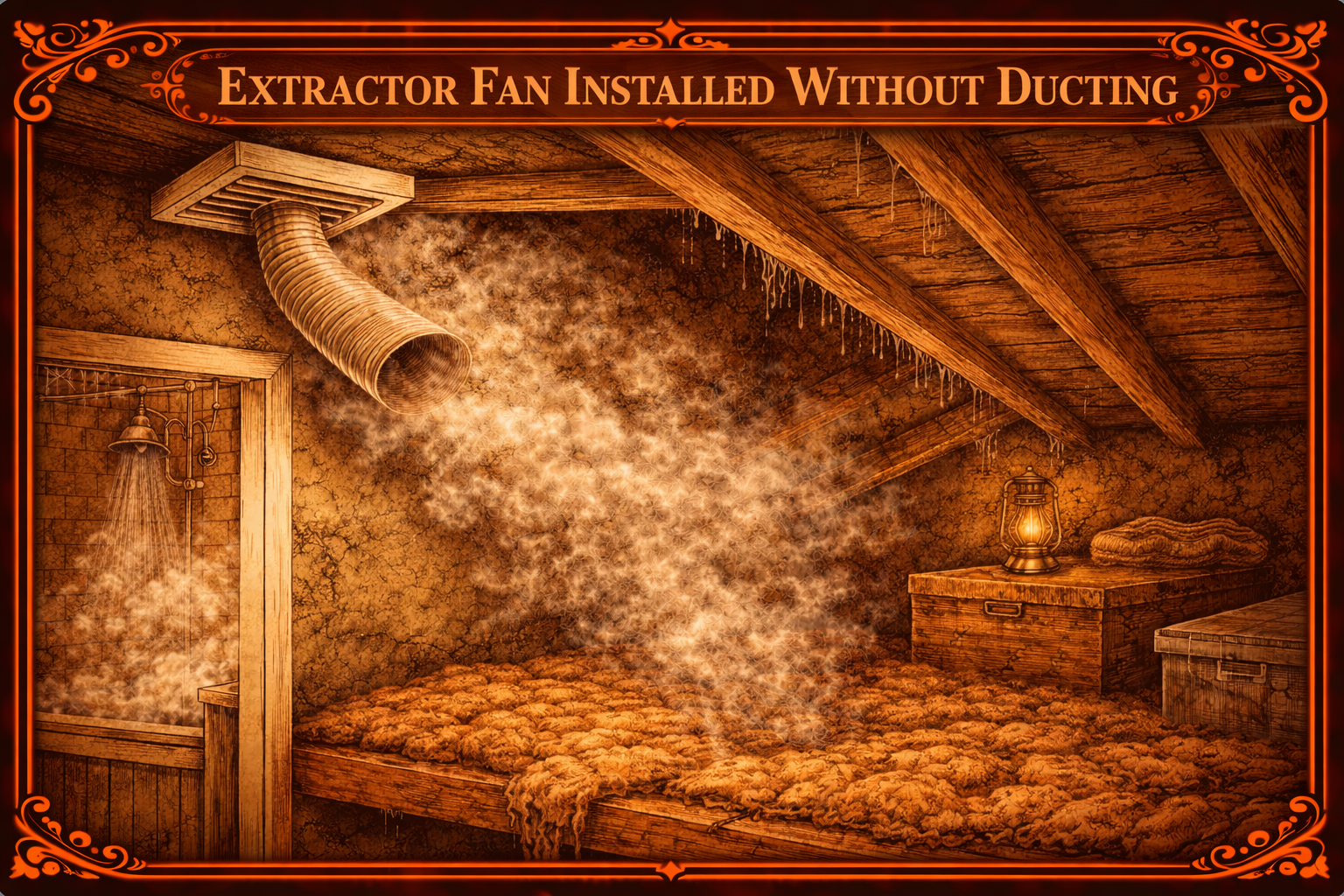
Extractor fans rely on ducting to carry moist air away from bathrooms, kitchens, and utility rooms. Without proper ducting, the fan cannot effectively remove humidity from the building.
In some homes extractor fans are installed but not connected to any ductwork. Instead, they may simply blow air into ceiling voids, wall cavities, or loft spaces.
While the fan may appear to be functioning normally, the moisture is still trapped within the building structure.
Problems Caused by Missing Ducting
Without ducting to carry air outside, extractor fans can contribute to several problems.
These include:
- Condensation forming in loft spaces
- Damp insulation losing effectiveness
- Mould developing on ceilings and walls
- Moisture damage to timber structures
In severe cases prolonged moisture exposure can even contribute to timber decay in roof structures.
Why Extractor Fans Are Installed Without Ducting
Missing ducting is often the result of poor installation practices.
During renovations or bathroom upgrades, installers may fit a fan but delay installing the external vent. If the work is not completed properly, the fan may remain connected to nothing.
DIY installations can also result in missing or poorly fitted ducting.
Over time duct pipes can also become disconnected, particularly if flexible ducting was not secured properly.
How To Fix Missing Ducting
The solution is to connect the extractor fan to a properly installed duct system that vents outside the building.
Common external vent options include:
- Wall vents
- Roof tile vents
- Soffit vents beneath roof overhangs
Insulated ducting is often recommended to prevent condensation forming inside the pipe.
Once the fan is correctly ducted, moisture will be removed from the building instead of accumulating inside hidden spaces.
Leave a Reply