
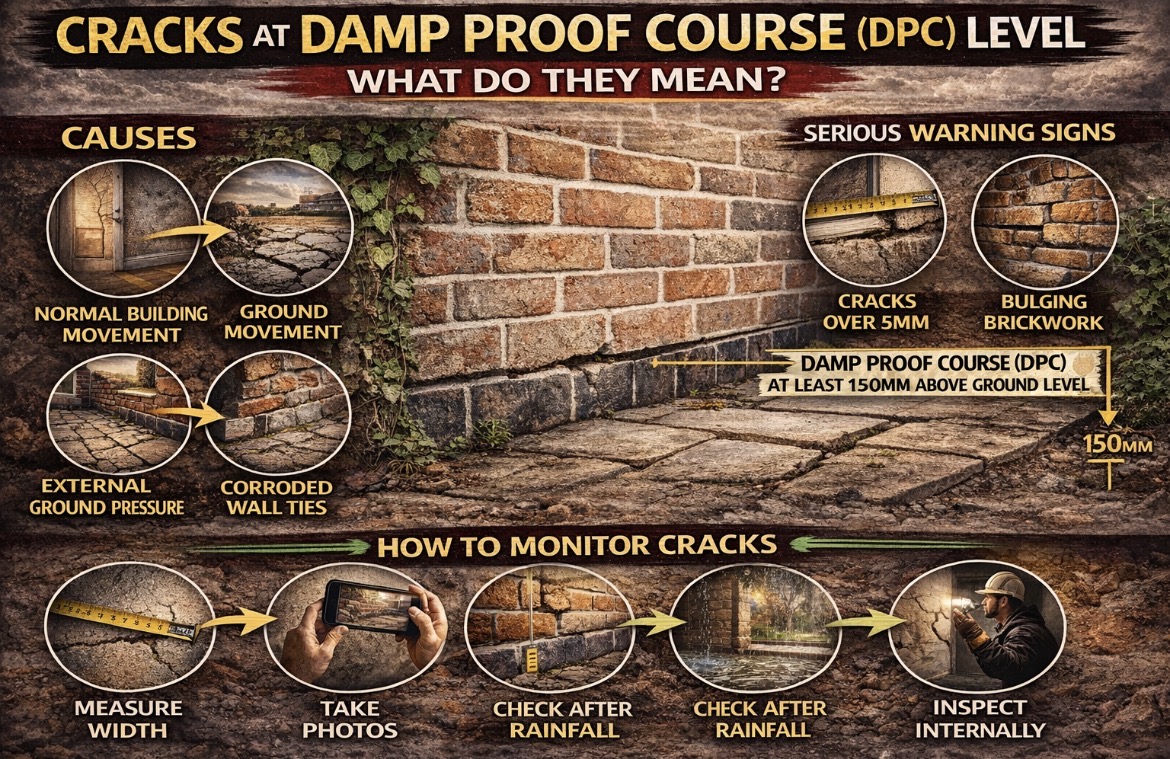
Cracks appearing at damp proof course (DPC) level can cause concern for homeowners, particularly when they run horizontally along the base of external walls. While some cracking at this level is cosmetic, others may indicate structural movement, ground pressure, or issues affecting the wall’s integrity.
Understanding why cracks form at DPC level is essential before carrying out repairs.
What Is the Damp Proof Course?
The damp proof course (DPC) is a horizontal barrier built into external walls, typically 150mm above ground level. Its purpose is to prevent moisture rising from the ground into the wall structure.
It is usually visible as a thin horizontal line in the mortar joint of brickwork.
Because it forms a continuous joint in the masonry, it can also become a natural line of weakness where cracking sometimes appears.
Why Do Cracks Form at DPC Level?
Common causes include:
1. Normal Building Movement
Minor settlement or thermal expansion can cause thin horizontal cracking along mortar joints, including the DPC line.
2. Ground Movement
If foundations shift due to soil shrinkage or expansion, cracking may appear near the base of the wall.
3. External Ground Pressure
Raised ground levels or heavy paving against walls can increase pressure at DPC level.
4. Corroded Wall Ties
In cavity walls, expanding corroded ties can create horizontal cracking in brickwork.
5. Poor Mortar or Workmanship
Weaker mortar joints at DPC level may crack over time.
When Are DPC Level Cracks Serious?
Cracks at damp proof course level may require investigation if they:
- Exceed 3–5mm in width
- Continue to widen
- Run along large sections of the wall
- Are accompanied by bulging brickwork
- Appear alongside internal cracking
- Coincide with doors or windows sticking
Horizontal cracking combined with outward movement can indicate structural stress.
Do DPC Cracks Cause Damp?
A crack at DPC level does not automatically mean the damp proof course has failed.
However, if the crack allows moisture to penetrate the wall, it may contribute to penetrating damp or visible damp patches internally. The crack itself may be structural, moisture-related, or a combination of both.
Proper diagnosis is essential before assuming the DPC requires replacement.
How to Monitor Cracks at DPC Level
- Measure and record crack width.
- Photograph the crack every few months.
- Check for widening after seasonal weather changes.
- Inspect internal walls in the same location.
- Ensure ground levels remain at least 150mm below DPC.
If the crack progresses or multiple signs of movement appear, professional assessment may be required.
Final Thoughts
Cracks at damp proof course level are often minor and cosmetic, particularly if limited to mortar joints. However, wider cracks or those combined with bulging brickwork or internal symptoms may indicate structural movement. Monitoring progression before carrying out repairs ensures that the underlying cause is properly addressed.
Treating the visible crack without identifying the reason behind it can lead to recurring problems.
Leave a Reply