
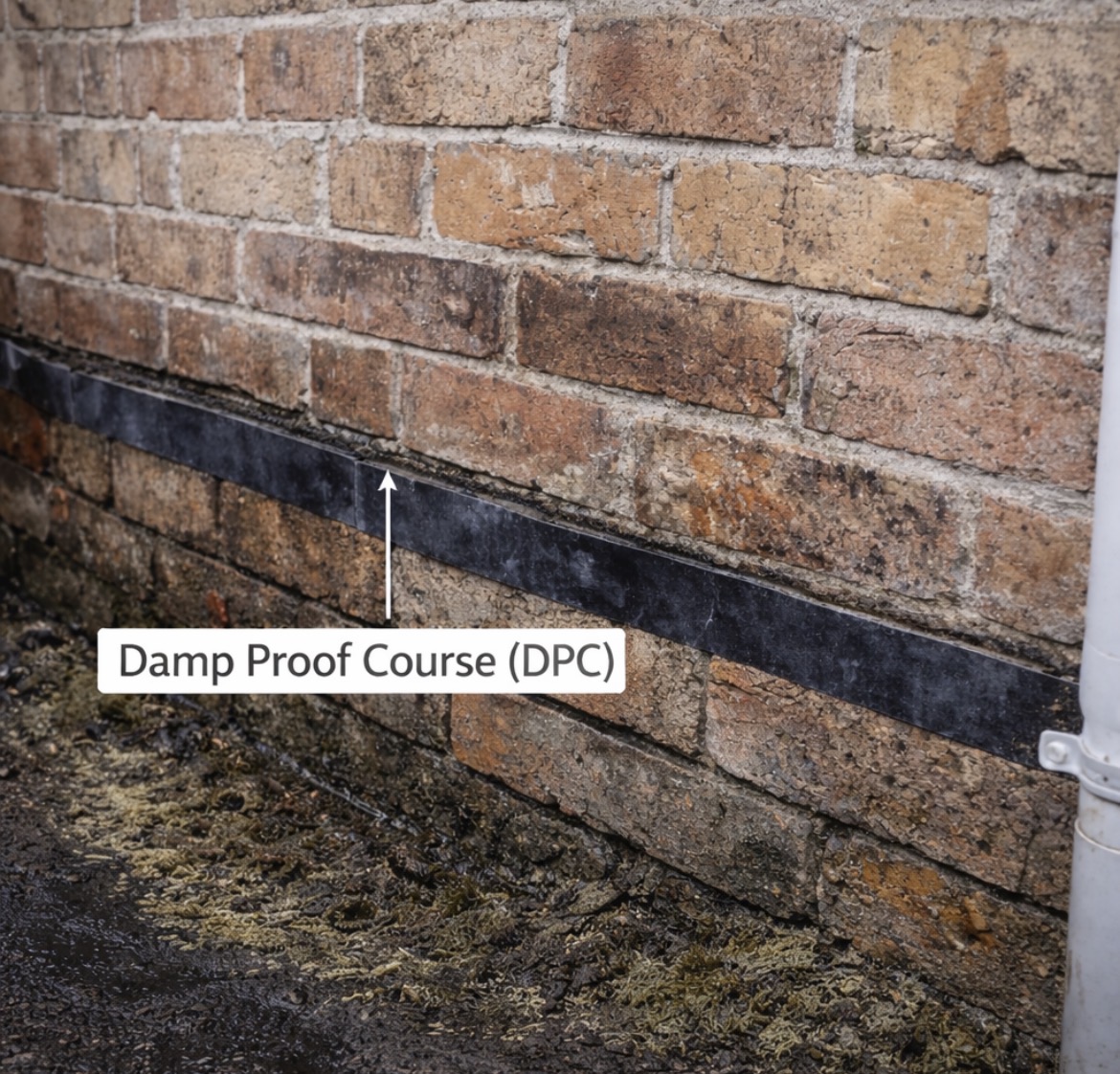
A damp proof course (DPC) is a barrier installed within the walls of a building to prevent moisture from rising up from the ground.
It is designed to stop rising damp by blocking groundwater from travelling through brickwork and mortar.
Most modern properties include a damp proof course as standard.
Where Is a Damp Proof Course Located?
A DPC is usually found:
- Approximately 150mm above ground level
- Along the base of external walls
- As a horizontal layer within brickwork
It may be made from materials such as:
- Bitumen
- Plastic membrane
- Slate (in older properties)
Its position helps prevent moisture from rising into walls.
How Does a Damp Proof Course Work?
Moisture in the ground moves upward through porous materials via capillary action.
A damp proof course acts as a physical barrier that interrupts this movement.
Without a functioning DPC, moisture can continue rising through walls.
What Happens If a DPC Fails?
If a damp proof course is:
- Missing
- Damaged
- Bridged by high ground levels
Rising damp may develop.
Signs of DPC failure include:
- Tide marks on walls
- White salt deposits
- Crumbling plaster
- Damp patches near skirting boards
Professional assessment is often required.
What Is DPC Bridging?
DPC bridging occurs when external ground levels, render, or internal plaster bypass the damp proof course, allowing moisture to travel around it.
Common causes include:
- Raised flower beds
- Blocked air bricks
- Render applied below DPC level
Lowering ground levels can sometimes solve the issue.
Can a Damp Proof Course Be Repaired?
Treatment options may include:
- Installing a new physical DPC
- Injecting a chemical damp proof course
- Removing contaminated plaster
- Improving drainage
Proper diagnosis is essential before treatment.
Final Thoughts
A damp proof course is a critical barrier that prevents rising damp. If it fails or becomes bridged, moisture can enter walls and cause structural damage.
Identifying and addressing the issue early can prevent long-term problems.
Leave a Reply