
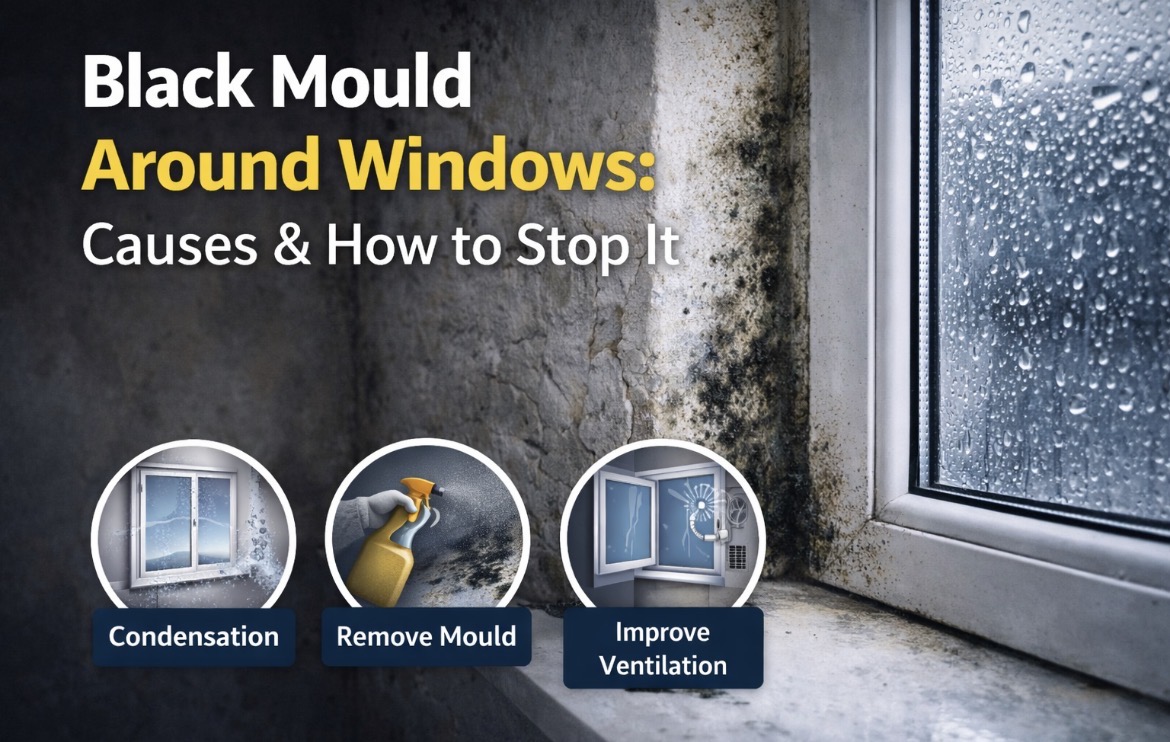
Black mould around windows is one of the most common mould problems in homes. It usually appears on window frames, silicone seals, surrounding plaster, or in the corners above the window.
In most cases, mould around windows is caused by condensation.
Why Does Black Mould Form Around Windows?
Windows are one of the coldest surfaces in a home. When warm, moist indoor air touches the cold glass or frame, condensation forms.
If this moisture is not wiped away or ventilated properly, mould spores begin to grow.
Moisture around windows is often caused by:
- Poor ventilation
- High indoor humidity
- Drying clothes indoors
- Lack of extractor fans
- Cold weather
Repeated condensation creates the perfect conditions for mould.
Signs It’s a Condensation Problem
Mould around windows is usually linked to condensation if:
- It appears during autumn or winter
- Water droplets form on the glass
- It wipes away but returns
- It’s worse in bedrooms or bathrooms
- There are no visible leaks
If mould is limited to the window area, condensation is the likely cause.
Can Window Mould Be Dangerous?
Small amounts of mould around windows are unlikely to cause serious health problems, but prolonged exposure can contribute to:
- Coughing
- Blocked nose
- Asthma irritation
- Allergies
Children and people with respiratory conditions may be more sensitive.
Because windows are often in bedrooms, regular cleaning and prevention is important.
How to Remove Black Mould Around Windows
For small areas:
- Wear gloves and a mask
- Spray a mould remover or white vinegar solution
- Wipe gently with a cloth
- Dry the area thoroughly
Avoid dry brushing, as this can release spores into the air.
If mould has penetrated silicone sealant, it may need replacing.
How to Stop It Coming Back
1. Improve Ventilation
Open windows daily, even for 10–15 minutes.
2. Use Extractor Fans
Especially after showering or cooking.
3. Wipe Condensation Daily
Remove moisture from glass and frames each morning.
4. Maintain Consistent Heating
Cold rooms increase condensation.
5. Reduce Indoor Moisture
Avoid drying clothes indoors where possible.
When to Investigate Further
If mould appears alongside:
- Peeling paint
- Water staining
- Damp patches on walls
- Crumbling plaster
There may be a leak or insulation issue rather than simple condensation.
Persistent problems may require professional advice.
Final Thoughts
Black mould around windows is usually caused by condensation and poor airflow. While it can often be cleaned easily, long-term prevention depends on reducing moisture and improving ventilation.
Managing condensation is the key to stopping window mould permanently.
Leave a Reply