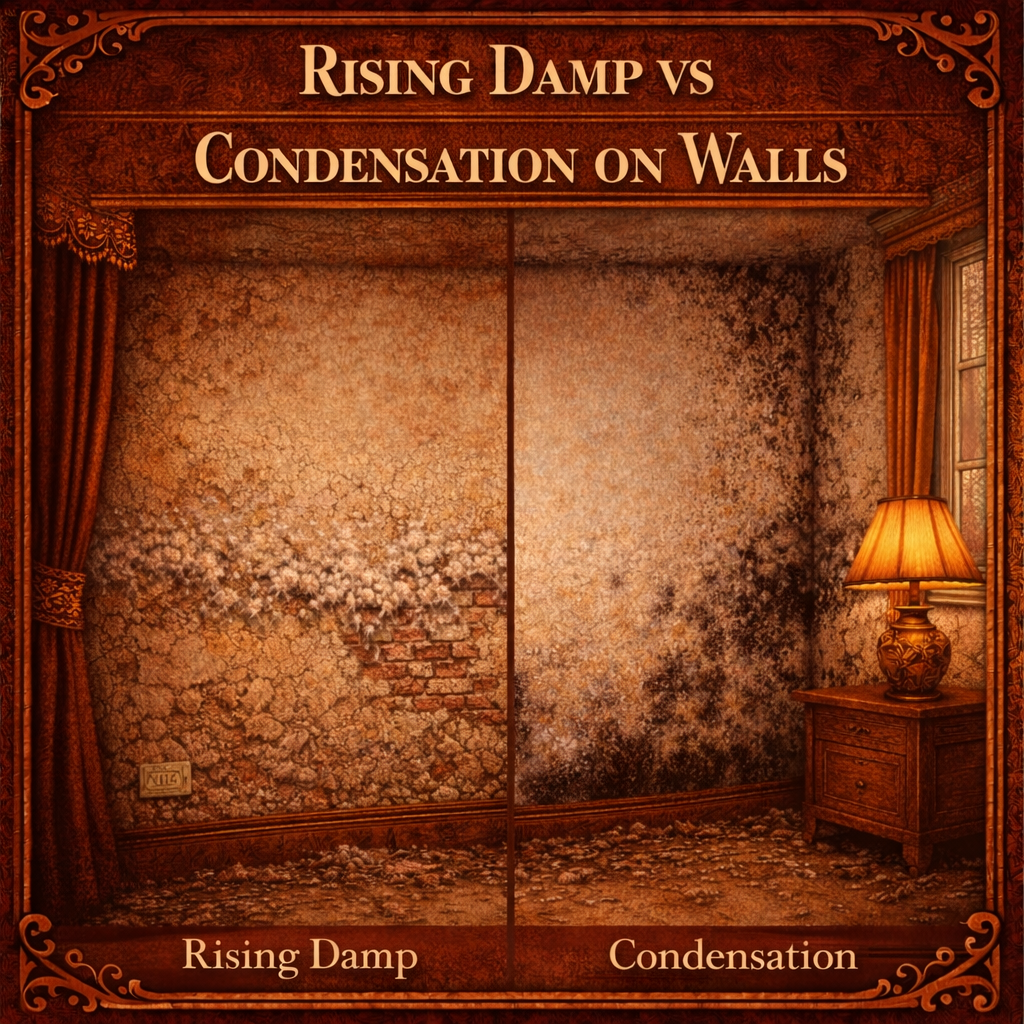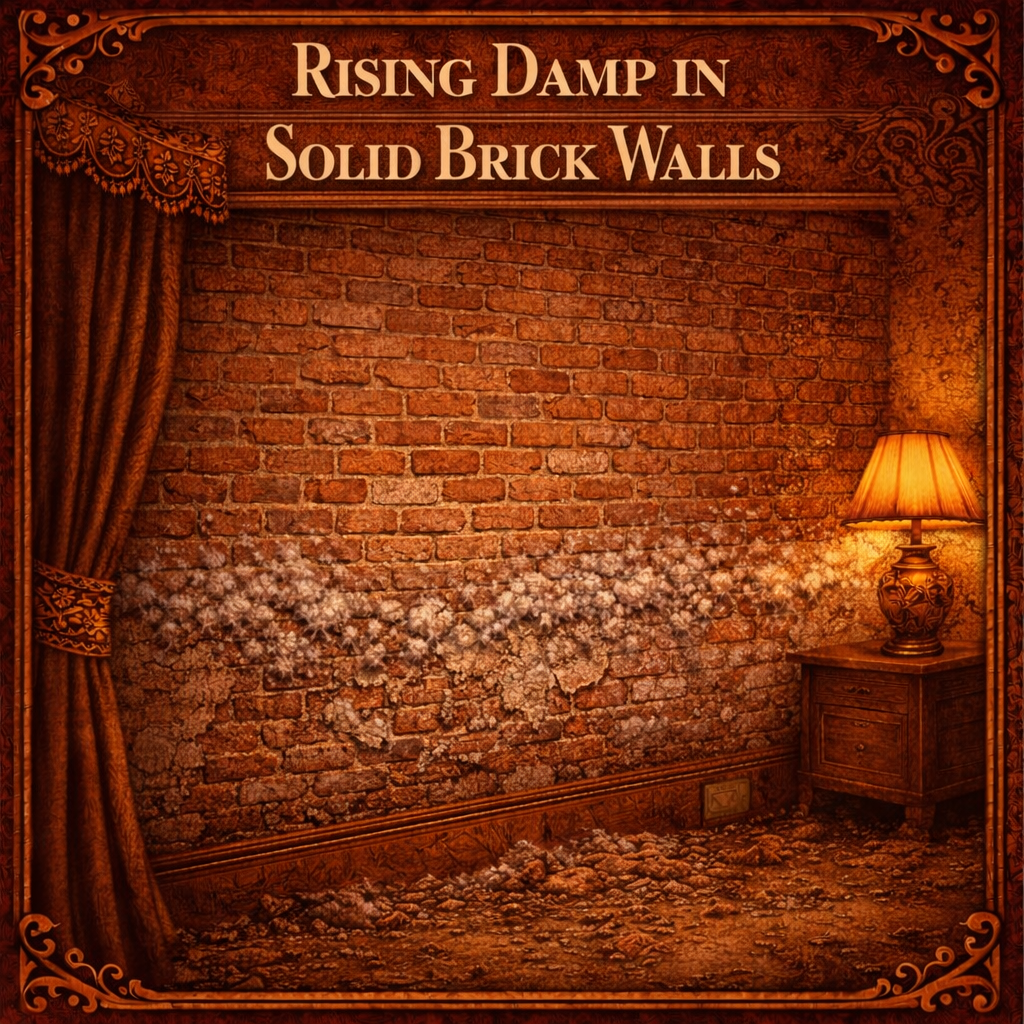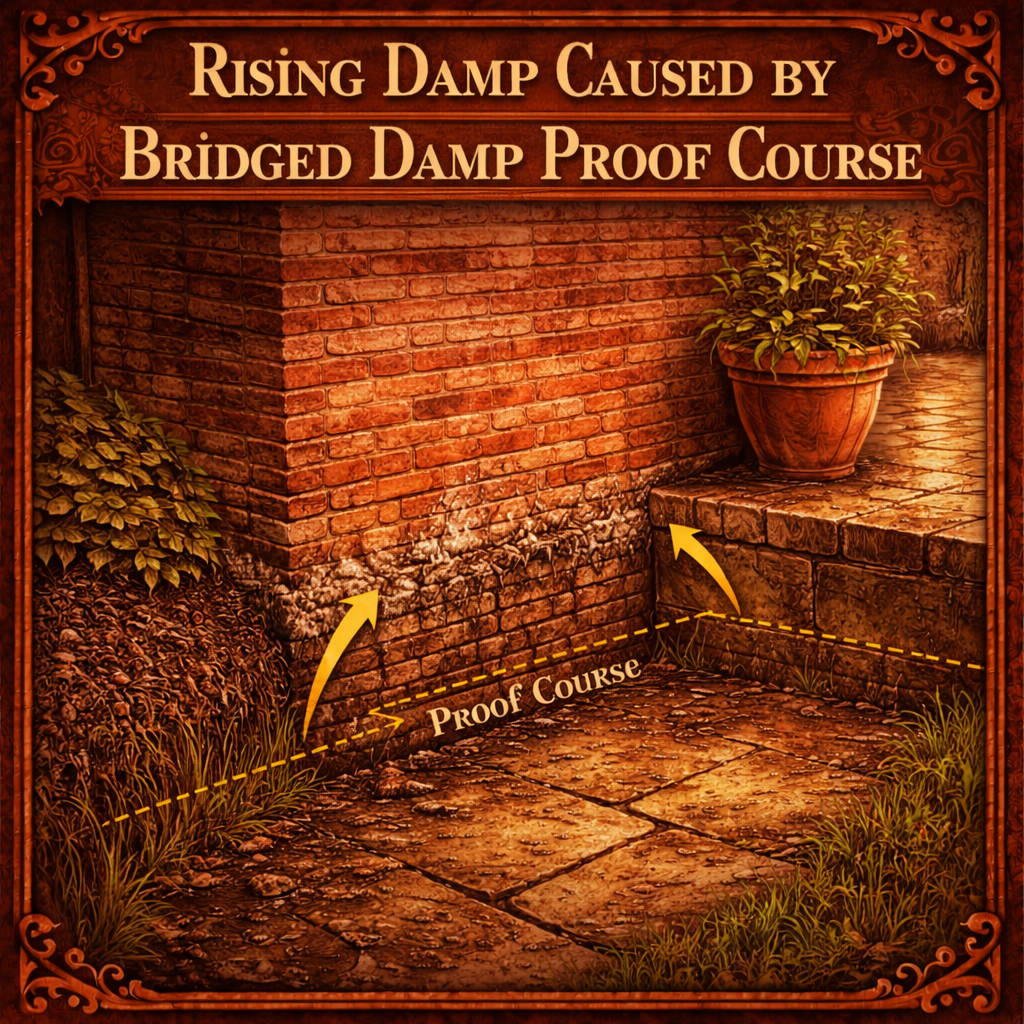
A bridged damp proof course (DPC) is one of the most common causes of rising damp, even in properties where a DPC is present and otherwise functional. Bridging occurs when materials or conditions allow moisture to bypass the DPC, effectively rendering it useless.
The purpose of a damp proof course is to act as a barrier that prevents moisture from rising up through the wall. However, if this barrier is physically bypassed, moisture can continue to travel upward, leading to damp problems inside the property.
One of the most frequent causes of bridging is high external ground levels. If soil, paving, or landscaping is built up above the level of the DPC, moisture can move across this higher level and enter the wall above the barrier.
Internally, bridging can occur when plaster or render extends below the DPC line. This creates a continuous path for moisture to travel upward, bypassing the protective layer. Similarly, debris within cavity walls can form a bridge between the inner and outer leaf, allowing moisture to transfer across.
Solid floors can also contribute to bridging. If a concrete floor is poured above the level of the DPC, or if there is no proper damp proof membrane, moisture can be forced into the base of the walls.
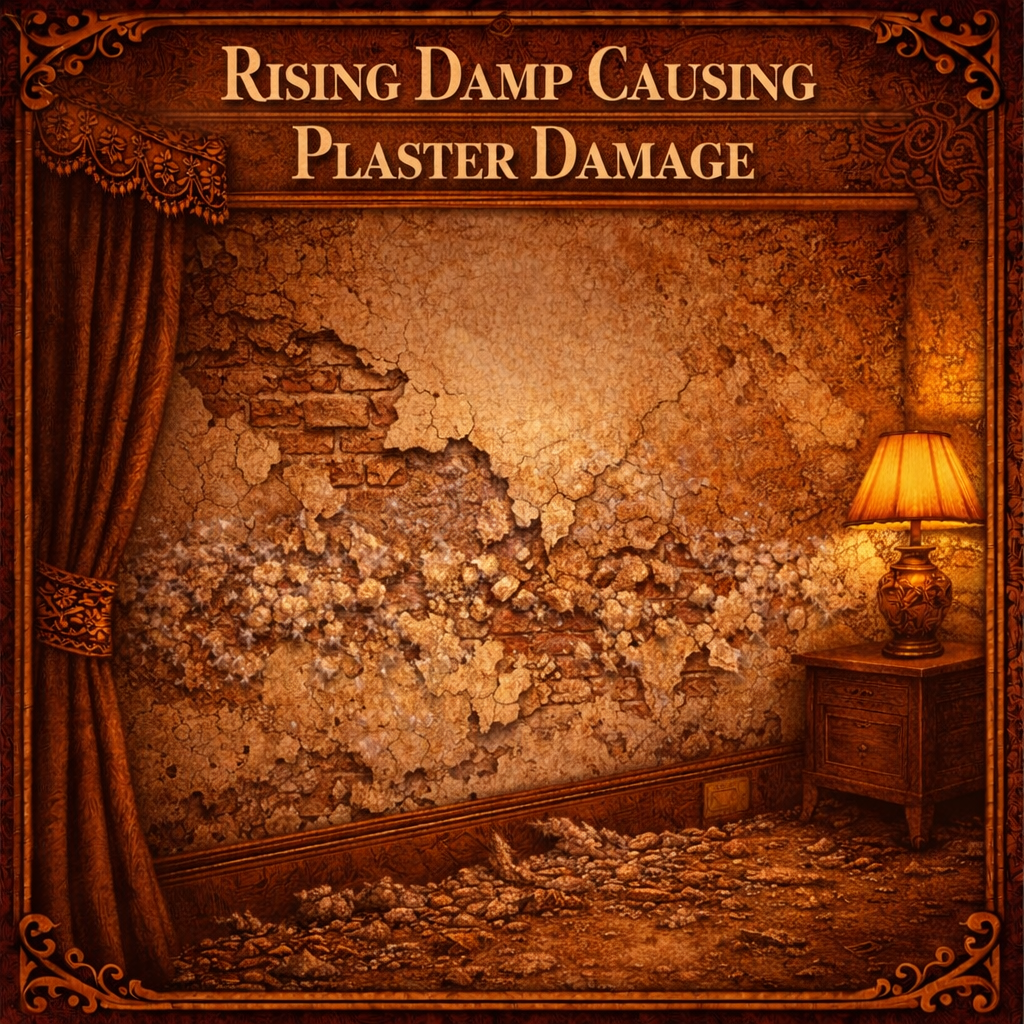
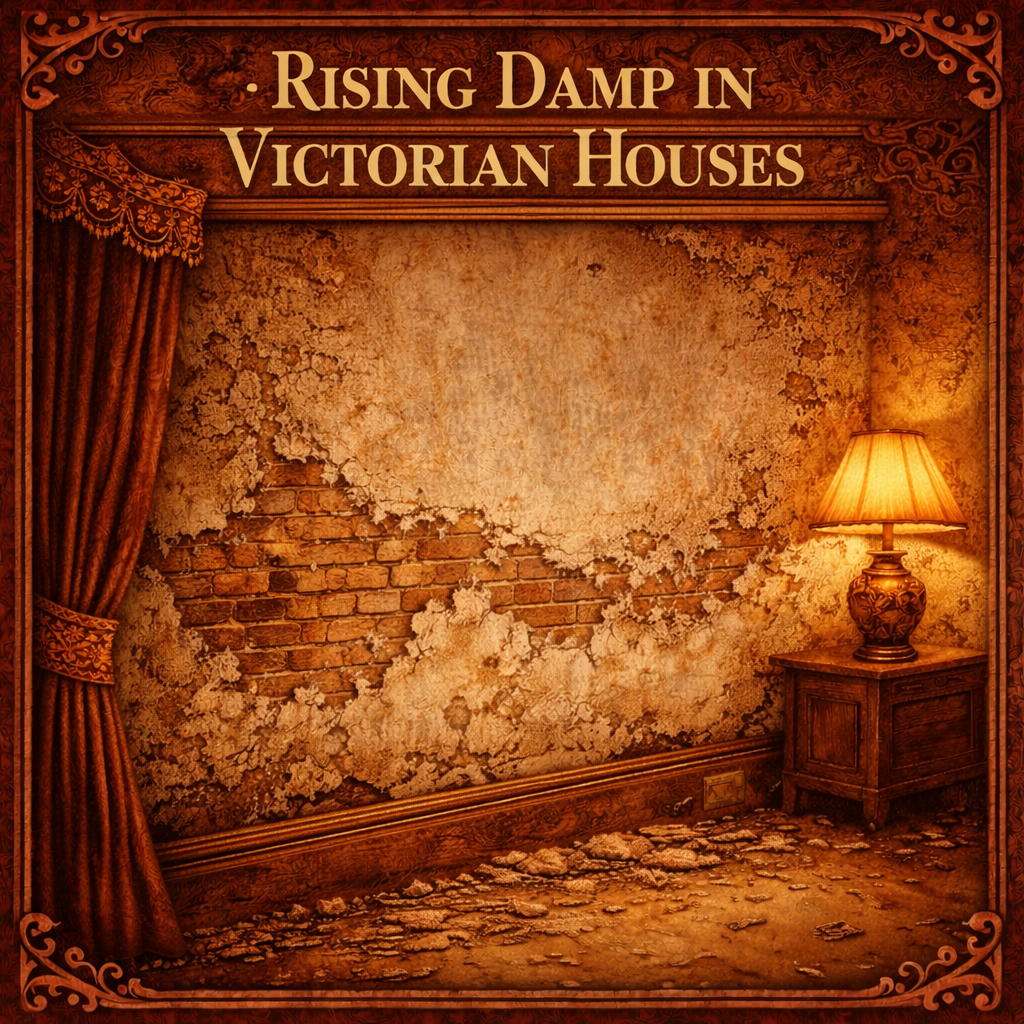
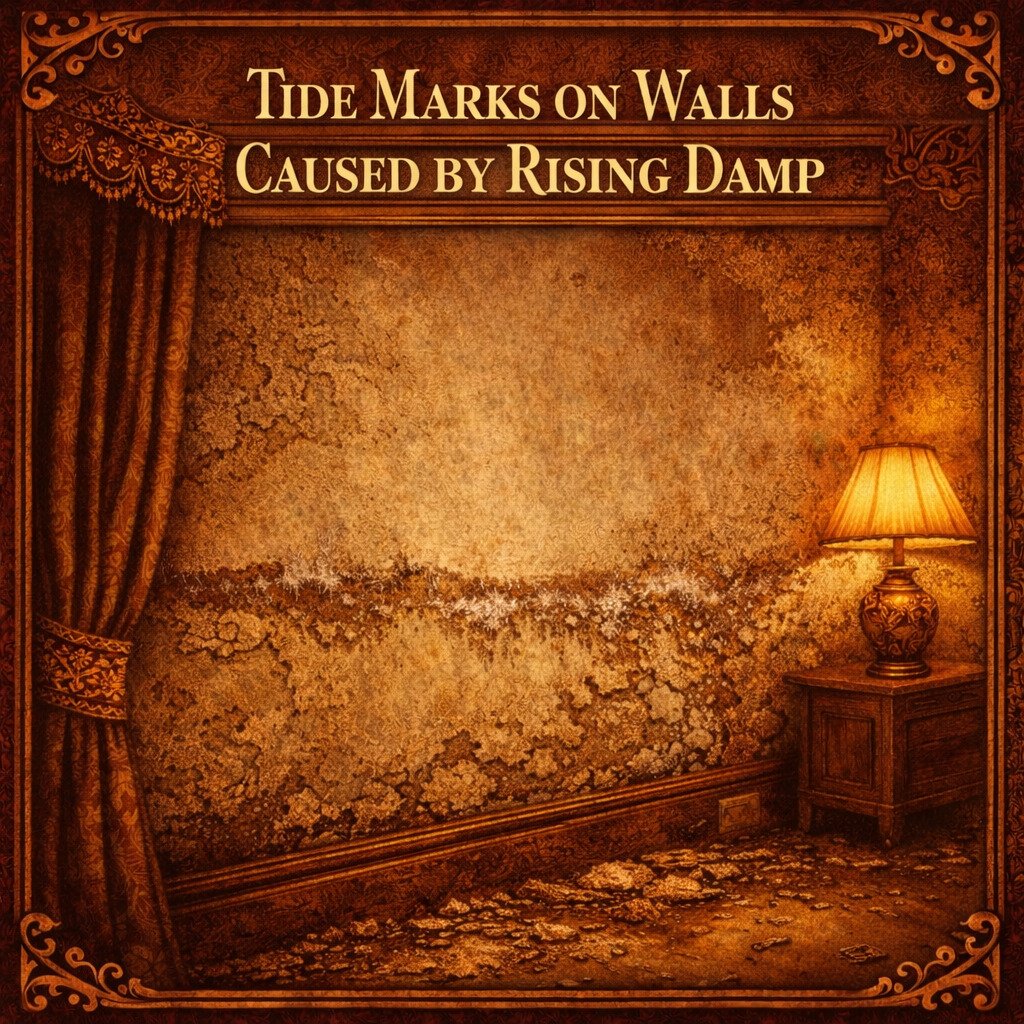
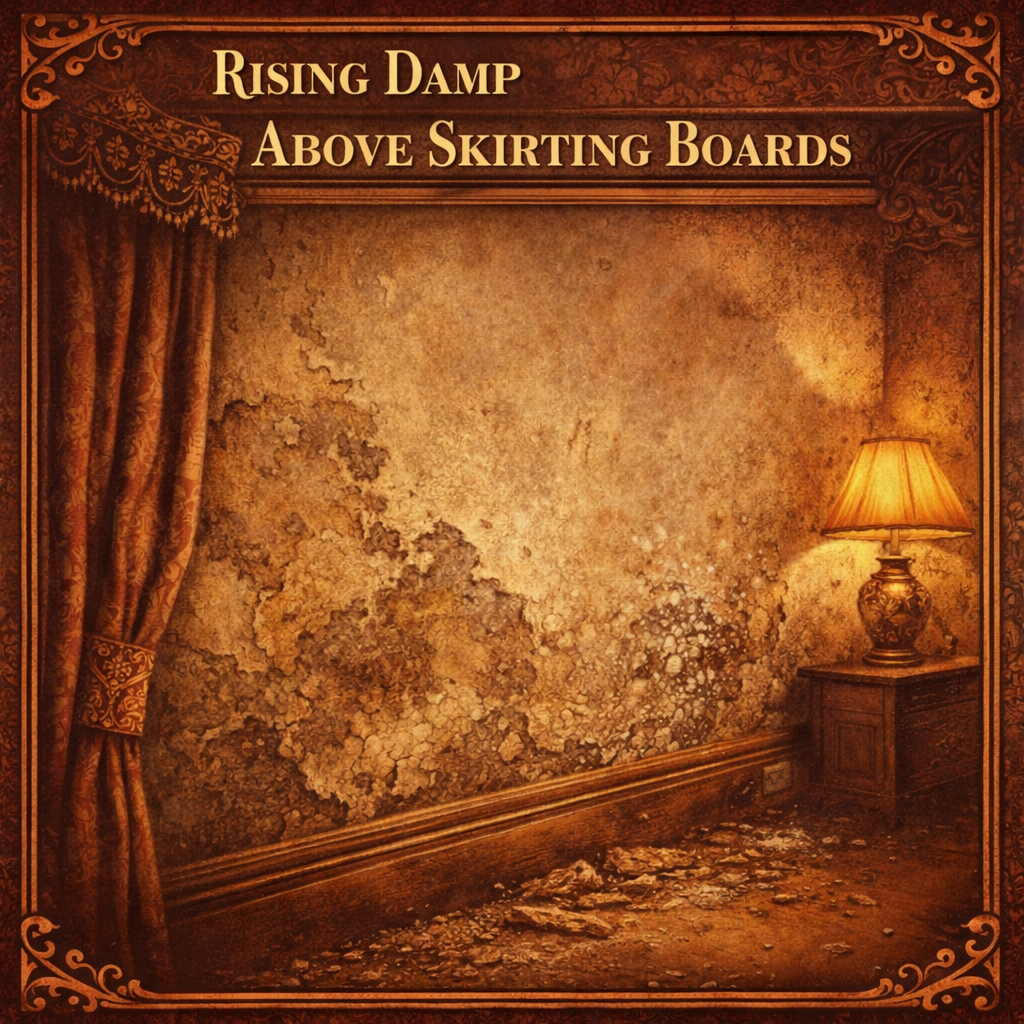
The symptoms of a bridged DPC are similar to those of typical rising damp. These include damp patches at low level, tide marks, salt deposits, and deteriorating plaster. However, the key difference is that the DPC itself may still be intact.
Correct diagnosis is crucial. Many properties are incorrectly treated with a new DPC when the real issue is bridging. In these cases, installing another DPC will not solve the problem.
The correct approach is to remove the source of the bridge. This may involve lowering external ground levels, removing contaminated plaster, or clearing debris from cavity walls. In some cases, adjustments to internal floor levels or finishes may also be required.
Once the bridging issue is resolved, the wall can begin to dry out naturally. Any damaged plaster should then be replaced with a suitable, salt-resistant system.
In summary, a bridged damp proof course can completely undermine the effectiveness of an otherwise sound damp proofing system. Identifying and removing the bridge is essential to resolving the issue and preventing further damage.