
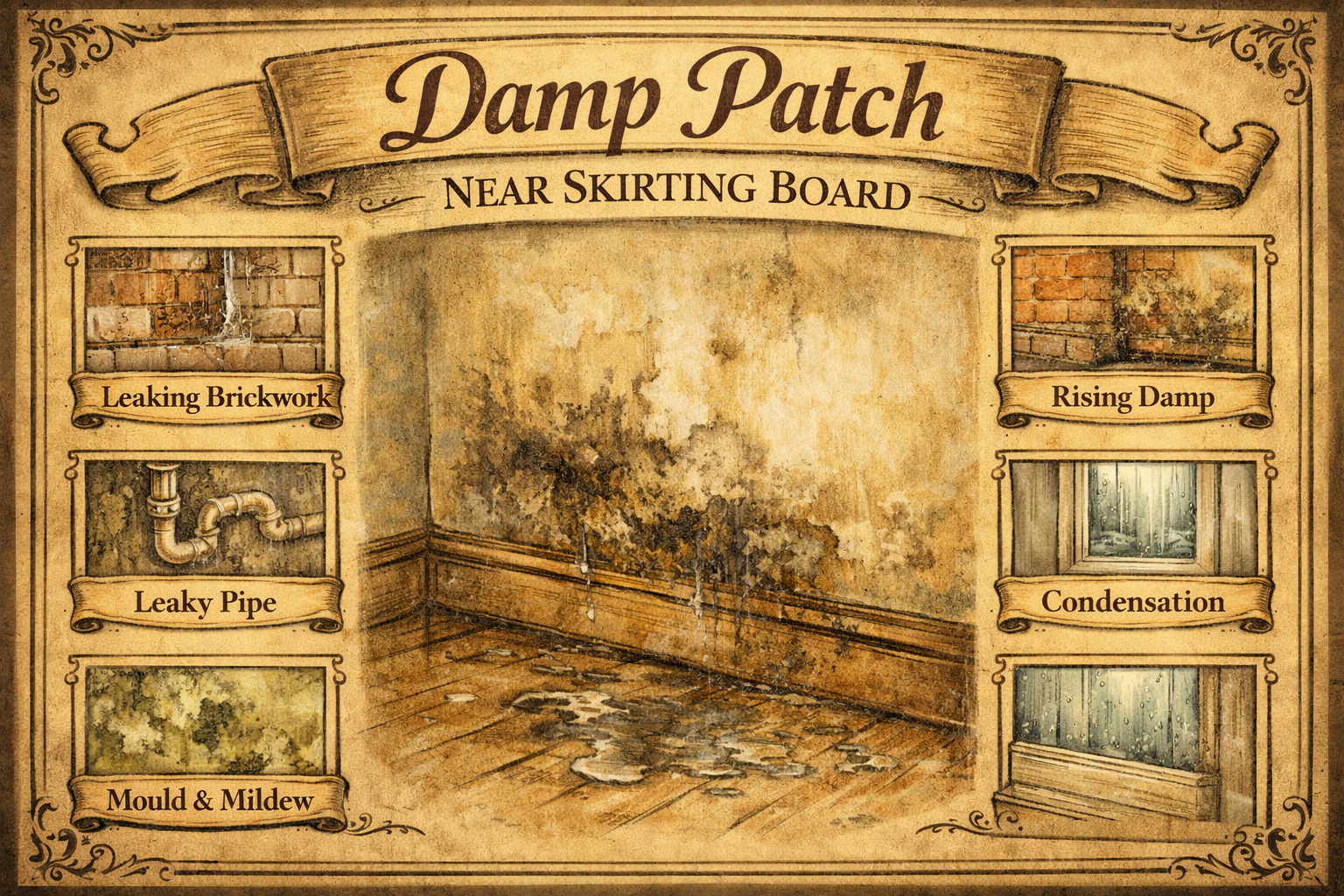
Damp patches near skirting boards are often immediately blamed on rising damp, but in reality, this is only one of several possible causes. Misdiagnosis is common, and unnecessary damp-proofing treatments are often installed when the real issue lies elsewhere.
Rising damp occurs when moisture from the ground travels upward through porous materials like brick and plaster. It typically affects the lower section of walls and is characterised by tide marks, peeling paint, and salt deposits. Skirting boards may become soft, warped, or rotten.
However, for rising damp to occur, the damp proof course (DPC) must be missing, damaged, or bridged. In many cases, the issue is actually bridging, where external ground levels are too high or internal plaster extends below the DPC, allowing moisture to bypass it.
Another very common cause is leaking pipework. Central heating pipes often run along the base of walls, and even a minor leak can create a damp patch in this area. Unlike rising damp, this type of moisture is usually more localised and may feel wetter.
Condensation can also play a role, particularly in corners or poorly ventilated rooms. In these cases, mould is more likely than salt deposits, and the damp may fluctuate with temperature and humidity levels.
Key signs to differentiate causes:
- Rising damp: tide marks, salts, damage up to ~1 metre high
- Leaks: localised damp, persistent moisture
- Condensation: mould, surface damp, worse in winter
Treatment must match the cause. If rising damp is confirmed, installing or repairing a DPC may be required. However, if bridging is the issue, lowering ground levels or removing plaster may solve the problem without chemical treatments.
Leaks should be repaired immediately, and affected materials may need to be replaced if damaged.
For condensation, improving ventilation and airflow is essential. This may include opening windows, installing vents, or repositioning furniture.
Preventing damp at skirting level involves a combination of good building maintenance and proper ventilation. Regular inspections can help catch issues early before they develop into more serious problems.
Leave a Reply