
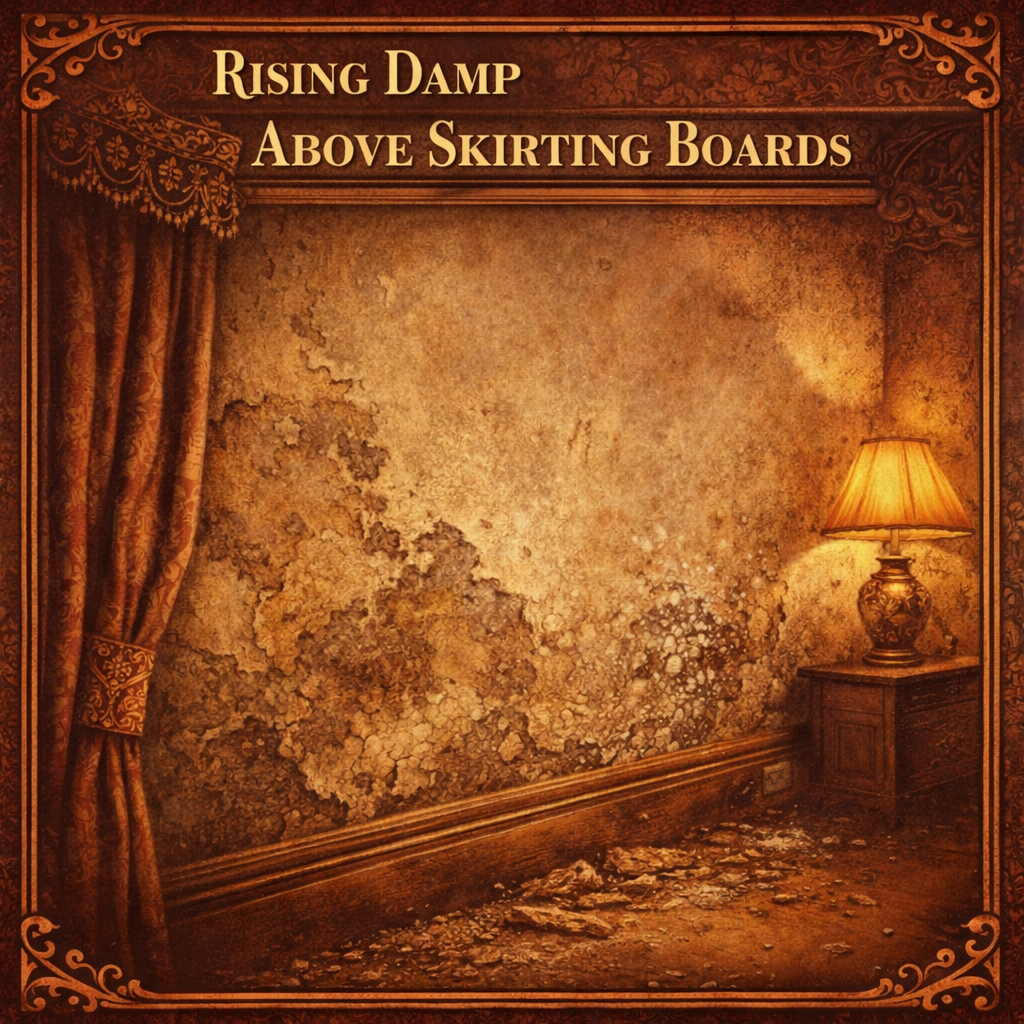
Rising damp above skirting boards is one of the most common early signs that moisture is travelling up through the walls of a building. This problem occurs when groundwater moves upward through porous materials such as brick, mortar, and plaster by a process known as capillary action. If this moisture is not stopped by a functioning damp proof course (DPC), it can begin to affect the lower sections of internal walls.
The first visible signs of rising damp are often seen just above the skirting boards. Homeowners may notice damp patches, discolouration of plaster, peeling paint, or wallpaper lifting from the wall surface. In some cases, the skirting boards themselves may become damp, swollen, or start to deteriorate.
Why Damp Appears Above Skirting Boards
The lower section of a wall is closest to the ground where moisture levels are highest. When the damp proof course becomes damaged, bridged, or ineffective, moisture can rise up through the masonry and begin to accumulate in the plaster above the skirting board level.
Salt deposits carried with the groundwater can also accumulate within the plaster. These salts can attract additional moisture from the air, making the damp area appear worse over time and causing further deterioration of wall finishes.
Common Signs of Rising Damp
Several symptoms may indicate that rising damp is affecting the area above skirting boards. These include:
- Damp patches or staining along the lower section of walls
- Peeling paint or bubbling wallpaper
- White powdery salt deposits on plaster surfaces
- Crumbling or damaged plaster near floor level
- Rotting or swollen timber skirting boards
These signs usually appear gradually and may worsen if the underlying cause is not addressed.
Rising damp above skirting boards is typically associated with problems affecting the damp proof course. In many older buildings, the damp proof course may have deteriorated over time or may not have been installed at all.
Other possible causes include:
- A damp proof course that has been bridged by raised external ground levels
- Internal plaster or flooring covering the damp proof course
- Damaged or deteriorated damp proof course materials
- Poor drainage around the building
Identifying the exact cause is important before any repair work is carried out.
How the Problem Is Investigated
A property surveyor or damp specialist will usually inspect the affected walls to determine whether rising damp is present. This may involve checking the height of damp patches, measuring moisture levels within the wall, and examining the condition of the damp proof course.
In some cases, other sources of moisture such as leaks, condensation, or penetrating damp must be ruled out before confirming rising damp.
Repair and Prevention
Treating rising damp above skirting boards normally involves addressing the failure of the damp proof course. This may include installing a new chemical damp proof course, removing contaminated plaster, and allowing the wall to dry before redecorating.
Improving drainage around the building and ensuring external ground levels remain below the damp proof course can also help prevent future moisture problems.
Early identification and repair of rising damp can help prevent further damage to internal finishes and protect the long-term condition of the property.
Leave a Reply