
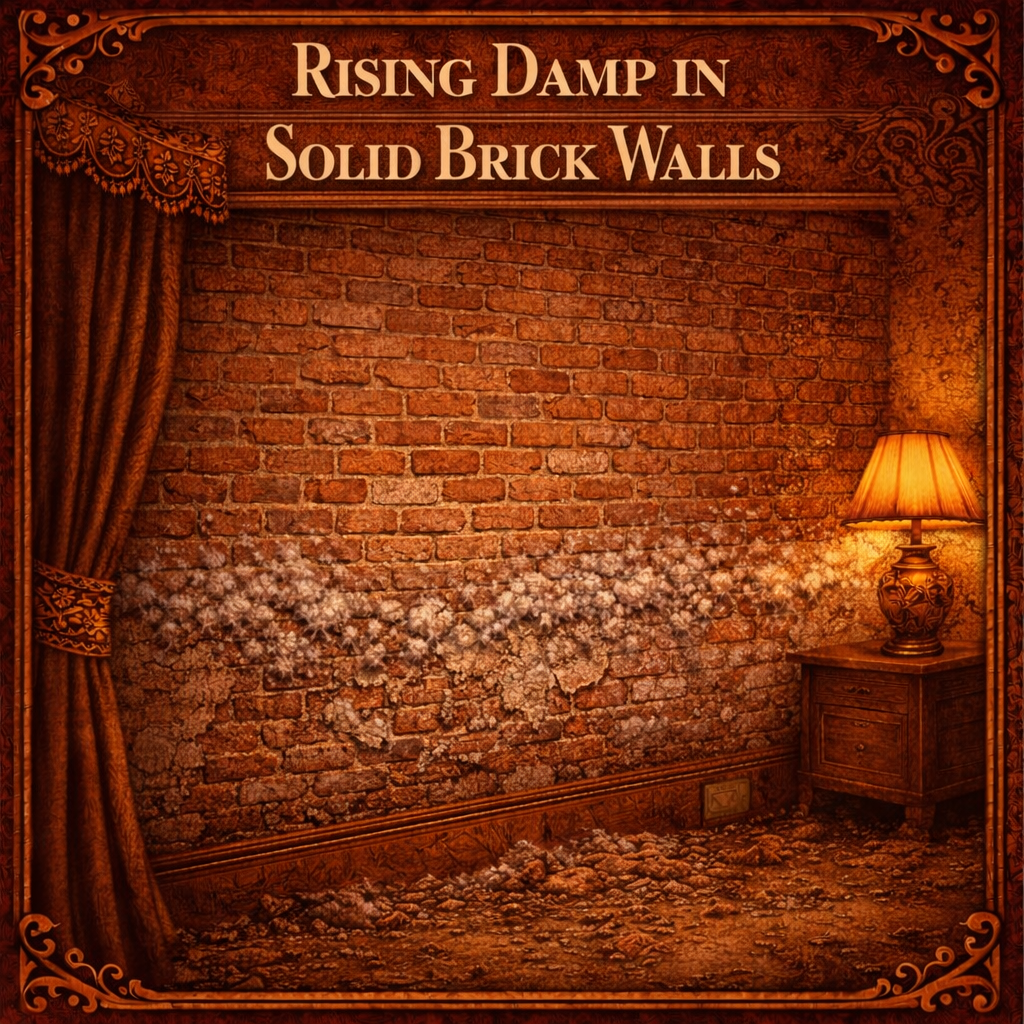
Rising damp is particularly common in solid brick walls, especially in older properties built before modern construction methods were introduced. Unlike cavity walls, solid walls have no internal barrier to moisture movement, making them more susceptible to damp issues.
In these types of walls, moisture from the ground can travel freely upward through the porous structure of the bricks and mortar. This process, known as capillary action, allows water to rise vertically, often carrying salts along with it.
Many older buildings either lack a damp proof course altogether or have one that has deteriorated over time. Even where a DPC is present, it can become ineffective if it is bridged by high external ground levels, internal plaster, or debris within the wall.
Typical signs of rising damp in solid brick walls include damp patches at low level, tide marks, salt deposits, and deteriorating plaster. Skirting boards may also show signs of moisture damage or rot.
Because solid walls retain more moisture than cavity walls, they can take significantly longer to dry out once damp issues are addressed. This is an important consideration when planning repairs.
Another challenge with solid walls is breathability. Traditional construction relied on materials like lime mortar and plaster, which allow moisture to evaporate naturally. Introducing modern, non-breathable materials can trap moisture within the wall, potentially worsening the problem.
For this reason, repairs should be carefully specified. Installing a damp proof course is often necessary to stop further moisture ingress. This can be achieved using chemical injection or physical methods, depending on the structure and condition of the wall.
Internally, it is important to use compatible materials. Breathable plaster systems or specialist renovating plasters are often recommended. Using gypsum-based products can lead to premature failure in damp-prone environments.
External factors should also be addressed, including ensuring that ground levels are below the DPC and that drainage around the property is effective.
In summary, solid brick walls are inherently more vulnerable to rising damp due to their construction. Successful treatment requires a balanced approach that controls moisture while allowing the wall to breathe, ensuring long-term performance and durability.
Leave a Reply