Category: Roof

  • Roof Leak Around Chimney: Causes, Signs and Fixes (UK Guide)

    Roof Leak Around Chimney: Causes, Signs and Fixes (UK Guide)

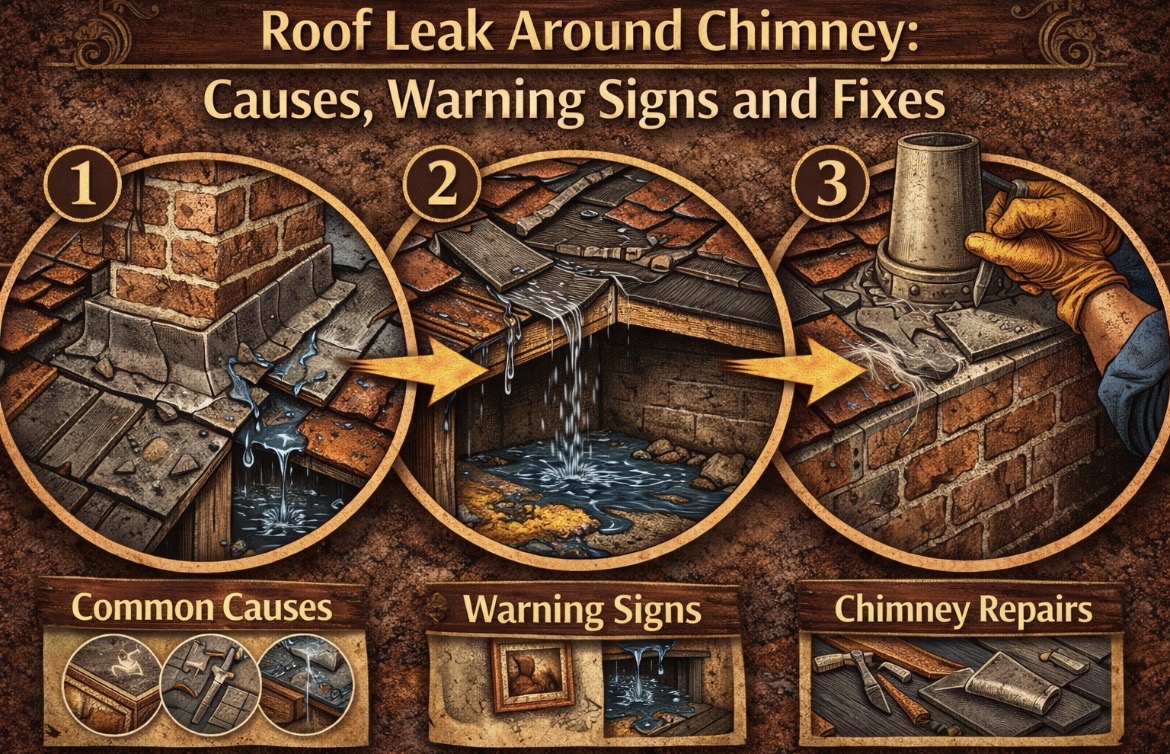
    A roof leak around a chimney is a common problem in many UK homes. Because a chimney passes directly through the roof structure, several materials must work together to keep the joint watertight. When flashing becomes damaged or mortar begins to deteriorate, rainwater can easily enter the roof space and eventually appear inside the property.

    Leaks around chimneys often show up as damp patches on ceilings, staining on chimney breasts, or water dripping during heavy rainfall. If left untreated, even a small leak can lead to timber decay, mould growth, and costly internal repairs.

    Understanding the causes of chimney roof leaks can help homeowners identify the issue early and arrange repairs before more serious damage occurs.

    Common Causes of Roof Leaks Around Chimneys

    Several issues can cause water to penetrate around a chimney. In many cases, the problem develops gradually as materials age or weather conditions damage parts of the roof structure.

    Damaged or Loose Flashing

    Flashing is the waterproof material installed where the chimney meets the roof. In many UK homes this flashing is made from lead, which is durable but can eventually become loose, cracked, or poorly sealed.

    If flashing lifts away from the chimney or roofing tiles, rainwater can enter the gap and travel into the roof structure below.

    Cracked Mortar or Brickwork

    Over time, the mortar joints in chimney brickwork can deteriorate due to weather exposure. Cracks in the mortar allow water to enter the chimney structure and work its way down into the loft or ceilings below.

    Freeze and thaw cycles during winter can make this problem worse by gradually widening existing cracks.

    Damaged Chimney Crown

    The chimney crown sits at the top of the chimney stack and helps prevent water entering from above. If the crown becomes cracked or damaged, rainwater can seep into the masonry and travel down through the chimney.

    This can sometimes appear as a roof leak even though the water is entering higher up the chimney structure.

    Missing or Damaged Roof Tiles

    Tiles or slates around the chimney are particularly vulnerable to damage due to the complex shape of the roof junction. If these tiles become cracked, slipped, or dislodged, rainwater can penetrate the roof covering and appear inside the property near the chimney area.

    Signs of a Chimney Roof Leak

    A chimney leak may not always be immediately obvious. In many cases, the first signs appear inside the property.

    Common warning signs include:

    If these signs appear, it is important to investigate the roof and chimney area as soon as possible.

    How Roof Leaks Around Chimneys Are Fixed

    The correct repair depends on the underlying cause of the leak. A roofing professional will usually inspect the chimney and surrounding roof area to identify where water is entering.

    Common repairs include:

    Replacing damaged flashing

    If flashing has deteriorated or lifted, new lead flashing may be installed to create a watertight seal between the chimney and roof.

    Repointing chimney brickwork

    If mortar joints are cracked or eroded, repointing can restore the structural integrity of the chimney and prevent water penetration.

    Replacing damaged tiles or slates

    Loose or broken tiles around the chimney may need replacing to restore the roof covering.

    Repairing or rebuilding the chimney crown

    If the crown at the top of the chimney is damaged, it may need sealing or rebuilding to stop water entering the masonry.

    Preventing Roof Leaks Around Chimneys

    Regular roof maintenance can help prevent leaks from developing around chimneys.

    Homeowners should:

    • Inspect flashing and chimney brickwork periodically
    • Replace damaged roof tiles promptly
    • Check mortar joints for cracks or deterioration
    • Arrange roof inspections after severe weather

    Addressing small problems early can prevent water damage and expensive structural repairs later.

    Conclusion

    Roof leaks around chimneys are usually caused by damaged flashing, deteriorating mortar, or broken roofing materials. Because chimneys create a vulnerable point where the roof structure is interrupted, this area requires proper sealing and regular inspection.

    If water stains or damp patches appear near the chimney inside a property, the roof and chimney stack should be checked as soon as possible. Prompt repairs can prevent further damage to ceilings, insulation, and roof timbers.

  • Missing or Slipped Roof Tiles: Causes, Warning Signs and Repairs

    Missing or Slipped Roof Tiles: Causes, Warning Signs and Repairs

    Missing or slipped roof tiles are a common roofing problem, particularly on older properties or after strong winds and storms. Roof tiles are designed to protect the structure beneath from rain, wind, and weather, so when a tile becomes loose or falls away it can expose vulnerable parts of the roof.

    Even a single missing tile can allow water to penetrate the roof structure, potentially leading to damp patches, ceiling damage, or roof leaks if the issue is not repaired.

    In many cases the problem can be repaired quickly if identified early.

    What Causes Roof Tiles to Slip or Go Missing?

    There are several reasons why roof tiles may move out of place or fall from the roof.

    Strong Winds and Storms

    High winds can lift roof tiles or loosen the fixings that hold them in place. Storm damage is one of the most common causes of missing roof tiles.

    Ageing Fixings

    On older roofs, tiles may be secured using nails or clips that deteriorate over time. Corrosion or weakening of these fixings can allow tiles to slip.

    Frost Damage

    When water enters small cracks in roof tiles it can freeze and expand during cold weather. This can weaken tiles and cause them to break or slip from position.

    Poor Installation

    If roof tiles were not installed correctly, they may become loose over time. Incorrect spacing, inadequate fixings, or poor workmanship can all contribute to tile movement.

    Signs of Missing or Slipped Roof Tiles

    Homeowners may notice several warning signs when roof tiles have slipped or fallen.

    Common signs include:

    Sometimes the issue may only be visible when looking closely at the roof from ground level or when inspecting the loft space.

    Why Missing Roof Tiles Should Be Repaired Quickly

    A roof is designed as a layered system that works together to keep water out. When a tile is missing, the underlying roof felt and battens become exposed to the weather.

    Over time this can lead to:

    Prompt repairs can prevent these problems and help maintain the condition of the roof.

    How Roof Tile Problems Are Repaired

    Repairing missing or slipped roof tiles is often a relatively straightforward job for a professional roofer.

    Typical repairs may involve:

    1. Replacing missing tiles with matching materials
    2. Re-securing slipped tiles using new fixings
    3. Inspecting surrounding tiles for damage
    4. Checking roof battens and underfelt for signs of water damage

    If the issue has affected multiple tiles, a larger section of the roof may need attention.

    Preventing Future Roof Tile Problems

    Regular roof inspections can help identify problems before they lead to leaks or structural damage.

    Homeowners can reduce the risk of tile problems by:

    • Checking the roof after storms or high winds
    • Arranging occasional professional roof inspections
    • Addressing small repairs before they worsen

    Maintaining the roof covering is an important part of protecting the overall structure of a property.

  • Roof Leak Around Vent Pipe: Causes, Signs and Fixes

    Roof Leak Around Vent Pipe: Causes, Signs and Fixes

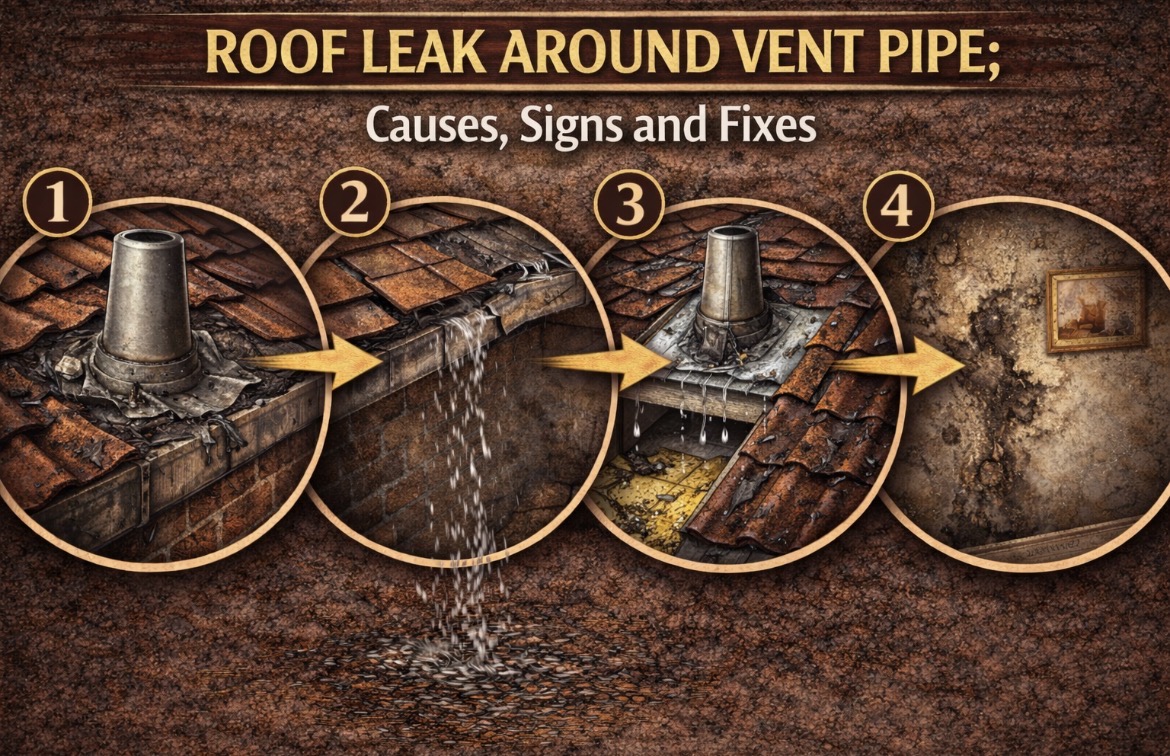
    A roof vent pipe allows air to escape from plumbing systems and is an essential part of most homes. However, the area around a vent pipe can sometimes develop leaks, especially if the waterproof seal around the pipe becomes damaged or worn.

    If you notice water stains on the ceiling near a vent pipe location or dampness in the loft, the leak may be coming from the roof penetration around the pipe.

    Understanding the common causes can help identify the issue early and prevent further damage to the roof structure.

    Signs of a Roof Leak Around a Vent Pipe

    Leaks around vent pipes are not always immediately obvious. In many cases, the water enters slowly and appears inside the property some distance from the pipe.

    Common warning signs include:

    Leaks may become more noticeable during prolonged rainfall or after storms.

    Common Causes of Vent Pipe Roof Leaks

    1. Damaged or cracked pipe flashing

    Flashing is the waterproof seal installed around the base of the vent pipe where it passes through the roof.

    Many vent pipes use a rubber or lead flashing boot to prevent water from entering the roof.

    Over time this flashing can crack, split, or deteriorate due to weather exposure and UV damage.

    This is one of the most common causes of leaks around vent pipes.

    2. Loose or damaged roof tiles

    Roof tiles surrounding the pipe may become loose or cracked due to age, wind, or storm damage.

    If tiles shift out of position, rainwater can enter beneath the roofing materials and travel along the roof structure before appearing inside the home.

    3. Poor installation

    If the vent pipe flashing was not installed correctly when the roof was built or repaired, gaps may exist around the pipe base.

    Water can enter these gaps and slowly penetrate the roof structure.

    Poor installation is often revealed during heavy rainfall.

    4. Sealant failure

    Roofing sealants used around flashing and roof penetrations can deteriorate over time.

    When sealant cracks or separates from the flashing, small gaps may allow rainwater to enter.

    5. Blocked or damaged vent pipe

    Although less common, a damaged vent pipe or blockage can sometimes cause moisture problems around the roof penetration.

    This may allow water to collect around the base of the pipe and eventually enter the roof.

    How Serious Is a Vent Pipe Leak?

    Even small leaks should be taken seriously.

    Water entering through a roof penetration can damage:

    If left untreated, the moisture can also lead to mould growth and timber decay.

    Early repair usually prevents more costly damage later.

    Temporary Fixes for a Vent Pipe Leak

    Some temporary measures may help reduce water entry until a permanent repair is carried out.

    Possible short-term solutions include:

    • Applying roofing sealant around small flashing gaps
    • Clearing debris around the pipe area
    • Checking surrounding tiles for visible damage

    These solutions should only be considered temporary until proper repairs are made.

    When to Call a Roofing Professional

    If water continues to enter the roof during rainfall or signs of damp appear in the loft, it may be necessary to have the roof inspected.

    A roofing professional can determine whether the flashing, roof tiles, or vent pipe itself requires repair or replacement.

    Early inspection can prevent further structural damage to the roof.

    Preventing Vent Pipe Roof Leaks

    Regular roof inspections can help reduce the risk of leaks around vent pipes.

    Preventative maintenance may include:

    • Inspecting roof penetrations after storms
    • Checking flashing around pipes and chimneys
    • Replacing cracked or damaged tiles
    • Ensuring roof sealants remain intact

    Maintaining these areas helps keep the roof watertight.

    Final Thoughts

    A roof leak around a vent pipe is usually caused by damaged flashing, worn sealant, or nearby roof tile problems.

    Although these leaks often start small, they can lead to more serious roof damage if left unresolved.

    Identifying the cause early can help prevent costly repairs and protect the roof structure from long-term moisture damage.

  • Roof Leak Around Skylight: Causes, Signs and Fixes

    Roof Leak Around Skylight: Causes, Signs and Fixes

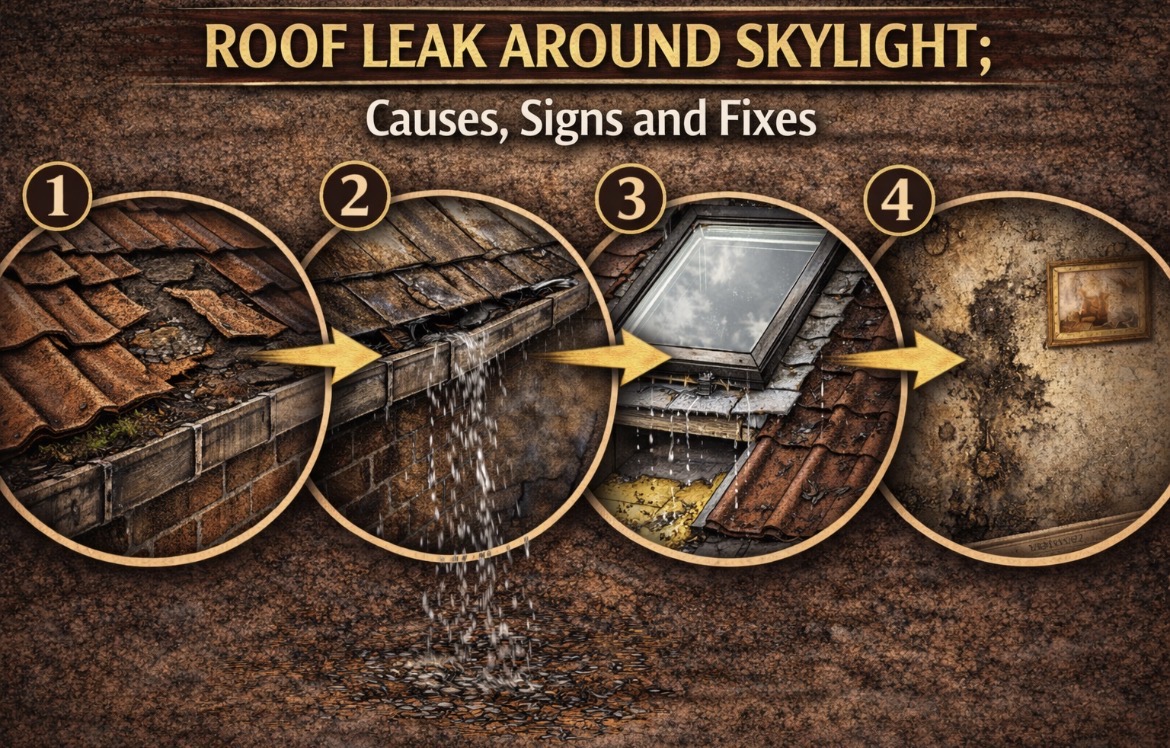
    A skylight can bring natural light into a home, but it can also become a common source of roof leaks. If you notice water stains around a skylight or dripping during rain, it usually means something has failed in the roof sealing system around the window.

    Understanding the cause of a skylight leak can help determine whether it is a minor repair or a more serious roofing issue.

    Signs of a Skylight Leak

    A leaking skylight does not always mean the skylight itself is damaged. Often the problem is with the surrounding roof materials or flashing.

    Common signs include:

    • Water stains on the ceiling near the skylight
    • Damp plasterboard or bubbling paint
    • Dripping water during heavy rain
    • Condensation or moisture around the skylight frame
    • Mould forming around the skylight opening

    Leaks may appear during heavy rainfall or after prolonged wet weather.

    Common Causes of Skylight Roof Leaks

    1. Failed flashing around the skylight

    Flashing is the metal waterproof barrier installed around a skylight to stop rain entering the roof.

    If flashing becomes loose, corroded, or poorly installed, water can penetrate around the skylight frame.

    This is one of the most common causes of skylight leaks.

    2. Damaged roof tiles or shingles

    Tiles surrounding a skylight can crack or slip over time.

    Even a small gap can allow rainwater to travel underneath the roofing materials and appear as a leak inside the property.

    Storm damage often causes this problem.

    3. Blocked drainage channels

    Some skylights are designed with small drainage channels to direct water away.

    If debris such as moss or leaves block these channels, water may pool and eventually enter the roof structure.

    4. Poor skylight installation

    If the skylight was installed incorrectly, the waterproof seals may not be properly integrated into the roof.

    This can allow water to enter during heavy rain or strong winds.

    Older installations are particularly prone to this issue.

    5. Condensation mistaken for a leak

    In some cases, moisture around a skylight is actually caused by condensation rather than rain penetration.

    Warm indoor air can condense on the colder glass surface, especially during winter months.

    This may create damp patches around the skylight opening.

    How Serious Is a Skylight Leak?

    A skylight leak should not be ignored.

    Even small amounts of water entering the roof structure can cause:

    • Damp insulation
    • Timber rot
    • Mould growth
    • Ceiling damage

    If the problem continues for a long period, repairs can become more expensive.

    Temporary Fixes for a Skylight Leak

    Temporary measures may help reduce water entry until a proper repair can be carried out.

    Possible temporary solutions include:

    • Clearing debris around the skylight
    • Applying roofing sealant to small gaps
    • Covering the skylight area externally with a waterproof tarp during severe weather

    These measures are only short-term and should not replace proper roof repairs.

    When to Call a Roofing Professional

    If the leak continues after rain or the ceiling shows signs of damage, it is usually best to have the roof inspected.

    A roofing professional can determine whether the issue involves flashing failure, damaged tiles, or a skylight defect.

    Early repairs can prevent further structural damage.

    Preventing Skylight Leaks

    Regular roof maintenance can reduce the risk of leaks around skylights.

    Good preventative steps include:

    • Inspecting the roof after storms
    • Clearing moss and debris from the roof surface
    • Checking flashing around skylights and chimneys
    • Repairing damaged tiles promptly

    Maintaining the roof helps keep skylights watertight and functioning properly.

    Final Thoughts

    A roof leak around a skylight is often caused by flashing problems, damaged roof tiles, or poor installation rather than the skylight itself.

    Identifying the source of the leak early can prevent further damage to the ceiling, insulation, and roof structure.

    If water is entering the property regularly, a professional roof inspection may be necessary to resolve the issue.

  • Blocked Gutters Causing Damp Walls

    Blocked Gutters Causing Damp Walls

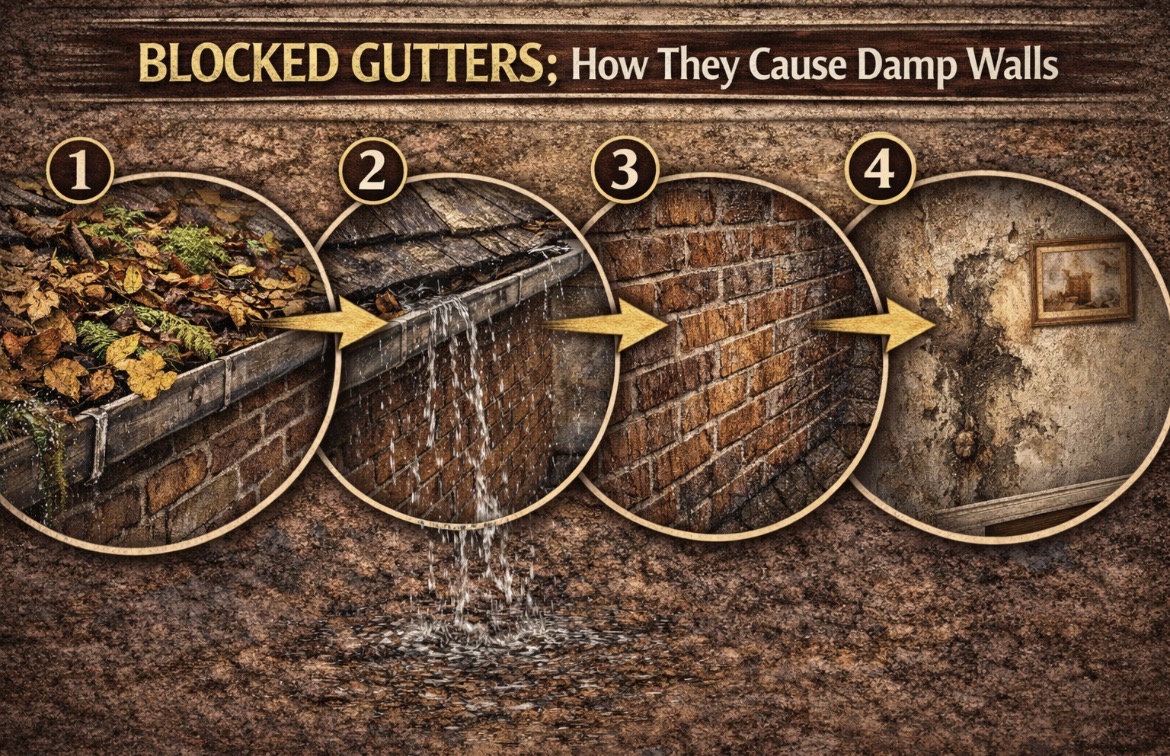
    Blocked gutters are one of the most common causes of external damp problems in residential properties.

    When gutters become filled with leaves, moss, or debris, rainwater cannot drain properly. Instead, it overflows down the outside walls of the property.

    Over time, this repeated saturation can lead to penetrating damp and internal moisture problems.

    How Gutters Become Blocked

    Gutters can become blocked for several reasons:

    Leaves and Debris

    Properties near trees are particularly vulnerable to gutter blockages.

    Falling leaves collect in gutters and stop water flowing to the downpipe.

    Moss from Roof Tiles

    Moss growing on roof tiles often washes into the gutters during heavy rain.

    This gradually builds up and creates a dense blockage.

    Poor Gutter Maintenance

    Many homeowners simply forget to check their gutters.

    Without occasional cleaning, debris builds up until water begins overflowing.

    Signs Your Gutters Are Blocked

    Blocked gutters often cause visible problems around the property.

    Look for signs such as:

    Inside the property you may notice:

    Why Blocked Gutters Cause Damp

    When water repeatedly runs down the outside wall instead of draining away, it can soak into the masonry.

    Over time this moisture travels through the wall and appears inside the property as penetrating damp.

    If left untreated it may also lead to:

    How to Prevent Gutter Problems

    Regular maintenance is the best way to prevent gutter-related damp.

    Homeowners should:

    • Check gutters at least twice per year
    • Remove leaves and moss build-up
    • Ensure downpipes are clear
    • Inspect gutters after storms

    When to Call a Professional

    A roofing contractor or gutter specialist should be contacted if:

    • Gutters are leaking or damaged
    • Water continues overflowing after cleaning
    • Downpipes appear blocked internally

    Prompt maintenance prevents small issues turning into costly structural repairs.

  • Roof Leak When It Rains: What’s Causing It?

    Roof Leak When It Rains: What’s Causing It?

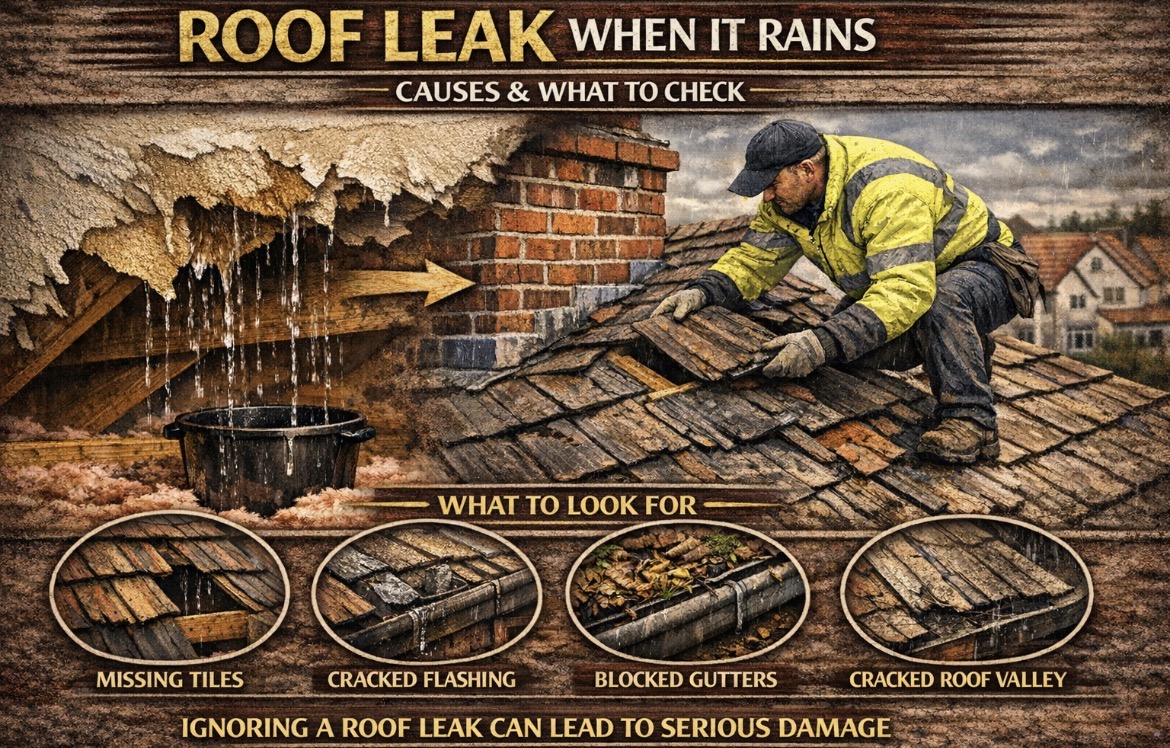
    A roof that leaks during rainfall is usually a sign that water is penetrating the external roof covering or flashing. Even small defects can allow water to travel along rafters and appear somewhere completely different inside the property.

    Roof leaks should be investigated quickly, as ongoing water penetration can lead to timber decay, mould growth, and internal plaster damage.

    Common Causes of Roof Leaks

    Missing or Broken Roof Tiles

    Tiles can crack, slip, or break during storms or strong winds. When this happens, rainwater can enter the roof structure.

    Signs include:

    • Damp patches on ceilings
    • Water dripping in loft spaces
    • Visible gaps in roof tiles

    Damaged Lead Flashing

    Flashing seals joints where roofs meet chimneys, walls, or dormers.

    If flashing becomes loose or cracked, rainwater can enter around these vulnerable junctions.

    Blocked Gutters

    Overflowing gutters can force water back under the roof edge.

    This often causes:

    • Damp walls
    • Rotting fascia boards
    • Water entering loft spaces

    Cracked Roof Valleys

    Roof valleys carry a large volume of rainwater.

    If the lining becomes damaged or deteriorates, water can penetrate the roof beneath the tiles.

    Signs of a Roof Leak Inside the House

    Typical indicators include:

    These symptoms are often confused with penetrating damp or condensation, so identifying the source is important.

    What to Check Safely

    From ground level you can look for:

    • Missing tiles
    • Sagging guttering
    • Moss blocking valleys
    • Debris in gutters

    Avoid climbing onto the roof unless trained and equipped.

    When to Call a Professional

    A roofing contractor should be contacted if:

    • Water is actively entering the property
    • Structural timbers appear wet or rotten
    • Ceiling plaster is bulging or sagging

    Early repair usually prevents much more expensive structural damage.

    2. Missing Roof Tiles: A Small Problem That Causes Big Damage

    Permalink

    /missing-roof-tiles/

    Meta description

    Missing roof tiles can quickly lead to roof leaks and damp problems. Learn the warning signs and how to prevent serious roof damage.

    Why Missing Roof Tiles Matter

    A single missing roof tile can allow rainwater to enter the roof structure.

    Once water gets beneath the tile covering it can travel along roof timbers before appearing inside the house.

    This often results in ceiling stains, damp insulation, and timber decay.

    Why Roof Tiles Go Missing

    Common reasons include:

    Storm Damage

    Strong winds can lift tiles from the roof, particularly on exposed properties.

    Old Fixings

    Older roofs often rely on nails or mortar that deteriorates over time.

    Frost Damage

    Water trapped in tiles can freeze and cause cracking.

    Signs a Tile Is Missing

    You may notice:

    • A visible gap on the roof
    • Debris or broken tiles on the ground
    • Water staining on ceilings
    • Damp loft insulation

    Sometimes the problem is only visible from the loft, where daylight can be seen through the roof covering.

    How Quickly Should It Be Fixed?

    Missing tiles should be repaired as soon as possible.

    Even a small gap can allow significant rainwater entry during heavy weather.

    Prompt repair usually prevents:

    • Internal damp problems
    • Structural timber damage
    • Expensive ceiling repairs

    Preventing Roof Problems

    Regular visual checks from ground level can help identify early defects.

    Look for:

    • Slipped tiles
    • Moss build-up
    • Damaged flashing
    • Blocked gutters

    Early maintenance can significantly extend the life of a roof.

  • Roof Leak: Causes, Signs & How to Fix It (UK Guide)

    Roof Leak: Causes, Signs & How to Fix It (UK Guide)

    A roof leak is one of the most common property problems in UK homes. Even a small leak can allow water to enter the building structure, causing ceiling stains, damp patches and mould growth if left untreated.

    Roof leaks often appear during or shortly after heavy rain, but the underlying cause may have been developing for some time.

    Understanding the signs of a roof leak and identifying the cause early can prevent more serious structural damage and costly repairs.

    Common Signs of a Roof Leak

    Roof leaks don’t always show obvious dripping water. In many cases the signs are subtle at first.

    Look for:

    A roof leak may also lead to problems such as penetrating damp, where rainwater travels through external walls or roof structures.

    Most Common Causes of Roof Leaks

    Several issues can allow water to enter through a roof.

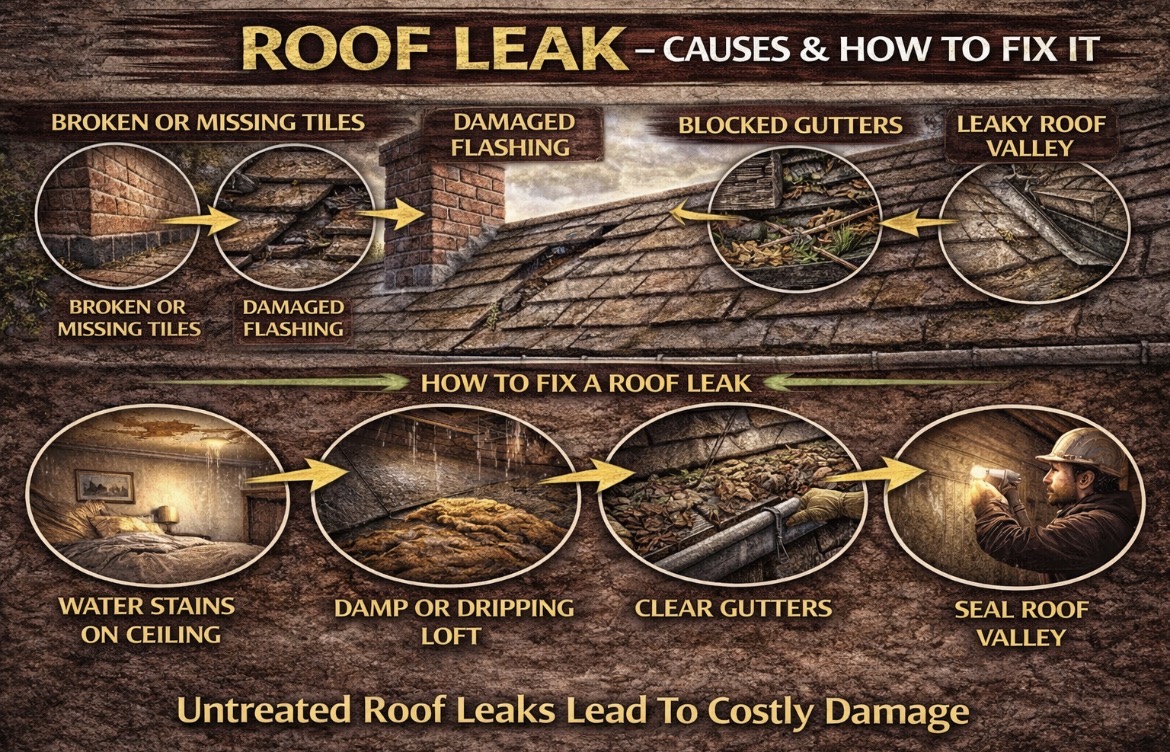
    1. Broken or Missing Roof Tiles

    Strong winds and ageing materials can cause roof tiles or slates to crack, slip or fall out of place.

    Even a small gap in the roof covering can allow rainwater to enter beneath the tiles and reach the roof structure.

    2. Damaged Flashing

    Flashing is the metal material used to seal joints around roof features such as chimneys, skylights and roof valleys.

    If flashing becomes loose, corroded or poorly installed, water can easily penetrate the roof structure.

    3. Blocked Gutters

    Blocked gutters can cause rainwater to overflow and run down external walls or beneath the roof edge.

    Over time this can lead to water entering the roof structure and causing damp problems internally.

    4. Roof Leaks Around Chimneys

    Chimneys are particularly vulnerable to leaks because they interrupt the roof covering.

    Water can enter through:

    • damaged flashing
    • cracked mortar joints
    • porous brickwork
    • missing chimney cowls

    These issues often lead to damp around chimney breasts inside the property.

    5. Roof Valleys and Junctions

    Roof valleys are where two roof slopes meet.

    Because large volumes of water flow through these areas during rainfall, any damage to the valley lining or tiles can quickly cause a leak.

    How to Diagnose a Roof Leak

    Finding the exact source of a roof leak can sometimes be difficult because water can travel along rafters or roof membranes before appearing inside.

    To help identify the cause, ask:

    • Does the leak appear only during heavy rain?
    • Is the water stain directly below the roof area above?
    • Is the loft insulation wet?
    • Are there damaged tiles visible from outside?

    Checking the loft during rainfall can sometimes reveal where water is entering.

    However, many roof leaks require a roof-level inspection to locate the source accurately.

    How to Fix a Roof Leak

    The correct repair depends on the cause of the leak.

    Broken or Missing Tiles

    Damaged tiles should be replaced and surrounding tiles checked to ensure they are secure.

    Faulty Flashing

    Loose or damaged flashing should be repaired or replaced to restore a waterproof seal.

    Blocked Gutters

    Clear debris such as leaves and moss from gutters and downpipes to restore proper drainage.

    Chimney Repairs

    Chimney leaks may require repointing brickwork, replacing flashing or installing a chimney cowl.

    Temporary Fix for a Roof Leak

    If a roof leak appears during heavy rain, temporary measures may help reduce further damage until repairs can be carried out.

    Possible temporary actions include:

    • placing containers under dripping water
    • moving furniture away from affected areas
    • protecting ceilings with plastic sheeting

    However, temporary solutions should not replace proper repairs.

    Can a Roof Leak Cause Serious Damage?

    Yes. If left untreated, a roof leak can lead to:

    Early repairs are usually far less expensive than fixing long-term damage caused by water ingress.

    When to Call a Professional

    If the source of the leak cannot be identified safely or the roof damage appears significant, a professional roofer or building surveyor should inspect the roof.

    They can assess the condition of the roof covering, flashing, gutters and chimney structures to determine the cause of the leak.

    Final Thoughts

    Roof leaks are a common problem in UK homes, particularly during periods of heavy rainfall and strong winds.

    Identifying the signs early and repairing the cause quickly can prevent water damage spreading through the property.

    Regular roof inspections and gutter maintenance can help reduce the risk of leaks developing in the future.