
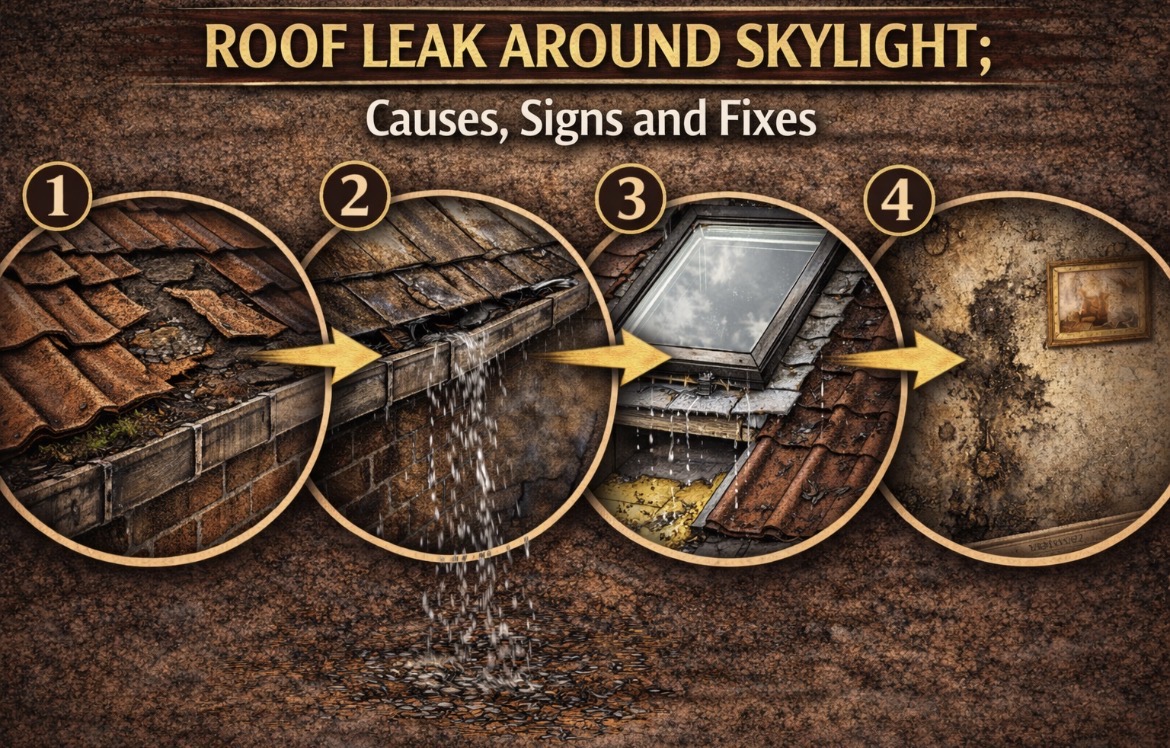
A skylight can bring natural light into a home, but it can also become a common source of roof leaks. If you notice water stains around a skylight or dripping during rain, it usually means something has failed in the roof sealing system around the window.
Understanding the cause of a skylight leak can help determine whether it is a minor repair or a more serious roofing issue.
Signs of a Skylight Leak
A leaking skylight does not always mean the skylight itself is damaged. Often the problem is with the surrounding roof materials or flashing.
Common signs include:
- Water stains on the ceiling near the skylight
- Damp plasterboard or bubbling paint
- Dripping water during heavy rain
- Condensation or moisture around the skylight frame
- Mould forming around the skylight opening
Leaks may appear during heavy rainfall or after prolonged wet weather.
Common Causes of Skylight Roof Leaks
1. Failed flashing around the skylight
Flashing is the metal waterproof barrier installed around a skylight to stop rain entering the roof.
If flashing becomes loose, corroded, or poorly installed, water can penetrate around the skylight frame.
This is one of the most common causes of skylight leaks.
2. Damaged roof tiles or shingles
Tiles surrounding a skylight can crack or slip over time.
Even a small gap can allow rainwater to travel underneath the roofing materials and appear as a leak inside the property.
Storm damage often causes this problem.
3. Blocked drainage channels
Some skylights are designed with small drainage channels to direct water away.
If debris such as moss or leaves block these channels, water may pool and eventually enter the roof structure.
4. Poor skylight installation
If the skylight was installed incorrectly, the waterproof seals may not be properly integrated into the roof.
This can allow water to enter during heavy rain or strong winds.
Older installations are particularly prone to this issue.
5. Condensation mistaken for a leak
In some cases, moisture around a skylight is actually caused by condensation rather than rain penetration.
Warm indoor air can condense on the colder glass surface, especially during winter months.
This may create damp patches around the skylight opening.
How Serious Is a Skylight Leak?
A skylight leak should not be ignored.
Even small amounts of water entering the roof structure can cause:
- Damp insulation
- Timber rot
- Mould growth
- Ceiling damage
If the problem continues for a long period, repairs can become more expensive.
Temporary Fixes for a Skylight Leak
Temporary measures may help reduce water entry until a proper repair can be carried out.
Possible temporary solutions include:
- Clearing debris around the skylight
- Applying roofing sealant to small gaps
- Covering the skylight area externally with a waterproof tarp during severe weather
These measures are only short-term and should not replace proper roof repairs.
When to Call a Roofing Professional
If the leak continues after rain or the ceiling shows signs of damage, it is usually best to have the roof inspected.
A roofing professional can determine whether the issue involves flashing failure, damaged tiles, or a skylight defect.
Early repairs can prevent further structural damage.
Preventing Skylight Leaks
Regular roof maintenance can reduce the risk of leaks around skylights.
Good preventative steps include:
- Inspecting the roof after storms
- Clearing moss and debris from the roof surface
- Checking flashing around skylights and chimneys
- Repairing damaged tiles promptly
Maintaining the roof helps keep skylights watertight and functioning properly.
Final Thoughts
A roof leak around a skylight is often caused by flashing problems, damaged roof tiles, or poor installation rather than the skylight itself.
Identifying the source of the leak early can prevent further damage to the ceiling, insulation, and roof structure.
If water is entering the property regularly, a professional roof inspection may be necessary to resolve the issue.
Leave a Reply