
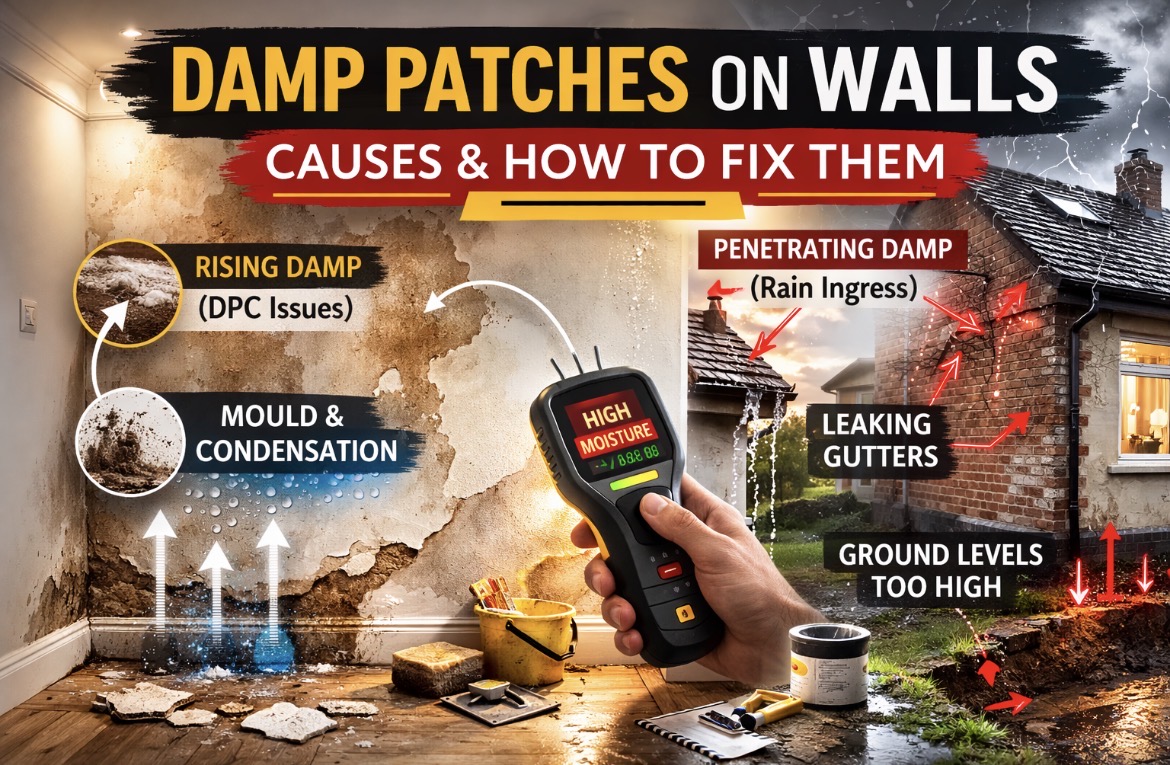
Damp patches on internal walls are one of the most common concerns for homeowners. Whether it appears as a dark stain, peeling paint, or bubbling plaster, visible damp is a sign that moisture is entering or forming within the building fabric.
The key is identifying the source before attempting repairs.
What Do Damp Patches Look Like?
Damp patches may appear as:
- Dark or discoloured areas on walls
- Peeling paint or wallpaper
- Blistering plaster
- Musty smells
- Black mould forming around the edges
The location of the patch often helps identify the cause.
Common Causes of Damp Patches
1. Condensation
If the patch appears on cold surfaces, near windows, or in corners of rooms, condensation is the likely cause. This is especially common in bedrooms and bathrooms.
(Internal link this to your condensation post.)
If the patch worsens after rainfall and appears on external walls, moisture may be entering from outside through cracked brickwork, damaged pointing, or faulty gutters.
(Internal link to penetrating damp post.)
3. Rising Damp
If the patch starts at skirting level and rises upward in a “tide mark” pattern, rising damp could be responsible — although this is often misdiagnosed.
(Internal link to DPC post.)
4. Plumbing Leaks
Leaks from radiators, pipework, or bathrooms can cause isolated damp patches that remain damp regardless of weather.
How to Diagnose the Cause
Before spending money on damp proofing treatments:
- Check external gutters and downpipes
- Inspect roof tiles and flashing
- Look for bridging of the damp proof course
- Monitor whether the patch worsens after rain
- Check for condensation patterns
Moisture meters alone cannot confirm rising damp.
How to Fix Damp Patches
The solution depends entirely on the cause:
- Improve ventilation for condensation
- Repair gutters or pointing for penetrating damp
- Lower external ground levels if DPC is bridged
- Repair leaking plumbing
Treating symptoms without fixing the source will result in the damp returning.
Final Thoughts
Damp patches are a symptom — not the problem itself.
Correct diagnosis is essential before committing to costly treatments. In many cases, simple external maintenance or improved ventilation can resolve the issue without invasive damp proofing work.
Leave a Reply