
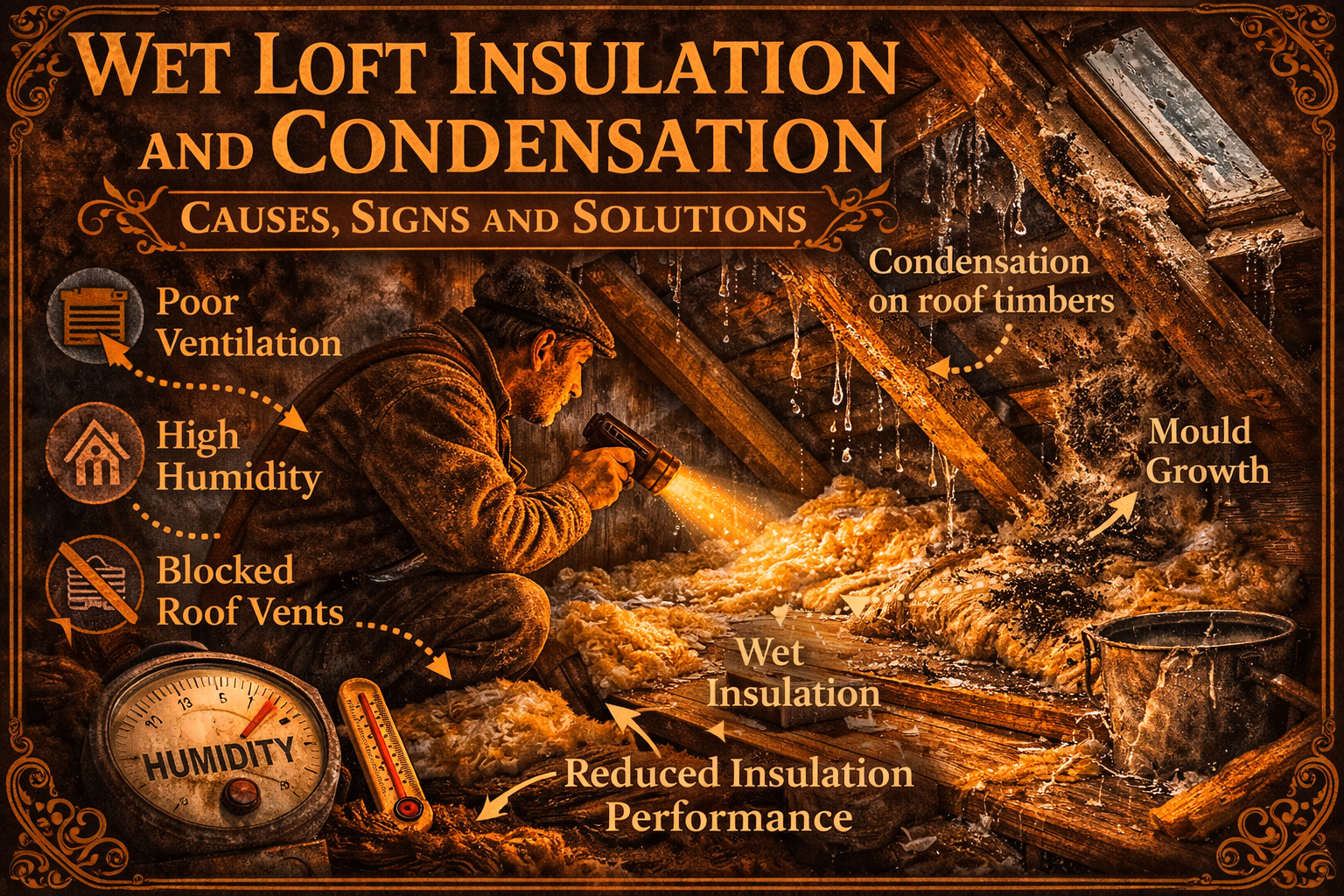
Loft insulation should normally remain dry and effective at reducing heat loss. If insulation becomes wet or damp, it often indicates a condensation problem within the roof space.
Moisture trapped in the loft can soak into insulation materials and reduce their ability to retain heat.
Over time, wet insulation may also contribute to mould growth and timber damage.
Why Loft Insulation Becomes Wet
There are several reasons why loft insulation may become damp.
Common causes include:
- poor loft ventilation
- high humidity in the home
- blocked roof vents
- warm moist air entering the loft
- inadequate vapour barriers in ceilings
When warm air from the home rises into the loft and meets colder surfaces, condensation can form.
Warning Signs of Wet Loft Insulation
Homeowners may notice several signs that insulation has become damp.
These include:
- insulation feeling heavy or damp
- condensation on roof timbers
- water droplets on roofing felt
- mould growth in the loft
- musty smells in the roof space
Wet insulation also loses much of its thermal performance.
Problems Caused by Damp Insulation
If insulation remains wet for long periods, it can lead to further issues.
Potential problems include:
- reduced insulation performance
- mould growth
- timber decay in roof structures
- persistent condensation in the loft
Addressing moisture problems early can help prevent structural damage.
Preventing Moisture in Loft Insulation
Preventing condensation in a loft space usually involves improving ventilation and controlling moisture.
Effective measures include:
- ensuring roof vents remain clear
- installing proper loft ventilation
- sealing gaps where warm air enters the loft
- controlling humidity levels inside the home
These steps help keep loft insulation dry and functioning properly.
Leave a Reply