
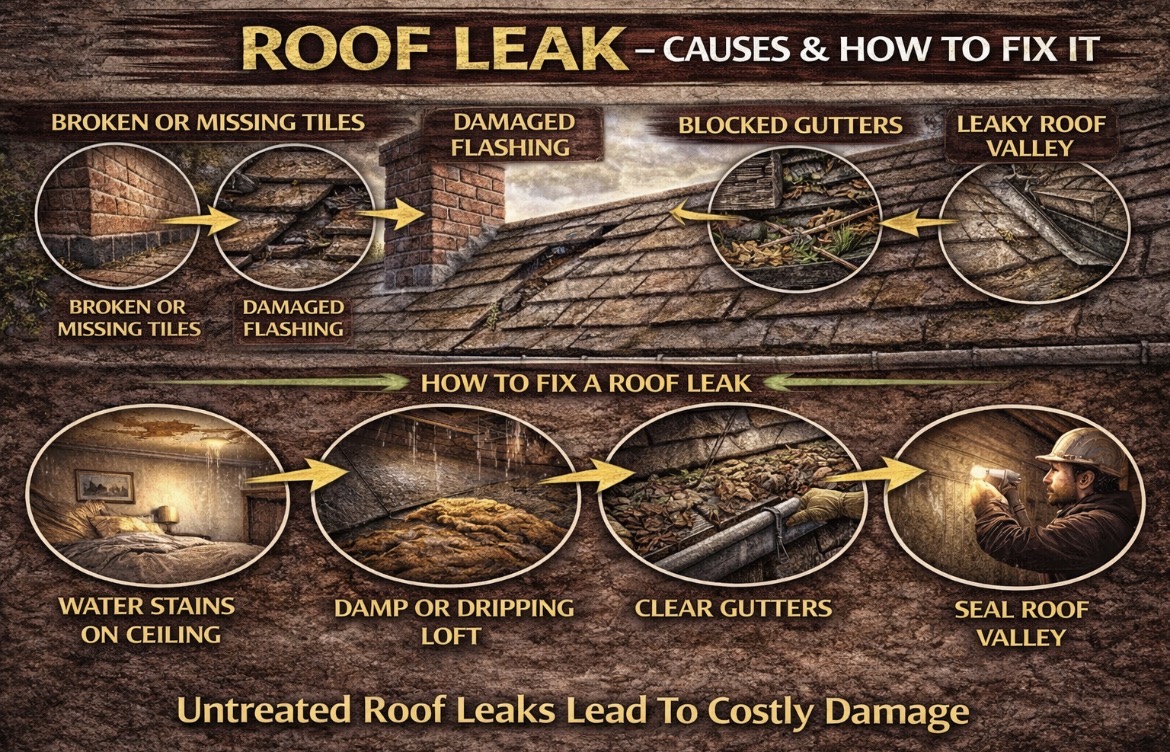
A roof leak is one of the most common property problems in UK homes. Even a small leak can allow water to enter the building structure, causing ceiling stains, damp patches and mould growth if left untreated.
Roof leaks often appear during or shortly after heavy rain, but the underlying cause may have been developing for some time.
Understanding the signs of a roof leak and identifying the cause early can prevent more serious structural damage and costly repairs.
Common Signs of a Roof Leak
Roof leaks don’t always show obvious dripping water. In many cases the signs are subtle at first.
Look for:
- Water stains on ceilings
- Damp patches on internal walls
- Peeling paint or bubbling plaster
- Musty smells in loft spaces
- Dripping water in the attic during rain
- Wet insulation in the loft
A roof leak may also lead to problems such as penetrating damp, where rainwater travels through external walls or roof structures.
Most Common Causes of Roof Leaks
Several issues can allow water to enter through a roof.
1. Broken or Missing Roof Tiles
Strong winds and ageing materials can cause roof tiles or slates to crack, slip or fall out of place.
Even a small gap in the roof covering can allow rainwater to enter beneath the tiles and reach the roof structure.
2. Damaged Flashing
Flashing is the metal material used to seal joints around roof features such as chimneys, skylights and roof valleys.
If flashing becomes loose, corroded or poorly installed, water can easily penetrate the roof structure.
Blocked gutters can cause rainwater to overflow and run down external walls or beneath the roof edge.
Over time this can lead to water entering the roof structure and causing damp problems internally.
4. Roof Leaks Around Chimneys
Chimneys are particularly vulnerable to leaks because they interrupt the roof covering.
Water can enter through:
- damaged flashing
- cracked mortar joints
- porous brickwork
- missing chimney cowls
These issues often lead to damp around chimney breasts inside the property.
5. Roof Valleys and Junctions
Roof valleys are where two roof slopes meet.
Because large volumes of water flow through these areas during rainfall, any damage to the valley lining or tiles can quickly cause a leak.
How to Diagnose a Roof Leak
Finding the exact source of a roof leak can sometimes be difficult because water can travel along rafters or roof membranes before appearing inside.
To help identify the cause, ask:
- Does the leak appear only during heavy rain?
- Is the water stain directly below the roof area above?
- Is the loft insulation wet?
- Are there damaged tiles visible from outside?
Checking the loft during rainfall can sometimes reveal where water is entering.
However, many roof leaks require a roof-level inspection to locate the source accurately.
How to Fix a Roof Leak
The correct repair depends on the cause of the leak.
Broken or Missing Tiles
Damaged tiles should be replaced and surrounding tiles checked to ensure they are secure.
Faulty Flashing
Loose or damaged flashing should be repaired or replaced to restore a waterproof seal.
Blocked Gutters
Clear debris such as leaves and moss from gutters and downpipes to restore proper drainage.
Chimney Repairs
Chimney leaks may require repointing brickwork, replacing flashing or installing a chimney cowl.
Temporary Fix for a Roof Leak
If a roof leak appears during heavy rain, temporary measures may help reduce further damage until repairs can be carried out.
Possible temporary actions include:
- placing containers under dripping water
- moving furniture away from affected areas
- protecting ceilings with plastic sheeting
However, temporary solutions should not replace proper repairs.
Can a Roof Leak Cause Serious Damage?
Yes. If left untreated, a roof leak can lead to:
- structural timber rot
- ceiling collapse
- mould growth
- damp patches on walls
- insulation damage
Early repairs are usually far less expensive than fixing long-term damage caused by water ingress.
When to Call a Professional
If the source of the leak cannot be identified safely or the roof damage appears significant, a professional roofer or building surveyor should inspect the roof.
They can assess the condition of the roof covering, flashing, gutters and chimney structures to determine the cause of the leak.
Final Thoughts
Roof leaks are a common problem in UK homes, particularly during periods of heavy rainfall and strong winds.
Identifying the signs early and repairing the cause quickly can prevent water damage spreading through the property.
Regular roof inspections and gutter maintenance can help reduce the risk of leaks developing in the future.
Leave a Reply