
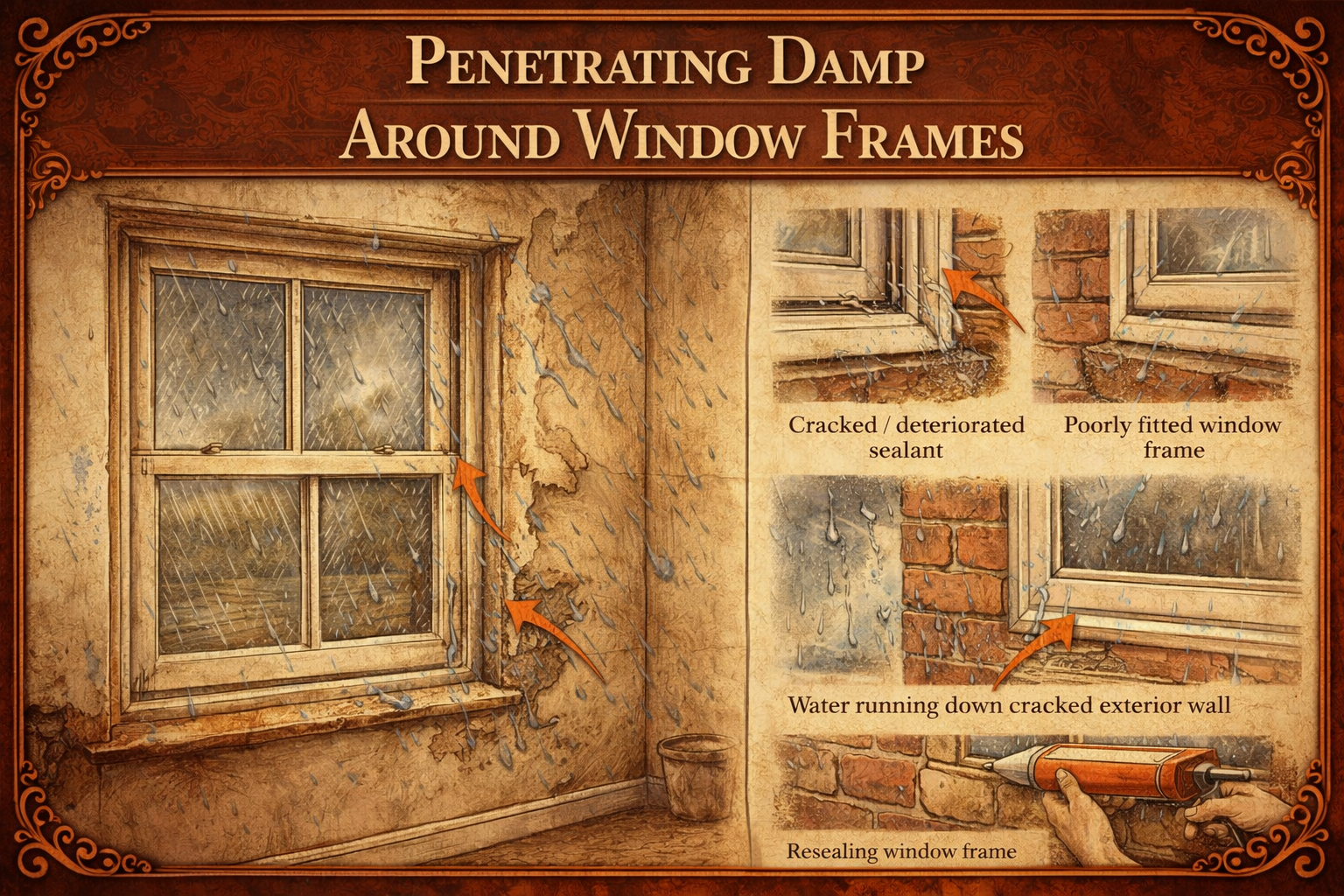
Penetrating damp around window frames is a common issue that affects both modern and traditional properties. Windows are natural weak points in the building envelope, and even small defects can allow water to enter and cause internal damage.
One of the most frequent causes is failed sealant around the window frame. Over time, silicone or mastic can degrade due to weather exposure, UV light, and natural movement in the building. As it cracks or separates, gaps form that allow rainwater to penetrate.
Poor installation is another common issue. If a window has not been correctly fitted, there may be gaps between the frame and the surrounding wall. In some cases, missing or defective cavity trays above the window can allow water to track into the structure and appear internally.
Externally, problems such as cracked render, deteriorated pointing, or poorly designed window sills can contribute to water ingress. If the sill does not project far enough or lacks a proper drip edge, water can run back toward the wall instead of being directed away.
Inside the property, signs of penetrating damp around windows include damp patches on the reveals, peeling paint, mould growth, and sometimes staining on wallpaper. The damp is often more noticeable after heavy rain or during periods of strong wind.
To fix the issue, start with a thorough external inspection. Remove any failed sealant and replace it with a high-quality, weather-resistant product. Ensure that all joints around the frame are fully sealed and that there are no gaps.
Check the condition of the window sill and ensure it is functioning correctly. Repairs or replacements may be necessary if it is damaged or incorrectly installed.
If problems persist, further investigation may be needed to assess the wall cavity or lintel. In some cases, water may be entering from above and tracking down to the window opening.
Routine maintenance, including resealing windows every few years and checking external finishes, can significantly reduce the risk of penetrating damp developing in these areas.
Leave a Reply