
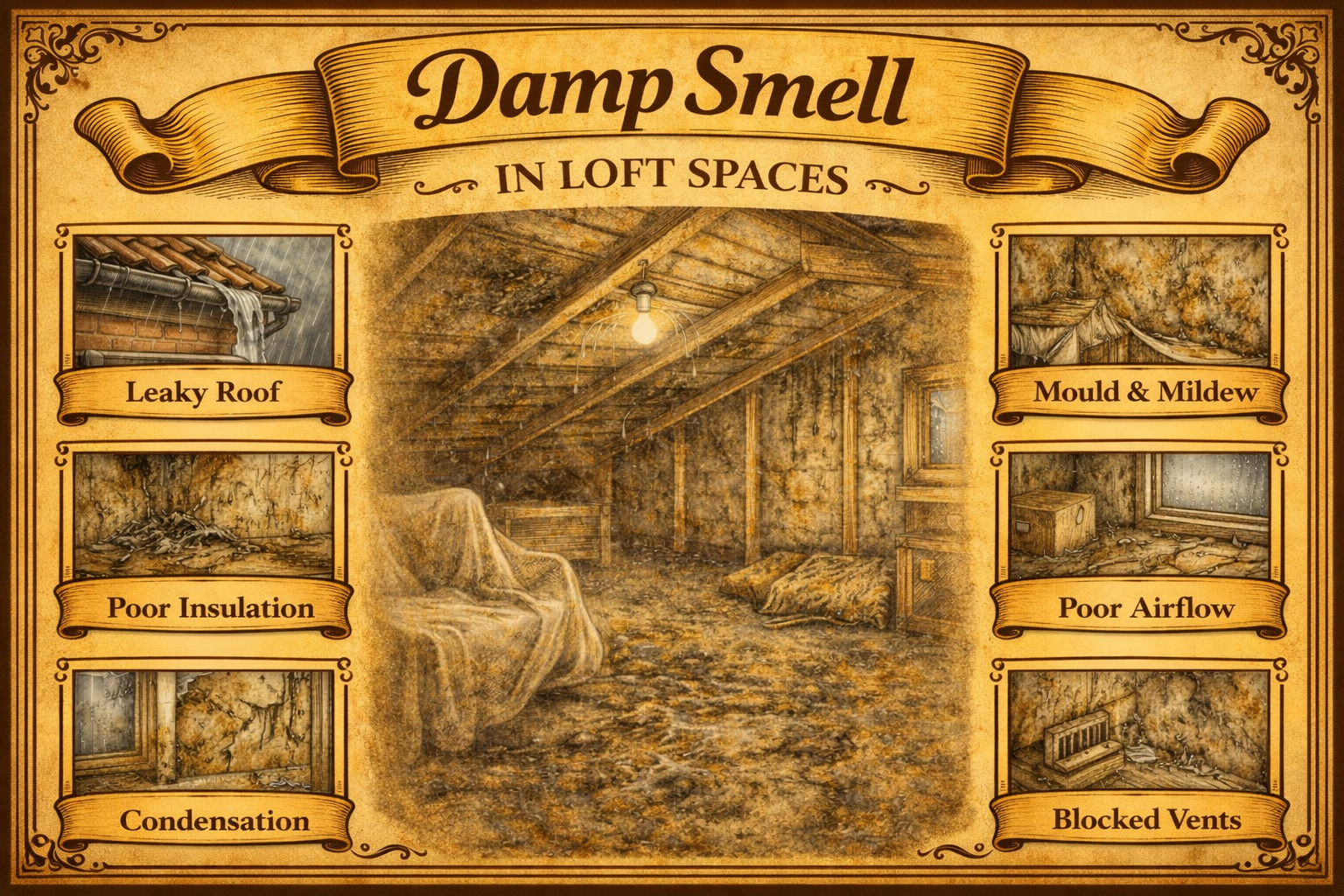
A damp smell in a loft space is often a sign that excess moisture has accumulated in the roof area. Because lofts are typically less frequently inspected than other parts of a property, damp problems can develop gradually without being noticed.
The smell is usually musty or earthy and may become noticeable when accessing the loft or when damp air circulates through the house.
One of the most common causes of damp smells in lofts is poor ventilation. Lofts require adequate airflow to allow moisture to escape from the roof structure. Without sufficient ventilation, humidity can build up and create conditions where mould or mildew may develop.
Condensation is another major cause. Warm air rising from the living areas of the house can carry moisture into the loft space. When this warm air meets cold roof surfaces, condensation can form on rafters, insulation, and roofing felt.
Over time, repeated condensation can lead to damp insulation, mould growth, and persistent musty smells.
Roof leaks can also contribute to damp conditions in lofts. Damaged roof tiles, cracked flashing, or blocked gutters can allow water to enter the roof structure and soak into timbers or insulation.
Common causes of damp smells in loft spaces include:
- Poor roof ventilation
- Condensation forming on roof timbers
- Damp insulation absorbing moisture
- Leaks from damaged roof coverings
- Blocked soffit vents preventing airflow
- Moisture rising from bathrooms or kitchens below
Because loft spaces are enclosed areas, moisture can remain trapped for long periods and produce persistent damp odours.
The Solution: How to Remove Damp Smells from Loft Spaces
The most effective way to eliminate damp smells in a loft is to reduce moisture levels and ensure proper ventilation.
Checking that roof ventilation is functioning correctly is an important first step. Many lofts rely on soffit vents, ridge vents, or roof vents to allow fresh air to circulate through the space. Ensuring these vents are not blocked can help moisture escape.
If condensation is the main cause, improving insulation between the loft and the rooms below may help reduce warm air entering the loft space.
Any damp insulation should be replaced once the moisture source has been addressed, as wet insulation can retain moisture and continue producing damp smells.
Inspecting the roof for leaks is also essential. Damaged roof tiles, flashing, or gutters should be repaired promptly to prevent further water entering the roof structure.
Regular loft inspections can help identify damp issues early before they cause damage to timber structures.
When to Call a Specialist
Persistent damp smells in a loft may indicate more serious roof or ventilation issues.
If condensation continues to form on roof timbers or insulation, the loft may require improved ventilation or insulation upgrades. In some cases, roof repairs may be necessary to prevent water from entering the structure.
Warning signs that professional investigation may be needed include:
- Wet or sagging insulation
- Visible mould growth on roof timbers
- Water stains on loft surfaces
- Damp patches appearing on ceilings below the loft
- A strong musty smell throughout the upper floors of the property
A roofing specialist or building surveyor can inspect the loft and determine whether structural repairs, ventilation improvements, or insulation upgrades are required.
Addressing damp problems in loft spaces early can help protect roof timbers and prevent moisture issues spreading to other parts of the property.
Leave a Reply