
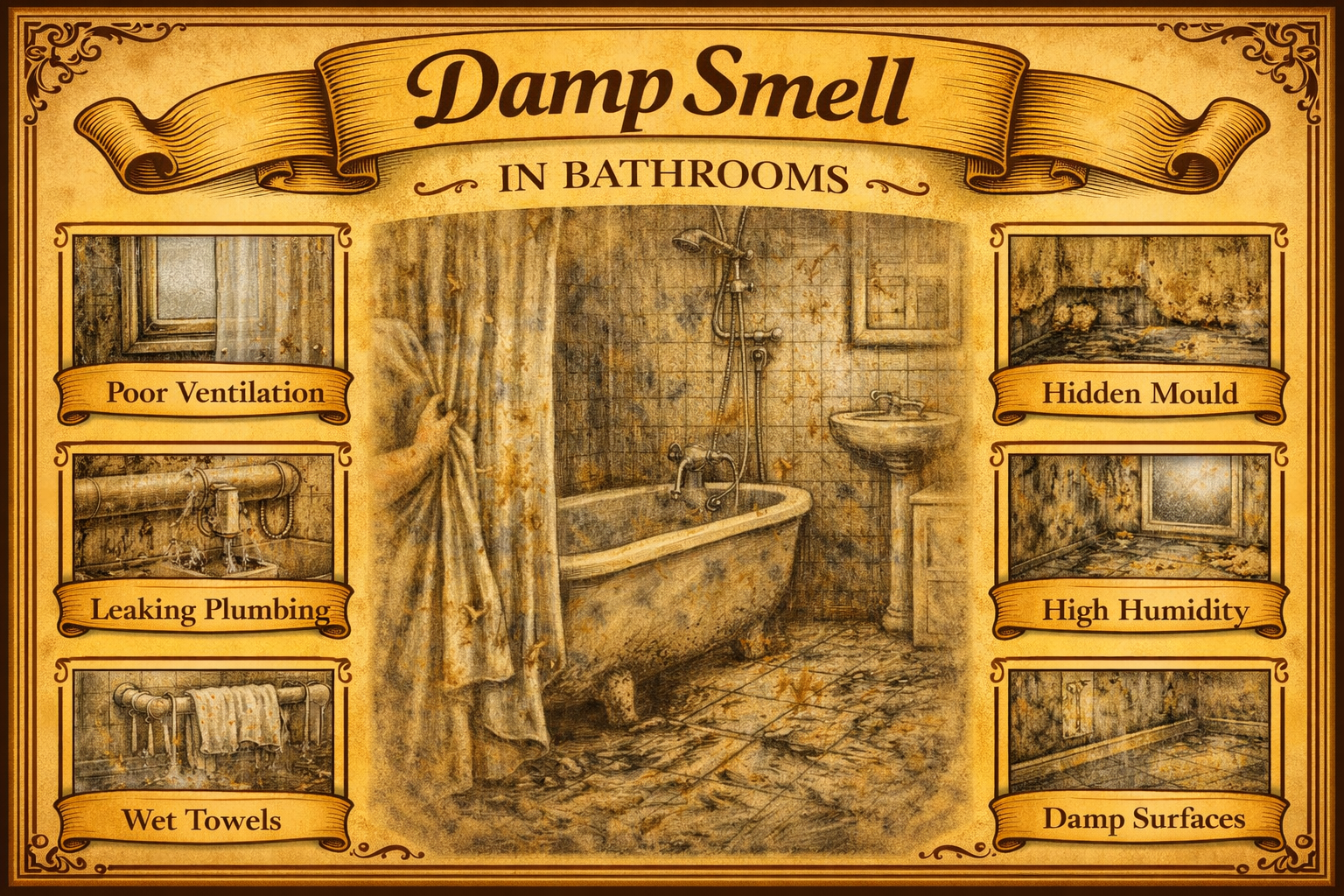
A damp smell in bathrooms is a common issue in many homes and is usually caused by excess moisture that remains in the room after bathing or showering. Because bathrooms regularly produce large amounts of steam and humidity, they are one of the most likely places for damp conditions and mould growth to develop.
The smell is often described as musty or stale and may become more noticeable when the bathroom door has been closed for long periods or when the room has not been ventilated properly.
Bathrooms naturally experience high humidity levels because hot water releases moisture into the air. When this warm, humid air meets cooler surfaces such as walls, ceilings, mirrors, and tiles, condensation forms. If this moisture does not dry quickly, it can create conditions where mould and mildew grow.
Another contributing factor is poor ventilation. Many bathrooms rely on extractor fans or small windows to remove humid air. If these systems are not working effectively, moisture can remain trapped in the room and gradually lead to damp smells.
Moisture can also become trapped in materials such as grout, sealant, bath mats, and towels. Over time these materials can retain moisture and produce musty odours if they do not dry properly.
Common causes of damp smells in bathrooms include:
- Poor ventilation after showers or baths
- Condensation forming on walls and ceilings
- Mould growth in grout or silicone sealant
- Damp bath mats or towels
- Leaking pipes beneath sinks or baths
- Water seeping behind tiles or wall panels
Because bathrooms are used frequently, moisture may accumulate daily, making it difficult for the room to fully dry between uses.
The Solution: How to Remove Damp Smells from Bathrooms
The most effective way to eliminate damp smells in bathrooms is to control moisture levels and improve ventilation.
Using an extractor fan during and after showers can help remove humid air from the room before condensation forms. If the bathroom has a window, opening it after bathing can also help release moisture and improve airflow.
Wiping down surfaces such as tiles, mirrors, and shower screens after use can help remove excess moisture and prevent condensation from lingering.
Regular cleaning is also important to prevent mould growth. Grout lines, silicone sealant, and tile surfaces should be cleaned periodically using mould removal products to prevent mildew from developing.
Bath mats and towels should be allowed to dry properly between uses. Washing them regularly can help prevent damp smells from developing in fabrics.
If humidity levels remain high, a small dehumidifier may help remove moisture from the air and reduce the likelihood of damp conditions forming.
When to Call a Specialist
If damp smells persist despite improving ventilation and cleaning visible mould, the problem may be caused by hidden moisture behind walls or beneath bathroom fixtures.
Leaks from pipes behind sinks, toilets, or showers can introduce moisture into walls and floors, allowing mould to develop in hidden areas. Water may also seep behind damaged tiles or cracked grout, creating damp conditions behind the surface.
Signs that professional investigation may be needed include:
- Persistent mould returning after cleaning
- Peeling paint or bubbling wall surfaces
- Damp patches appearing on ceilings below the bathroom
- Loose or cracked tiles allowing water behind surfaces
- A strong damp smell that does not improve with ventilation
A plumber or damp specialist can inspect the bathroom to determine whether hidden leaks or structural moisture problems are present.
Identifying and repairing these issues early can prevent further water damage and help eliminate persistent damp smells.
Leave a Reply