
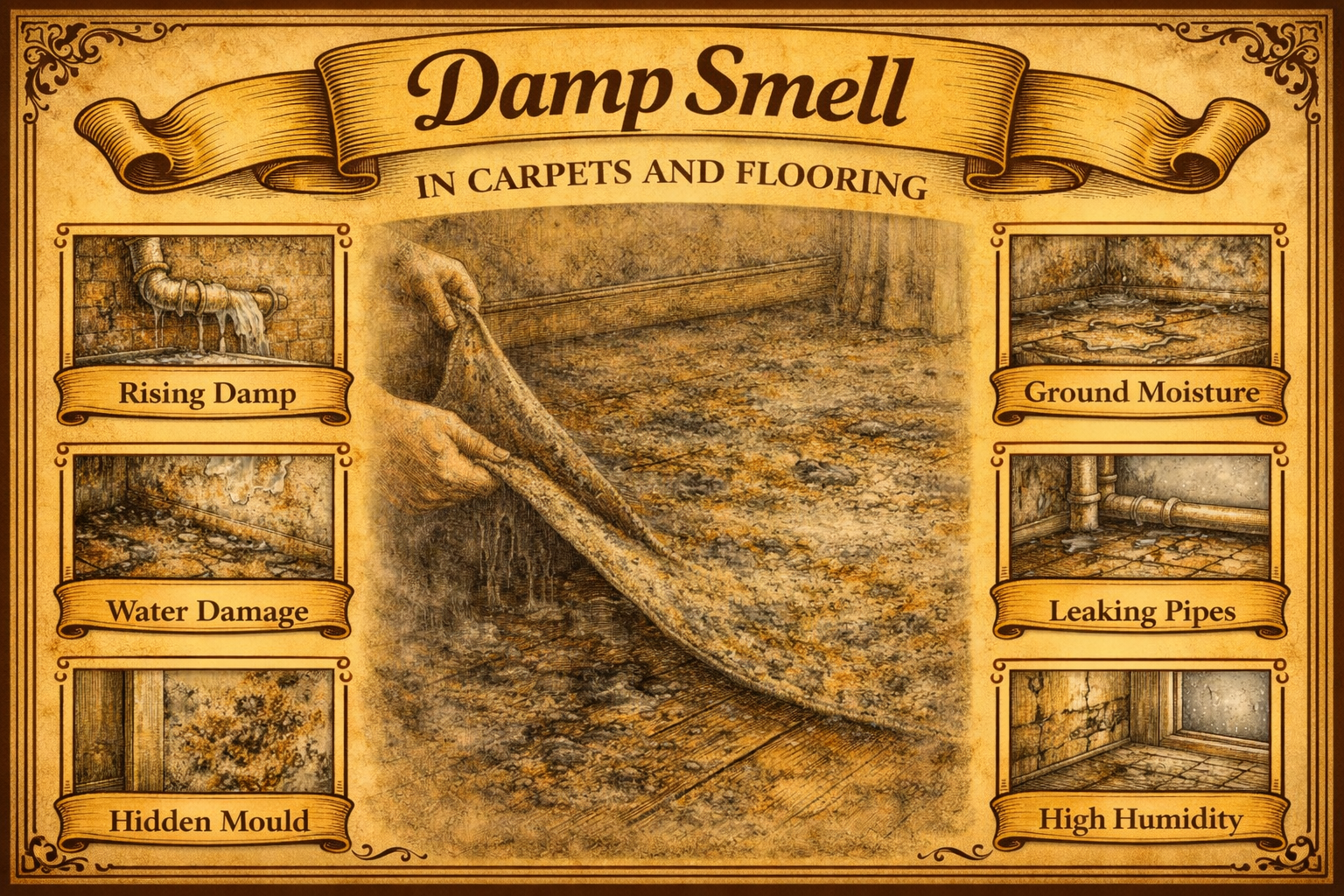
A damp smell in carpets is a common issue in many homes and usually indicates that moisture has become trapped within the carpet fibres or the underlay beneath it. Because carpets are designed to absorb and retain moisture, they can easily hold dampness if the surrounding environment has high humidity levels or if water has entered the floor structure.
The smell is typically described as musty or stale and may become stronger when the room is closed for long periods or when the carpet is disturbed by walking across it.
One of the most common causes of damp smells in carpets is condensation. When warm, humid air settles on cold floors, moisture can accumulate within the carpet fibres. If the area does not dry properly, this moisture can encourage the growth of mould or mildew.
Another frequent cause is liquid spills or water leaks that have soaked into the carpet and underlay. Even small spills can create damp conditions if they are not dried thoroughly. Over time, trapped moisture beneath the carpet can begin to produce a persistent odour.
Carpets laid directly on concrete floors are particularly prone to damp problems. Concrete floors can sometimes allow moisture to pass through from the ground below, especially if the damp proof membrane is damaged or missing.
Common causes of damp smells in carpets include:
- Condensation forming on cold floors
- Spilled liquids soaking into carpet fibres
- Water leaks from plumbing or appliances
- Moisture rising through concrete floors
- Poor ventilation in the room
- Damp underlay beneath the carpet
Because the underlay beneath the carpet is hidden, moisture problems may remain unnoticed until the smell becomes obvious.
The Solution: How to Remove Damp Smells from Carpets
The most effective way to remove damp smells from carpets is to eliminate the moisture source and allow the carpet to dry completely.
Improving ventilation in the room can help reduce humidity levels and allow damp carpets to dry more quickly. Opening windows regularly and allowing fresh air to circulate can significantly reduce moisture levels indoors.
If the smell is caused by a spill or leak, the affected area should be dried as quickly as possible. In some cases, lifting the carpet slightly may be necessary to allow the underlay and subfloor to dry thoroughly.
Professional carpet cleaning may also help remove odours caused by trapped moisture or mould growth. Deep cleaning methods can remove contaminants within the carpet fibres that contribute to musty smells.
Using a dehumidifier can also help reduce moisture in the air, particularly in rooms that frequently experience condensation.
If carpets are located in areas prone to damp conditions, such as ground floor rooms with concrete floors, moisture barriers or improved ventilation may help prevent the issue from recurring.
When to Call a Specialist
If damp smells persist despite cleaning and drying the carpet, there may be a deeper moisture problem affecting the floor structure.
Moisture may be rising from the ground beneath concrete floors if the damp proof membrane has failed. Alternatively, plumbing leaks beneath the floor may be introducing moisture into the carpet and underlay.
Signs that professional investigation may be required include:
- Persistent damp smells that return after cleaning
- Wet patches appearing on the carpet
- Mould growth on carpet edges or skirting boards
- Carpets that feel cold or damp to the touch
- Water stains on floors or nearby walls
A damp specialist or building surveyor can investigate whether moisture is entering the floor structure and recommend appropriate solutions.
Addressing the underlying damp problem is essential to prevent recurring smells and potential damage to flooring materials.
Leave a Reply