
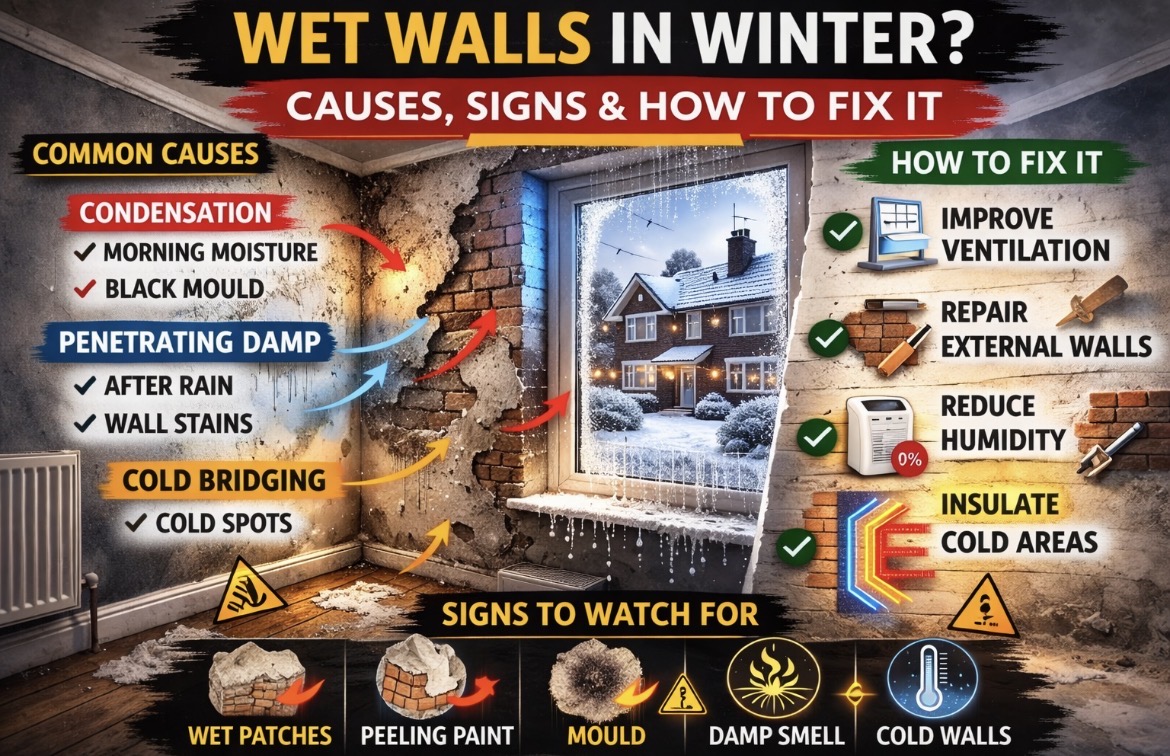
If damp patches appear only during rainfall and seem to dry out afterwards, the issue is almost certainly external water penetration rather than rising damp.
Rain-related damp problems usually indicate a defect in the building envelope that allows water to enter.
This guide explains the most common causes and what you should check first.
Why Does Damp Appear Only During Rain?
Rainwater should be directed safely away from your property by:
- Roof coverings
- Flashing
- Gutters and downpipes
- External wall finishes
- Drainage systems
If any of these fail, water can track into walls or ceilings.
When the weather improves, the moisture may partially dry — which is why the damp seems temporary.
Most Common Causes
1️⃣ Blocked or Overflowing Gutters
Overflowing gutters allow water to cascade down walls instead of draining properly.
Look for:
- Water marks beneath gutter joints
- Green staining on brickwork
- Damp near ceiling lines
2️⃣ Damaged Roof Tiles or Flashing
Missing or slipped tiles allow water into roof spaces.
Signs:
- Damp ceilings after storms
- Stains near chimney breasts
- Drips in loft space
3️⃣ Cracked Brickwork or Failed Pointing
Wind-driven rain can penetrate weakened mortar joints.
Signs:
- Localised damp patches
- Peeling paint
- Damp on upper floors
4️⃣ Faulty Window Seals
Failed seals allow water ingress during heavy, wind-driven rain.
Check for:
- Damp around window reveals
- Water staining beneath sills
Is It Rising Damp?
Rising damp does not depend on rainfall.
If damp:
- Worsens only during rain
- Appears higher than ground level
- Dries between storms
It is very unlikely to be rising damp.
How to Confirm the Source
Ask yourself:
- Does the damp worsen during heavy rain or storms?
- Is it located near rooflines, windows or gutters?
- Does it improve in dry weather?
External inspection is critical.
Sometimes the issue is visible from ground level, but roof problems may require closer inspection.
How to Fix Damp That Appears During Rain
The solution depends on the defect.
Common repairs include:
- Cleaning or replacing gutters
- Repairing roof tiles
- Repointing brickwork
- Sealing cracks in render
- Repairing flashing
- Improving drainage
Avoid cosmetic fixes like repainting until the source is resolved.
When to Get Professional Help
Consider professional inspection if:
- The damp is spreading
- You cannot identify the entry point
- Timber feels soft or decayed
- The issue keeps returning
Early intervention is usually far cheaper than structural repairs later.
Final Thoughts
If damp appears only when it rains, the cause is almost always external water penetration.
Focus on identifying the entry point, repairing the defect, and ensuring water is directed away from the building.
Treating the symptom without fixing the source will not solve the problem long term.
Leave a Reply