
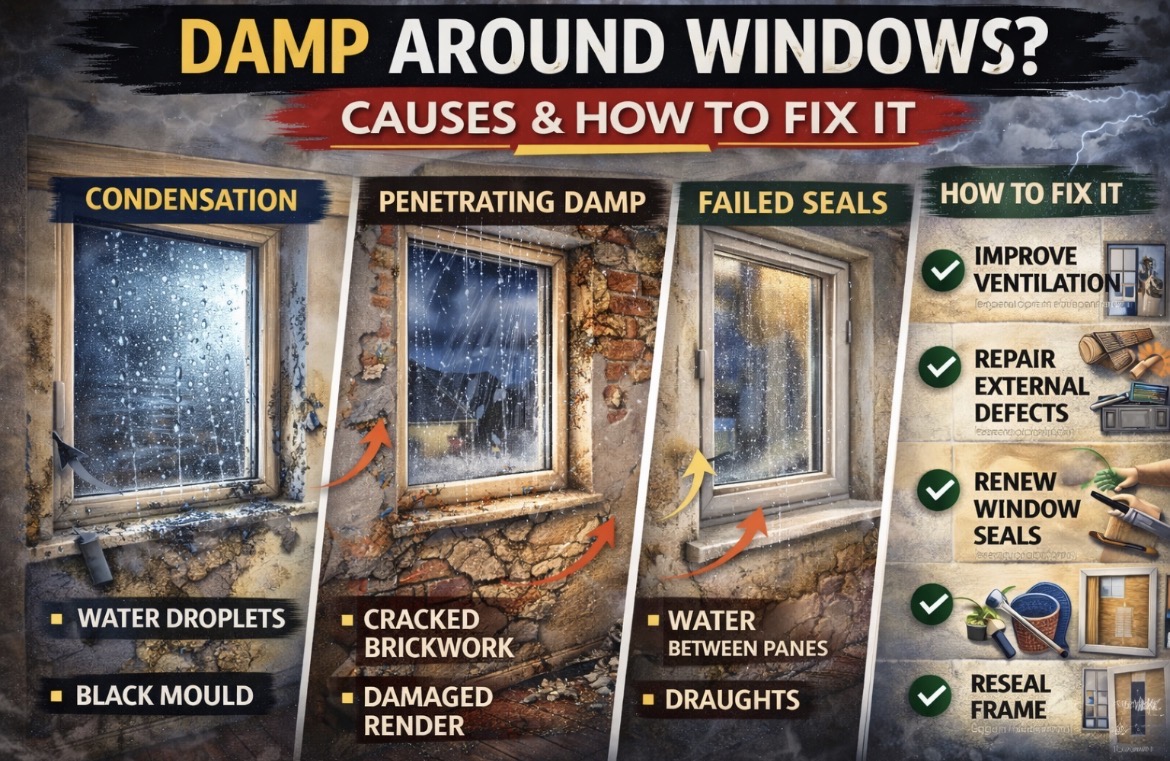
Damp around windows is a common problem in many homes, particularly during colder months. It may appear as staining, peeling paint, black mould, or moisture pooling on window sills.
The cause can vary — from simple condensation to external water penetration — so identifying the source is essential before attempting repairs.
Why Does Damp Form Around Windows?
Windows are natural weak points in a building’s structure. They interrupt insulation, create temperature differences, and rely on seals to prevent water ingress.
Damp around windows is usually caused by one of three issues:
- Condensation
- Penetrating damp
- Failed seals or installation defects
1️⃣ Condensation (Most Common Cause)
Condensation forms when warm, moist indoor air meets a cold window surface.
Common signs:
- Water droplets on glass
- Black mould on window reveals
- Worse in mornings
- More noticeable in winter
Condensation typically affects the surface rather than penetrating deep into the wall.
Poor ventilation often makes this worse.
2️⃣ Penetrating Damp
If damp appears after rainfall, water may be entering from outside.
Possible causes:
- Cracked brickwork around the frame
- Failed pointing
- Damaged render
- Blocked cavity trays
- Poorly installed flashing
Signs include:
- Staining that worsens after rain
- Damp patches extending beyond the immediate window area
- Peeling paint higher up the wall
3️⃣ Failed Window Seals
Over time, window seals can degrade.
Signs:
- Damp limited to edges of frame
- Water between glazing panes
- Draughts around the window
This is common in older double-glazed units.
How to Diagnose the Real Cause
Ask:
- Is it worse after heavy rain? → Likely penetrating damp
- Is it worse in cold mornings? → Likely condensation
- Is there visible seal failure? → Likely window defect
Pattern and timing are important indicators.
How to Fix Damp Around Windows
If It’s Condensation:
- Improve ventilation
- Use extractor fans
- Open trickle vents
- Maintain consistent heating
- Avoid drying clothes indoors
If It’s Penetrating Damp:
- Repoint brickwork
- Repair render cracks
- Clear blocked gutters
- Check flashing
- Inspect cavity trays
If It’s Seal Failure:
- Reseal frame edges
- Replace damaged glazing units
- Consider professional inspection
When to Get Professional Advice
You should consider further investigation if:
- The damp spreads beyond the window area
- Plaster feels soft or crumbling
- Mould continues despite ventilation improvements
- Timber frames show signs of rot
Persistent moisture can eventually damage surrounding wall structures.
Final Thoughts
Damp around windows is common, especially in winter, but the cause determines the solution.
Surface condensation requires ventilation improvements. Damp linked to rainfall usually points to external defects. Failed seals may require repair or replacement.
Identifying the pattern is the key to resolving the issue properly.
Leave a Reply