Category: Cracks

  • Cracking or Falling Render After Wall Insulation

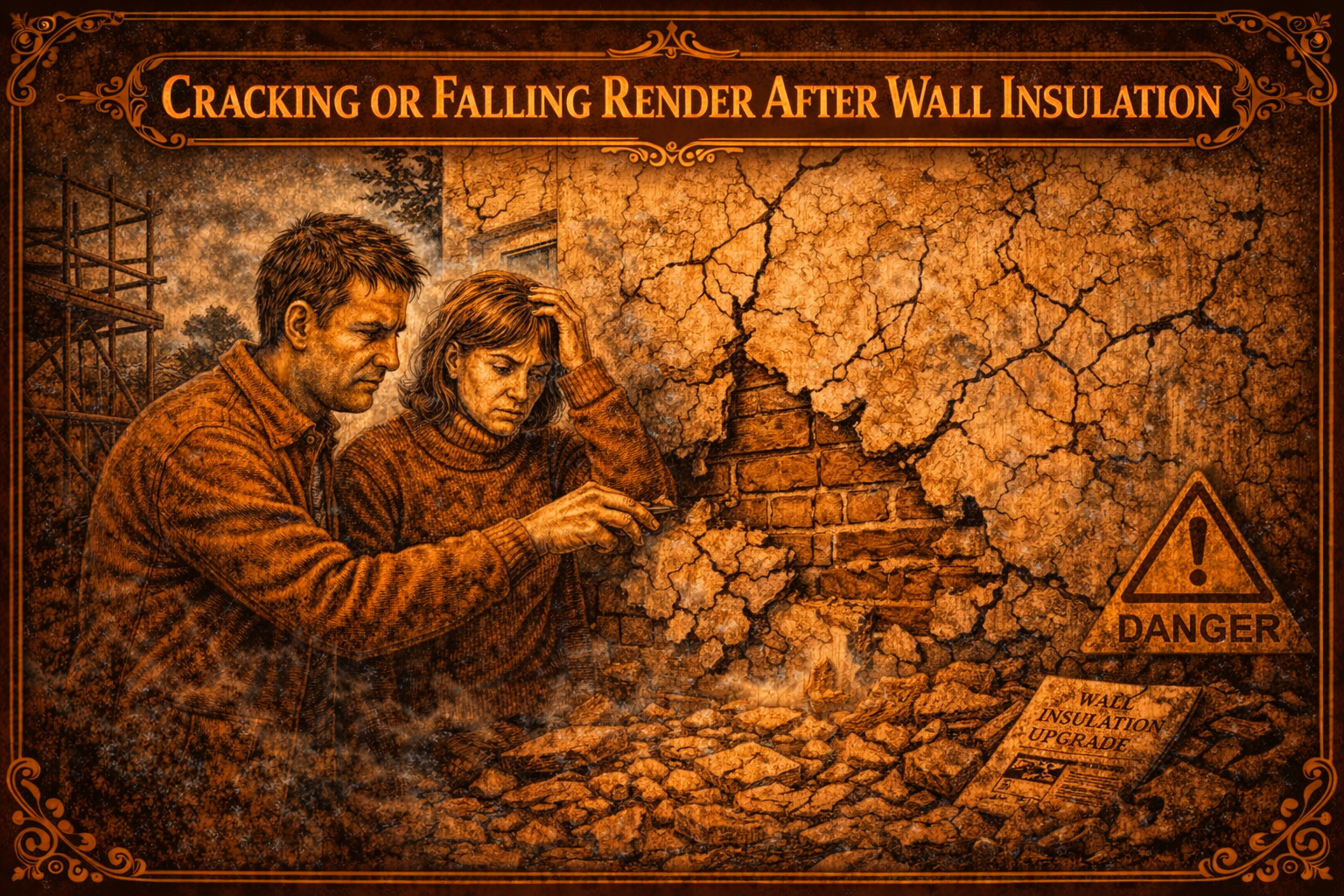
    Cracking or Falling Render After Wall Insulation

    External wall insulation (EWI) systems are designed to improve a building’s thermal performance by adding insulation boards and a protective render layer to the outside of the property. While these systems can significantly improve energy efficiency, problems sometimes develop when the render layer begins to crack, blister or fall away from the wall.

    Cracking or detached render can occur when insulation systems are poorly installed or when moisture becomes trapped behind the insulation. Over time, these defects may allow water to penetrate the structure of the building and cause further damage.

    When render begins to fail, it is important to investigate the cause to prevent additional structural or moisture problems.

    Why Render Can Crack After Insulation Work

    External wall insulation systems rely on several layers working together correctly. If any of these layers are incorrectly installed, the render surface may become unstable.

    Common causes include:

    • poor bonding between insulation boards and the wall
    • inadequate fixing of insulation boards
    • incorrect render mixtures or application techniques
    • thermal movement causing stress in the render layer
    • moisture trapped behind the insulation system

    Weather conditions during installation can also affect the durability of the render finish.

    Warning Signs of Render Failure

    Homeowners may notice several signs that the render system is failing.

    Typical symptoms include:

    • cracks appearing across the render surface
    • pieces of render falling away from the wall
    • bulging or uneven render surfaces
    • discolouration or staining on the render
    • damp patches appearing inside the property

    If left unresolved, these issues can allow water to penetrate behind the insulation system.

    How the Problem Is Diagnosed

    A building professional will usually inspect the external wall insulation system to identify the cause of the render failure.

    This inspection may include:

    • examining the render for cracking patterns
    • checking the stability of insulation boards
    • identifying signs of trapped moisture
    • assessing whether the system was installed correctly

    In some cases sections of render may need to be removed to inspect the underlying layers.

    How Cracking Render Is Repaired

    Repair solutions depend on the severity of the damage.

    Possible repairs include:

    • patching small cracks in the render
    • replacing damaged sections of render
    • reinforcing insulation boards and fixings
    • removing and reinstalling parts of the insulation system

    Proper repairs should address the underlying cause rather than simply covering the cracks.
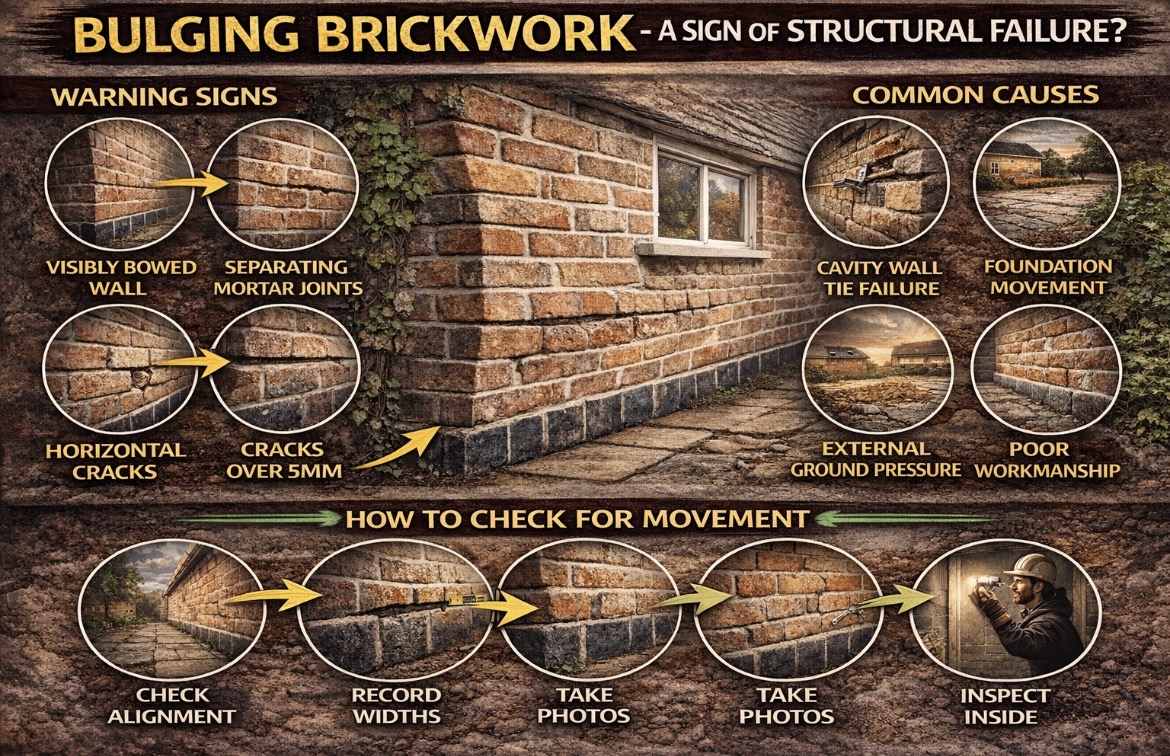
  • Bulging Brickwork – A Sign of Structural Failure?

    Bulging Brickwork – A Sign of Structural Failure?

    Bulging brickwork is one of the more serious external wall defects that homeowners may notice. Unlike minor surface cracks, bulging or bowing brickwork can indicate structural stress within a wall. While some cases are minor and caused by localised defects, others may signal underlying issues such as wall tie failure or foundation movement.

    Identifying the cause early is essential before repairs are carried out.

    What Does Bulging Brickwork Look Like?

    Bulging brickwork may:

    • Appear as an outward curve in the wall
    • Cause mortar joints to separate
    • Be accompanied by horizontal cracking
    • Be most visible in long, uninterrupted walls
    • Occur at mid-wall height or near DPC level

    In some cases, the wall may feel unstable or visibly out of alignment when viewed along its length.

    Common Causes of Bulging Brickwork

    1. Cavity Wall Tie Failure

    In cavity walls, metal wall ties connect the outer and inner leaf. If these ties corrode, they expand and push the outer brickwork outward, causing horizontal cracking and bulging.

    2. Foundation Movement

    Uneven settlement or ground movement can create stress within the wall, leading to outward displacement.

    3. External Ground Pressure

    Raised ground levels or heavy paving pressing against the wall can increase lateral pressure.

    4. Poor Workmanship

    Inadequate tying, weak mortar, or improper construction can result in long-term instability.

    When Is Bulging Brickwork Serious?

    Bulging brickwork should always be taken seriously, particularly if:

    • The wall is visibly bowed outward
    • Horizontal cracks are present
    • Cracks exceed 5mm
    • Mortar joints are separating
    • The wall appears unstable
    • Movement is progressing over time

    Unlike cosmetic cracking, outward movement of masonry can present structural risk.

    How to Check for Movement

    • View the wall from an angle to spot curvature.
    • Use a straight edge or string line to check alignment.
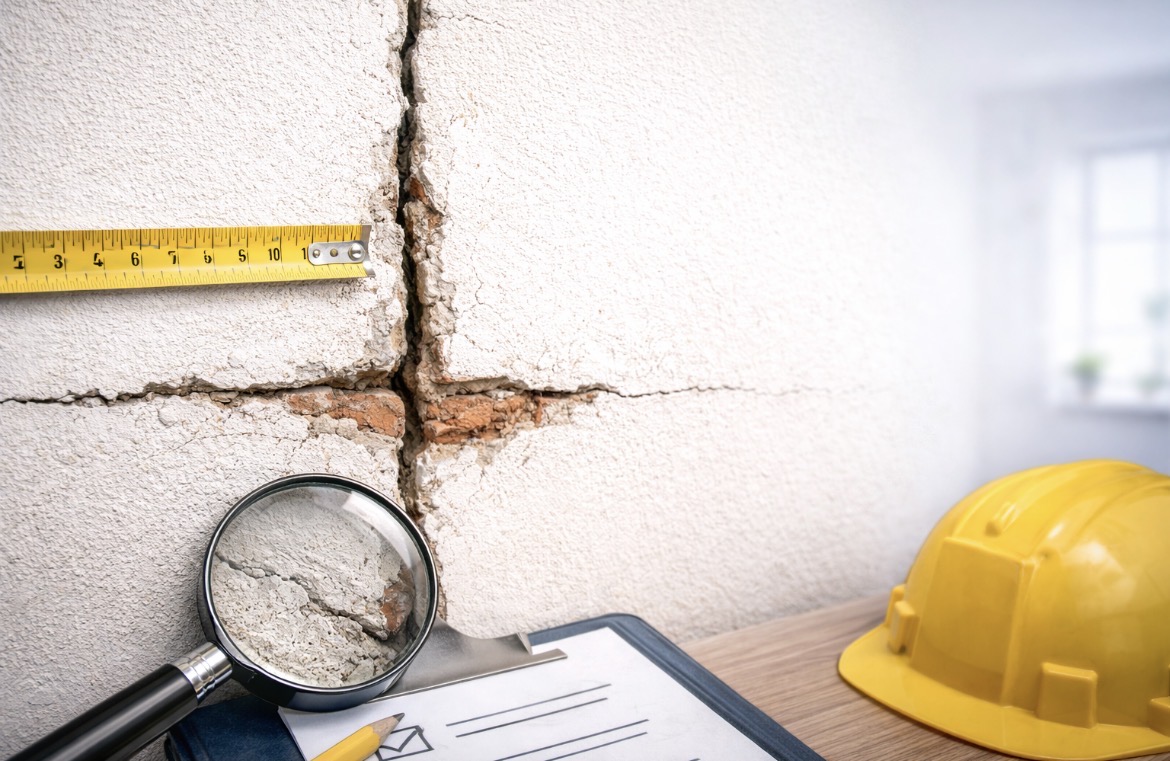
    • Measure and record crack widths.
    • Photograph the area every few months.
    • Check internally for corresponding cracks.

    If movement is active or worsening, professional assessment may be required.

    Can Bulging Brickwork Be Repaired?

    The repair depends on the cause:

    • Wall tie failure may require wall tie replacement.
    • Foundation movement may require structural repair.
    • Minor mortar issues may be resolved with repointing.

    Superficial repair without identifying the cause can allow the problem to continue.

    Final Thoughts

    Bulging brickwork is more serious than most surface cracks and should not be ignored. While some cases are linked to minor defects, outward movement of masonry can indicate structural stress within the wall. Early identification and proper diagnosis ensure that the correct repair method is applied and prevent further damage.

    Addressing the cause — not just the visible symptoms — is essential.

  • Cracks at Damp Proof Course (DPC) Level – What Do They Mean?

    Cracks at Damp Proof Course (DPC) Level – What Do They Mean?

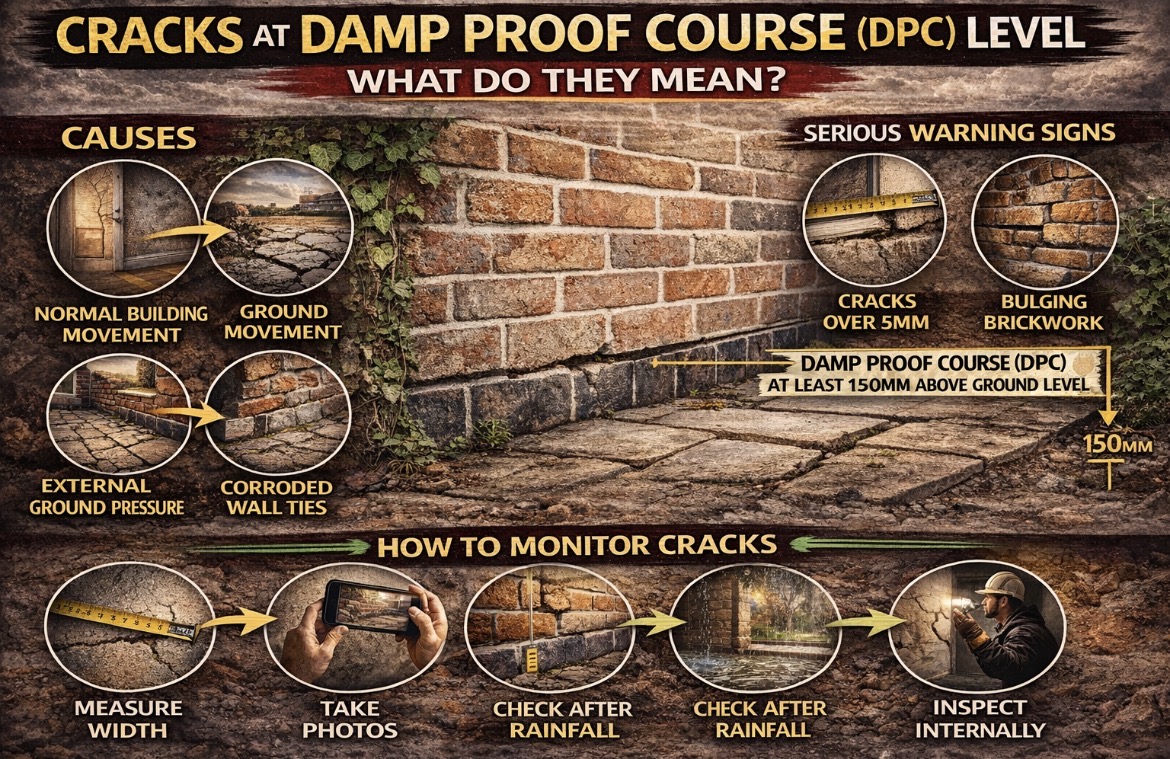
    Cracks appearing at damp proof course (DPC) level can cause concern for homeowners, particularly when they run horizontally along the base of external walls. While some cracking at this level is cosmetic, others may indicate structural movement, ground pressure, or issues affecting the wall’s integrity.

    Understanding why cracks form at DPC level is essential before carrying out repairs.

    What Is the Damp Proof Course?

    The damp proof course (DPC) is a horizontal barrier built into external walls, typically 150mm above ground level. Its purpose is to prevent moisture rising from the ground into the wall structure.

    It is usually visible as a thin horizontal line in the mortar joint of brickwork.

    Because it forms a continuous joint in the masonry, it can also become a natural line of weakness where cracking sometimes appears.

    Why Do Cracks Form at DPC Level?

    Common causes include:

    1. Normal Building Movement

    Minor settlement or thermal expansion can cause thin horizontal cracking along mortar joints, including the DPC line.

    2. Ground Movement

    If foundations shift due to soil shrinkage or expansion, cracking may appear near the base of the wall.

    3. External Ground Pressure

    Raised ground levels or heavy paving against walls can increase pressure at DPC level.

    4. Corroded Wall Ties

    In cavity walls, expanding corroded ties can create horizontal cracking in brickwork.

    5. Poor Mortar or Workmanship

    Weaker mortar joints at DPC level may crack over time.

    When Are DPC Level Cracks Serious?

    Cracks at damp proof course level may require investigation if they:

    • Exceed 3–5mm in width
    • Continue to widen
    • Run along large sections of the wall
    • Are accompanied by bulging brickwork
    • Appear alongside internal cracking
    • Coincide with doors or windows sticking

    Horizontal cracking combined with outward movement can indicate structural stress.

    Do DPC Cracks Cause Damp?

    A crack at DPC level does not automatically mean the damp proof course has failed.

    However, if the crack allows moisture to penetrate the wall, it may contribute to penetrating damp or visible damp patches internally. The crack itself may be structural, moisture-related, or a combination of both.

    Proper diagnosis is essential before assuming the DPC requires replacement.

    How to Monitor Cracks at DPC Level

    • Measure and record crack width.
    • Photograph the crack every few months.
    • Check for widening after seasonal weather changes.
    • Inspect internal walls in the same location.
    • Ensure ground levels remain at least 150mm below DPC.

    If the crack progresses or multiple signs of movement appear, professional assessment may be required.

    Final Thoughts

    Cracks at damp proof course level are often minor and cosmetic, particularly if limited to mortar joints. However, wider cracks or those combined with bulging brickwork or internal symptoms may indicate structural movement. Monitoring progression before carrying out repairs ensures that the underlying cause is properly addressed.

    Treating the visible crack without identifying the reason behind it can lead to recurring problems.

  • Subsidence Cracks – Warning Signs to Look For

    Subsidence Cracks – Warning Signs to Look For

    Subsidence cracks are caused by movement in the ground beneath a building’s foundations. When the soil shrinks, shifts or becomes unstable, part of the property can drop slightly, leading to visible cracking in walls and brickwork.

    While not all cracks indicate subsidence, certain patterns and symptoms should not be ignored.

    What Do Subsidence Cracks Look Like?

    Subsidence cracks often:

    • Run diagonally across walls
    • Follow a stair-step pattern in brickwork
    • Are wider at one end
    • Appear around windows and doors
    • Extend from floor level upwards
    • Are visible both internally and externally

    Cracks caused by subsidence usually affect masonry rather than just plaster.

    Common Causes of Subsidence

    Subsidence can be triggered by:

    • Clay soil shrinking during dry weather
    • Large trees drawing moisture from the ground
    • Damaged drains washing away soil
    • Poor ground compaction
    • Historic mining or ground instability

    Seasonal movement is common in clay-heavy areas.

    Warning Signs That May Indicate Subsidence

    Cracks may be linked to subsidence if you also notice:

    • Doors and windows sticking
    • Sloping or uneven floors
    • Gaps between walls and ceilings
    • Cracks reappearing after repair
    • Exterior brickwork bulging
    • Cracks that widen over time

    The combination of symptoms is more important than one small crack alone.

    When Should You Be Concerned?

    You should consider further investigation if:

    • Cracks exceed 5mm
    • Multiple cracks appear suddenly
    • The crack widens noticeably over months
    • There are signs of foundation movement externally

    Monitoring crack progression is essential before drawing conclusions.

    How to Monitor Potential Subsidence Cracks

    • Measure and record crack width.
    • Mark the ends and date them.
    • Take photographs every few months.
    • Check during both wet and dry seasons.
    • Inspect the same location externally.

    If cracks continue to widen or additional symptoms appear, professional assessment may be required.

    Final Thoughts

    Most wall cracks are not caused by subsidence. However, diagonal or stair-step cracks that widen over time — particularly when combined with sticking doors or sloping floors — may indicate ground movement. Identifying the signs early allows for proper investigation before cosmetic repairs are carried out.

    Addressing the cause, rather than simply filling the crack, prevents recurring structural damage.

  • Diagonal Cracks in Walls – What Do They Indicate?

    Diagonal Cracks in Walls – What Do They Indicate?

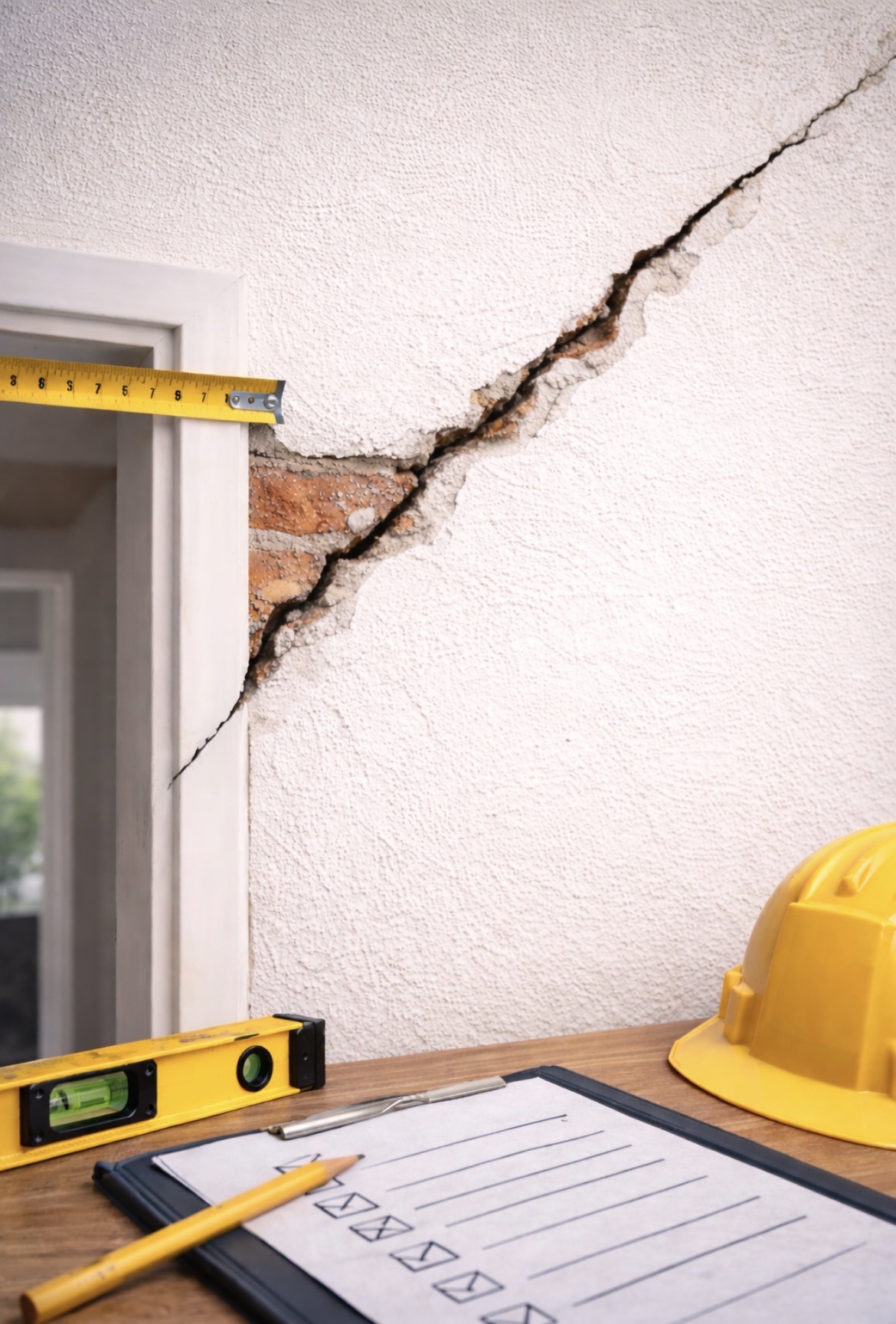
    Diagonal cracks in walls are often more concerning than straight vertical or horizontal cracks. They typically form at an angle, often starting near the corners of doors and windows, and can extend across plaster or brickwork. While some diagonal cracks are caused by minor settlement, others may indicate structural movement such as subsidence or foundation issues.

    Identifying the size, location and progression of the crack is essential before carrying out repairs.

    What Do Diagonal Cracks Look Like?

    Diagonal cracks:

    • Run at an angle across the wall
    • Often start at the top corners of doors or windows
    • May follow mortar joints in a stepped pattern
    • Can appear internally and externally in the same area
    • May widen at one end

    When diagonal cracks affect brickwork rather than just plaster, they require closer attention.

    Common Causes of Diagonal Cracks

    1. Normal Settlement

    Minor diagonal cracking can occur as a building naturally settles, particularly in newer homes.

    2. Subsidence

    Subsidence occurs when the ground beneath foundations shifts or shrinks, causing part of the building to drop. Diagonal cracking is one of the most common visible signs.

    3. Lintel Movement

    If a lintel above a door or window shifts or fails, the load distribution can change, resulting in diagonal cracking.

    4. Structural Alterations

    Removing or altering load-bearing walls without proper support can create stress cracks.

    5. Foundation Movement

    Changes in soil moisture levels can cause foundations to move slightly, leading to angled cracking.

    When Are Diagonal Cracks Serious?

    You should monitor diagonal cracks carefully if they:

    • Are wider than 3–5mm
    • Continue to widen over time
    • Appear on both internal and external walls
    • Form a stair-step pattern in brickwork
    • Are accompanied by sticking doors or windows
    • Occur alongside sloping floors

    Cracks that widen at one end may indicate ongoing movement.

    Cosmetic vs Structural Diagonal Cracks

    Cosmetic diagonal cracks:

    • Thin and stable
    • Limited to plaster
    • Do not change over time

    Structural diagonal cracks:

    • Extend through masonry
    • Increase in width
    • Reappear after repair
    • Appear alongside other movement symptoms

    Monitoring progression over several months helps determine whether movement is active.

    How to Monitor Diagonal Cracks

    • Measure the width of the crack.
    • Mark the end points and date them.
    • Take photographs every few months.
    • Inspect the same area externally.
    • Note any changes in door or window alignment.

    If the crack continues to widen or new cracks appear nearby, professional assessment may be necessary.

    Final Thoughts

    Diagonal cracks in walls should not be ignored, particularly when they affect brickwork or continue to widen. While some are caused by harmless settlement, others may indicate structural movement or subsidence. Identifying the cause before repairing the surface ensures that the correct solution is applied and prevents recurring damage.

  • Settlement Cracks vs Structural Cracks – What’s the Difference?

    Settlement Cracks vs Structural Cracks – What’s the Difference?

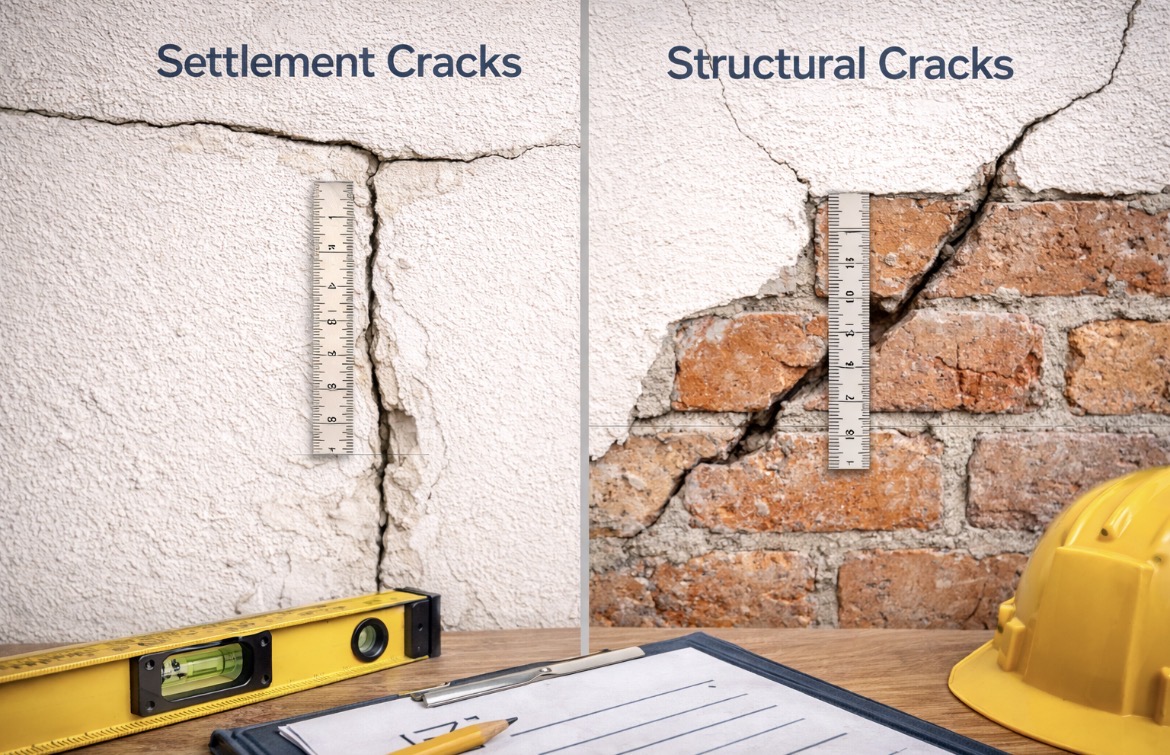
    Not all wall cracks mean the same thing. Some are caused by normal settlement as a building adjusts over time, while others may indicate structural movement affecting the foundations or load-bearing elements. Understanding the difference between settlement cracks and structural cracks is essential before carrying out repairs.

    Repairing the surface without identifying the cause can lead to recurring damage and unnecessary expense.

    What Are Settlement Cracks?

    Settlement cracks occur when a building naturally adjusts after construction. All properties settle slightly as materials dry, foundations bear weight, and structural components stabilise.

    Settlement cracks typically:

    • Appear within the first few years after construction
    • Are thin, usually under 2–3mm wide
    • Run vertically or slightly diagonally
    • Appear around doors and windows
    • Remain stable over time

    These cracks are generally cosmetic and can usually be repaired once movement has stopped.

    What Are Structural Cracks?

    Structural cracks are caused by movement that affects the stability of the building itself. This movement may involve foundation shifts, ground shrinkage, heave, or failure of load-bearing elements.

    Structural cracks often:

    • Exceed 3–5mm in width
    • Form diagonal or stair-step patterns in brickwork
    • Continue to widen over time
    • Appear both internally and externally
    • Reoccur after repair
    • Coincide with sticking doors, misaligned windows or uneven floors

    Unlike settlement cracks, structural cracks require investigation before cosmetic repair.

    How Settlement and Structural Cracks Differ

    Settlement cracks are usually minor, stable and limited to plaster or surface finishes. They tend to appear as part of a building’s natural adjustment process and do not typically worsen once the structure has settled.

    Structural cracks are more serious. They are often wider, affect masonry rather than just plaster, and may show signs of progression. Structural cracks can indicate ongoing movement, meaning the underlying cause must be identified before repairs are carried out.

    Monitoring the crack over several months is often the clearest way to determine whether it is stable or progressive.

    How to Tell Which Type You Have

    Consider the following:

    • Has the crack widened recently?
    • Is it visible on the exterior of the property?
    • Does it follow mortar joints?
    • Are there other cracks nearby?
    • Are doors or windows beginning to stick?

    If the crack is small and unchanged over time, it is more likely settlement-related. If it grows, spreads, or affects brickwork, structural movement may be involved.

    When to Seek Professional Advice

    You should consider professional assessment if:

    • Cracks exceed 5mm
    • Multiple cracks appear suddenly
    • Brickwork shows bulging
    • Floors slope noticeably
    • Gaps develop between walls and ceilings

    A structural engineer or building surveyor can confirm whether movement is active and recommend appropriate action.

    Final Thoughts

    Most cracks in homes are settlement-related and harmless. However, distinguishing between cosmetic settlement cracks and structural cracks is crucial before undertaking repairs. Monitoring size, pattern and progression over time provides the clearest indication of whether further investigation is necessary.

    Addressing the underlying cause — not just the visible crack — prevents recurring issues and ensures repairs are effective.

  • Cracks Between Wall and Ceiling – Should You Worry?

    Cracks Between Wall and Ceiling – Should You Worry?

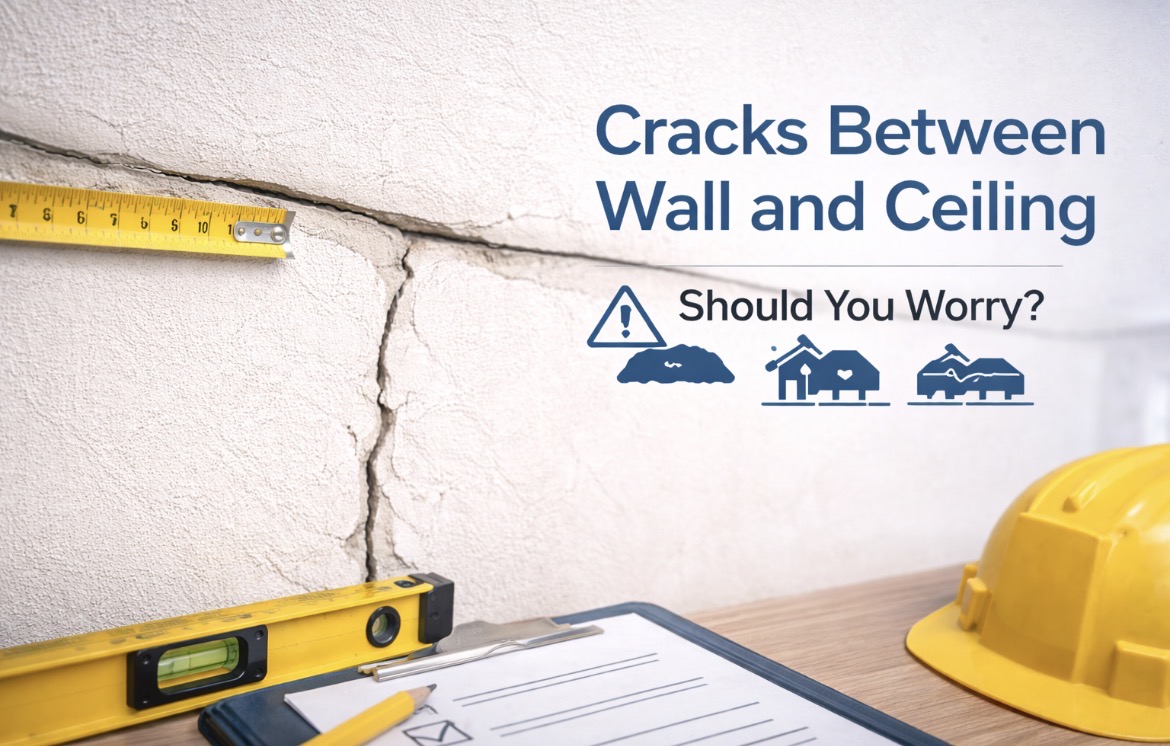
    Cracks between the wall and ceiling are common in many homes, particularly in older properties and new builds settling after construction. In most cases, these cracks are cosmetic and caused by normal movement or plaster shrinkage. However, larger gaps or cracks that continue to widen may indicate structural movement.

    Identifying the size, location and progression of the crack is key to determining its severity.

    Why Do Cracks Form Between Wall and Ceiling?

    The joint where the wall meets the ceiling is a natural stress point. Walls and ceilings are often constructed from different materials, which expand and contract at different rates.

    Common reasons include:

    • Natural building settlement
    • Timber shrinkage in roof structures
    • Plaster drying and shrinkage
    • Seasonal expansion and contraction
    • Minor structural movement

    Hairline cracking along this junction is extremely common.

    When Is It Just Cosmetic?

    The crack is likely cosmetic if:

    • It is under 2mm wide
    • It runs straight along the ceiling line
    • It does not worsen over time
    • There are no other cracks nearby
    • Doors and windows function normally

    These cracks are usually repairable with flexible filler and redecorating.

    When Should You Be Concerned?

    Further investigation may be needed if:

    • The gap widens beyond 3–5mm
    • The ceiling appears to sag
    • The crack runs diagonally from the corner
    • Other cracks appear on nearby walls
    • The wall shows signs of bulging

    Cracks that appear alongside sticking doors or sloping floors may indicate structural movement.

    How to Check for Ongoing Movement

    • Measure the gap width.
    • Mark the ends with pencil and date them.
    • Take photographs every few months.
    • Inspect the same area externally if possible.
    • Monitor during seasonal weather changes.

    If the crack continues to widen, professional assessment may be required.

    Final Thoughts

    Cracks between walls and ceilings are usually harmless and caused by normal building movement. However, larger cracks that progress over time or appear alongside other structural symptoms should not be ignored. Monitoring the crack before repairing it ensures that the underlying cause is properly identified.

  • Cracks Around Windows and Doors – What Causes Them?

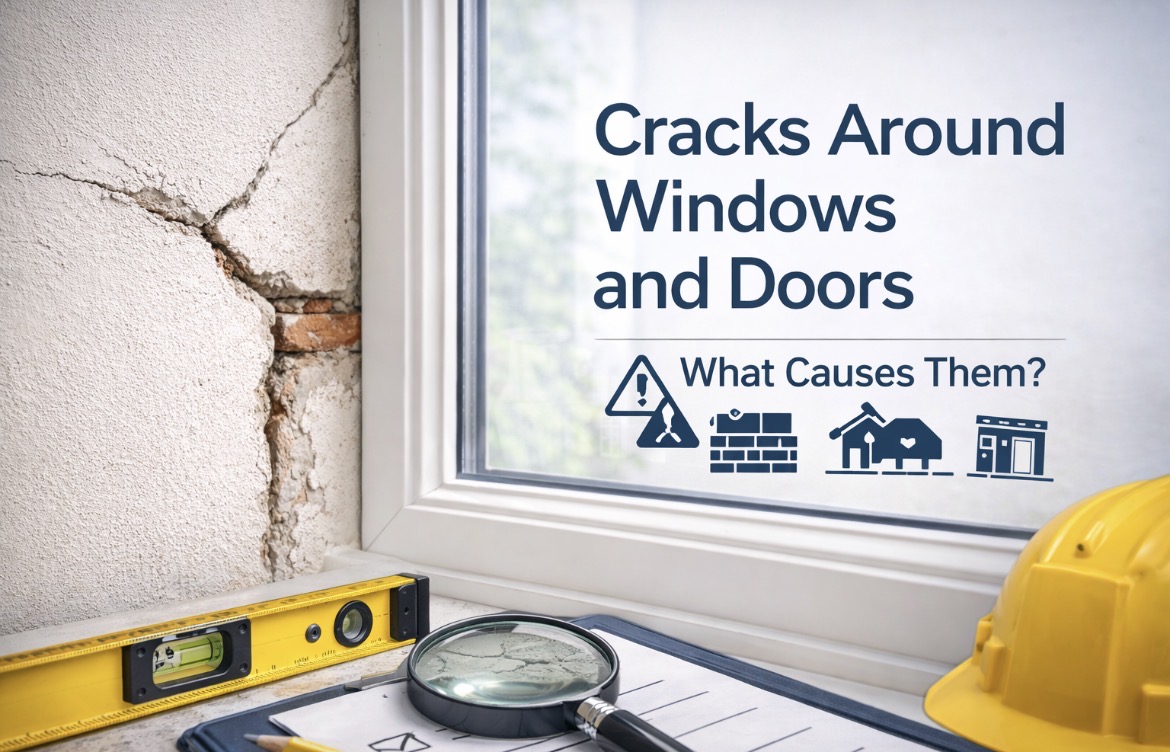
    Cracks Around Windows and Doors – What Causes Them?

    Cracks around windows and doors are common in homes of all ages. While many are harmless and caused by minor settlement or plaster shrinkage, others may indicate structural movement or lintel failure. The location, size and pattern of the crack help determine whether it is cosmetic or a sign of a deeper issue.

    Understanding the cause before repairing the surface is essential.

    Why Do Cracks Appear Around Openings?

    Windows and doors create natural weak points in walls. The masonry above relies on a lintel to support the load, and any movement or stress tends to show first at the corners of these openings.

    Cracks often form:

    • Diagonally from the top corners
    • Vertically along the frame edge
    • Horizontally across the lintel line
    • Internally and externally in the same area

    Common Causes of Cracks Around Windows and Doors

    1. Normal Settlement

    As buildings settle, slight movement can cause minor cracking at the weakest points — usually corners of openings.

    2. Lintel Failure

    A failing or undersized lintel can cause brickwork above the opening to drop slightly, leading to diagonal or stepped cracks.

    3. Thermal Movement

    Materials expand and contract with temperature changes, sometimes causing straight-line cracks around frames.

    4. Cavity Wall Tie Failure

    Corroded wall ties can create horizontal pressure in masonry, leading to cracking near window lines.

    5. Subsidence

    If foundations shift, diagonal cracks often appear from the corners of doors and windows.

    When Are Cracks Around Openings Serious?

    You should monitor cracks carefully if they:

    • Are wider than 3–5mm
    • Continue to widen
    • Appear both inside and outside
    • Form a stair-step pattern in brickwork
    • Cause frames to twist or doors/windows to stick
    • Are accompanied by bulging brickwork

    Cracks that widen at one end may suggest ongoing movement.

    Cosmetic vs Structural Cracks Around Windows

    Cosmetic cracks:

    • Thin hairline cracks in plaster
    • Do not worsen over time
    • Limited to decoration layer

    Structural cracks:

    • Extend through brickwork
    • Follow mortar joints
    • Reappear after repair
    • Increase in width

    Monitoring over several months helps determine if movement is active.

    How to Check for Ongoing Movement

    • Measure the width of the crack.
    • Mark the end points with pencil and date them.
    • Take photographs every 2–3 months.
    • Check if doors or windows begin sticking.
    • Inspect the same area externally.

    If cracks widen or multiple cracks appear nearby, further assessment may be required.

    Final Thoughts

    Cracks around windows and doors are often harmless settlement cracks, but they can also indicate lintel failure or structural movement. Identifying the pattern, width and progression of the crack is the first step in deciding whether simple cosmetic repair is sufficient or whether professional investigation is needed.

    Addressing the cause — not just the crack — prevents recurring issues.

  • Vertical Cracks in Walls – Are They Serious?

    Vertical Cracks in Walls – Are They Serious?

    Vertical cracks in walls are among the most common types of cracking found in homes. In many cases, they are harmless and caused by natural settlement or plaster shrinkage. However, depending on their size, location and progression, vertical cracks can sometimes indicate structural movement.

    Understanding the difference between cosmetic and structural cracking is essential before carrying out repairs.

    What Do Vertical Cracks Look Like?

    Vertical cracks:

    • Run straight up and down
    • Often appear near corners of rooms
    • Commonly form above doors and windows
    • May follow plasterboard joints
    • Can appear in both plaster and brickwork

    Cracks confined to plaster are usually less concerning than those affecting masonry.

    Common Causes of Vertical Cracks

    1. Normal Settlement

    All buildings settle slightly over time. Minor vertical cracks often form as materials adjust.

    2. Plaster Shrinkage

    As plaster dries, fine vertical cracking can occur, particularly in newer properties.

    3. Thermal Movement

    Expansion and contraction due to temperature changes can cause straight-line cracking.

    4. Foundation Movement

    More serious vertical cracks may develop if part of the foundation shifts.

    5. Structural Alterations

    Removing load-bearing walls or poor workmanship can lead to stress cracks.

    When Are Vertical Cracks a Concern?

    A vertical crack may require further investigation if:

    • It is wider than 3mm
    • It widens toward the top or bottom
    • It runs through brickwork
    • It continues to grow over time
    • It appears alongside other cracks nearby
    • Doors or windows begin sticking

    Cracks that affect both internal and external walls in the same location may suggest movement within the structure.

    Cosmetic vs Structural Vertical Cracks

    Cosmetic cracks:

    • Hairline or under 1mm wide
    • Limited to plaster
    • Do not change over time

    Structural cracks:

    • Wider and deeper
    • Visible externally
    • Continue to widen
    • Reappear after repair

    Monitoring is often the best first step.

    How to Monitor a Vertical Crack

    • Measure its width with a ruler.
    • Mark the top and bottom with a pencil and date them.
    • Take clear photos every few months.
    • Check nearby walls externally.
    • Note any changes in door or window alignment.

    If the crack widens noticeably, professional advice may be needed.

    Final Thoughts

    Most vertical cracks in walls are cosmetic and caused by normal building movement. However, larger cracks that progress or affect masonry should not be ignored. Identifying the pattern and monitoring changes over time helps determine whether simple cosmetic repair is sufficient or whether further structural assessment is required.

  • Horizontal Cracks in Walls – What Do They Mean?

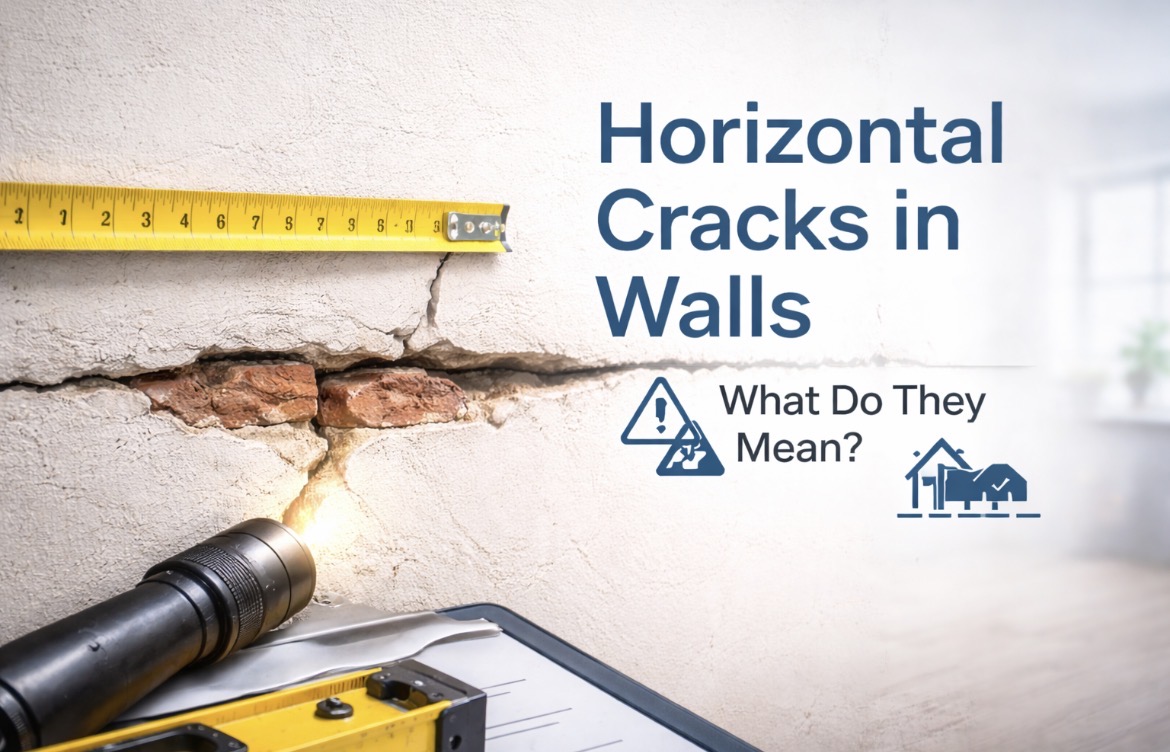
    Horizontal Cracks in Walls – What Do They Mean?

    Horizontal cracks in walls can range from harmless surface issues to signs of structural pressure. While some are caused by plaster shrinkage or minor settlement, others may indicate foundation movement, wall tie failure, or structural stress.

    The key is identifying where the crack is located and whether it affects plaster only or the brickwork itself.

    What Do Horizontal Cracks Look Like?

    Horizontal cracks typically:

    • Run straight across a wall
    • Follow mortar joints in brickwork
    • Appear along ceiling lines
    • Form at damp proof course (DPC) level
    • Occur near the middle of a wall or at foundation height

    Cracks in masonry are more concerning than those limited to internal plaster.

    Common Causes of Horizontal Cracks

    1. Plaster Shrinkage

    Hairline cracks along ceiling lines are often cosmetic and caused by drying plaster.

    2. Thermal Movement

    Buildings expand and contract with temperature changes, sometimes causing straight-line cracking.

    3. Cavity Wall Tie Failure

    Corroded wall ties can expand and create horizontal cracking in brickwork.

    4. Foundation Movement

    If foundations shift, horizontal stress cracks may form, particularly in blockwork walls.

    5. Soil Pressure (Basement or Retaining Walls)

    External ground pressure can cause horizontal cracking in lower walls.

    When Are Horizontal Cracks Serious?

    A horizontal crack may indicate structural movement if:

    Horizontal cracks at foundation level should always be assessed carefully.

    Cosmetic vs Structural Horizontal Cracks

    Cosmetic cracks:

    • Are thin and shallow
    • Appear in plaster only
    • Do not widen
    • Often run along plasterboard joints

    Structural cracks:

    • Affect masonry
    • May extend through to the exterior
    • Reappear after repair
    • Show signs of movement progression

    Monitoring is essential before deciding on repairs.

    How to Check for Ongoing Movement

    If widening occurs, professional assessment may be required.

    Final Thoughts

    Horizontal cracks should not be ignored, particularly when they appear in brickwork or at foundation level. While many are cosmetic, others can signal structural pressure or movement. Identifying the cause early prevents unnecessary repairs and ensures the correct solution is applied.