
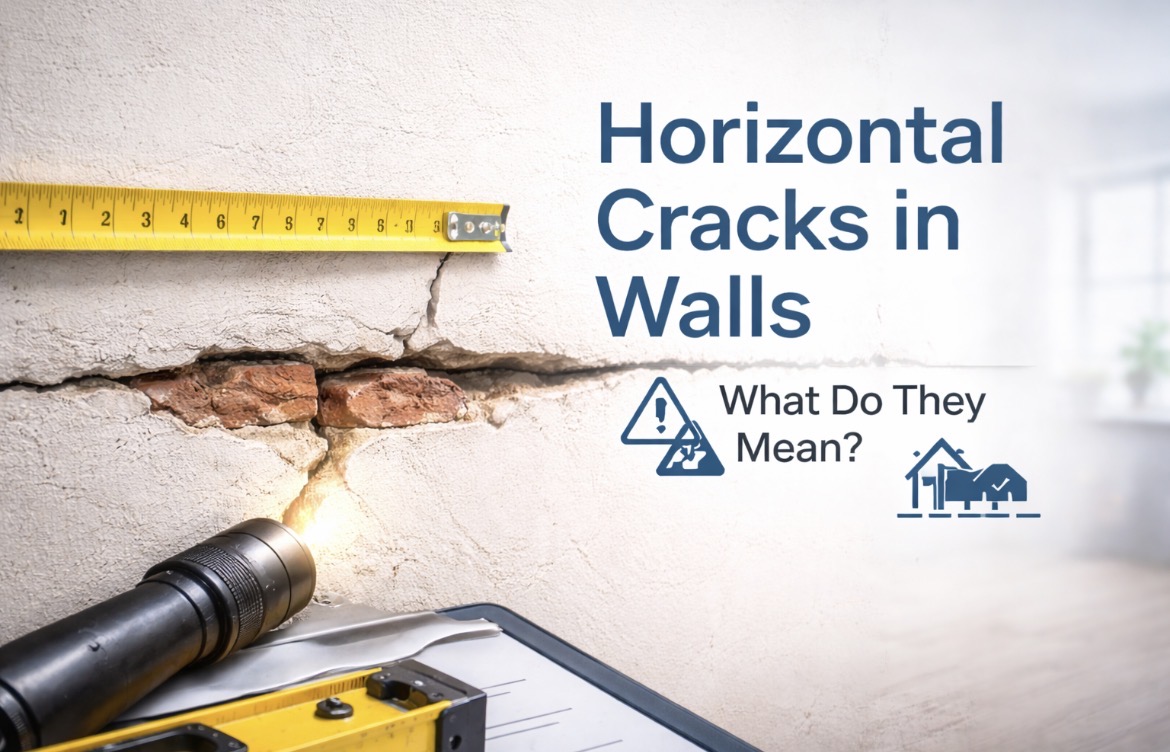
Horizontal cracks in walls can range from harmless surface issues to signs of structural pressure. While some are caused by plaster shrinkage or minor settlement, others may indicate foundation movement, wall tie failure, or structural stress.
The key is identifying where the crack is located and whether it affects plaster only or the brickwork itself.
What Do Horizontal Cracks Look Like?
Horizontal cracks typically:
- Run straight across a wall
- Follow mortar joints in brickwork
- Appear along ceiling lines
- Form at damp proof course (DPC) level
- Occur near the middle of a wall or at foundation height
Cracks in masonry are more concerning than those limited to internal plaster.
Common Causes of Horizontal Cracks
1. Plaster Shrinkage
Hairline cracks along ceiling lines are often cosmetic and caused by drying plaster.
2. Thermal Movement
Buildings expand and contract with temperature changes, sometimes causing straight-line cracking.
3. Cavity Wall Tie Failure
Corroded wall ties can expand and create horizontal cracking in brickwork.
4. Foundation Movement
If foundations shift, horizontal stress cracks may form, particularly in blockwork walls.
5. Soil Pressure (Basement or Retaining Walls)
External ground pressure can cause horizontal cracking in lower walls.
When Are Horizontal Cracks Serious?
A horizontal crack may indicate structural movement if:
- It is wider than 3–5mm
- It appears in brickwork rather than plaster
- The wall shows bulging
- The crack widens over time
- Multiple cracks appear at the same height
Horizontal cracks at foundation level should always be assessed carefully.
Cosmetic vs Structural Horizontal Cracks
Cosmetic cracks:
- Are thin and shallow
- Appear in plaster only
- Do not widen
- Often run along plasterboard joints
Structural cracks:
- Affect masonry
- May extend through to the exterior
- Reappear after repair
- Show signs of movement progression
Monitoring is essential before deciding on repairs.
How to Check for Ongoing Movement
- Measure the crack width.
- Mark and date both ends.
- Photograph every 2–3 months.
- Check doors and windows for sticking.
- Inspect the same location externally.
If widening occurs, professional assessment may be required.
Final Thoughts
Horizontal cracks should not be ignored, particularly when they appear in brickwork or at foundation level. While many are cosmetic, others can signal structural pressure or movement. Identifying the cause early prevents unnecessary repairs and ensures the correct solution is applied.
Leave a Reply