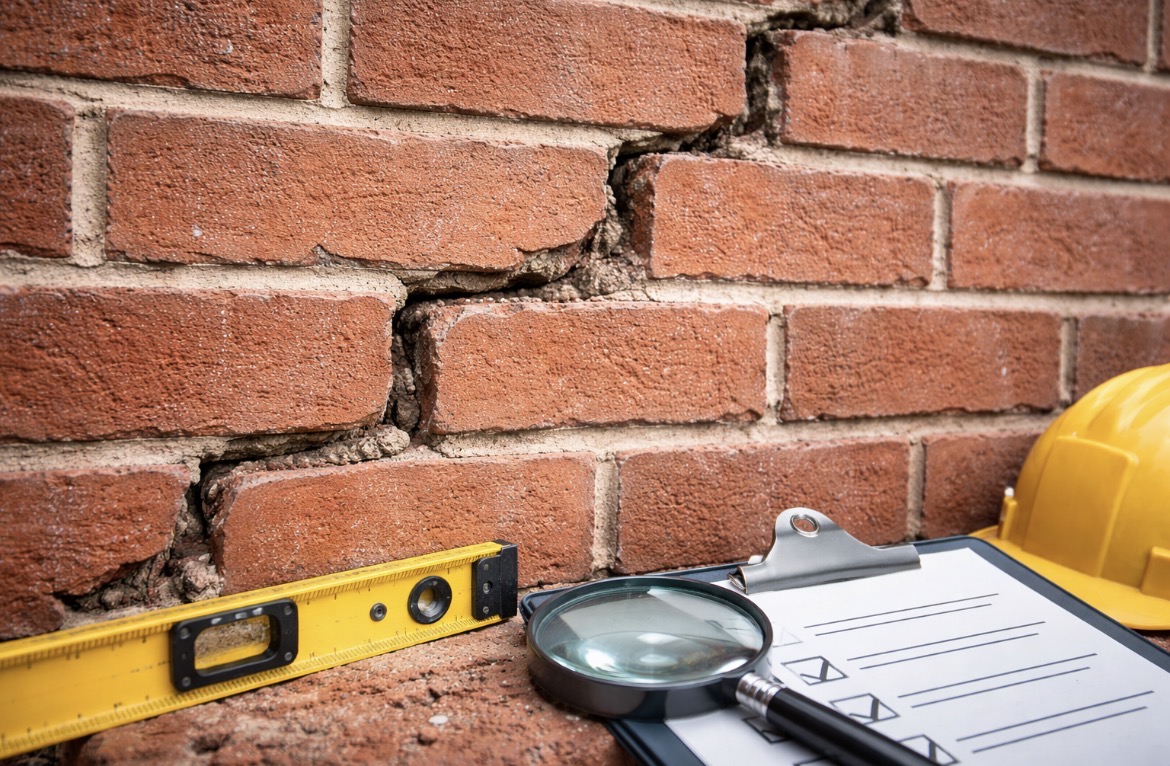
Stair-Step Cracks in Brickwork – Are They a Sign of Subsidence?
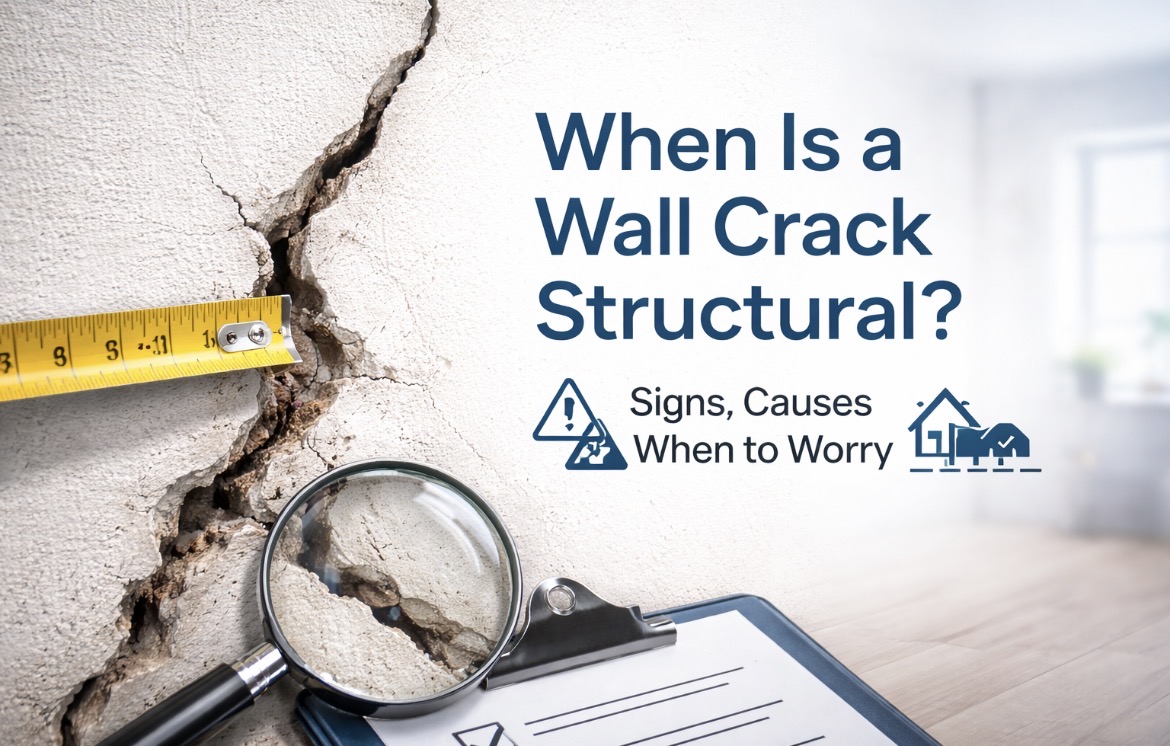
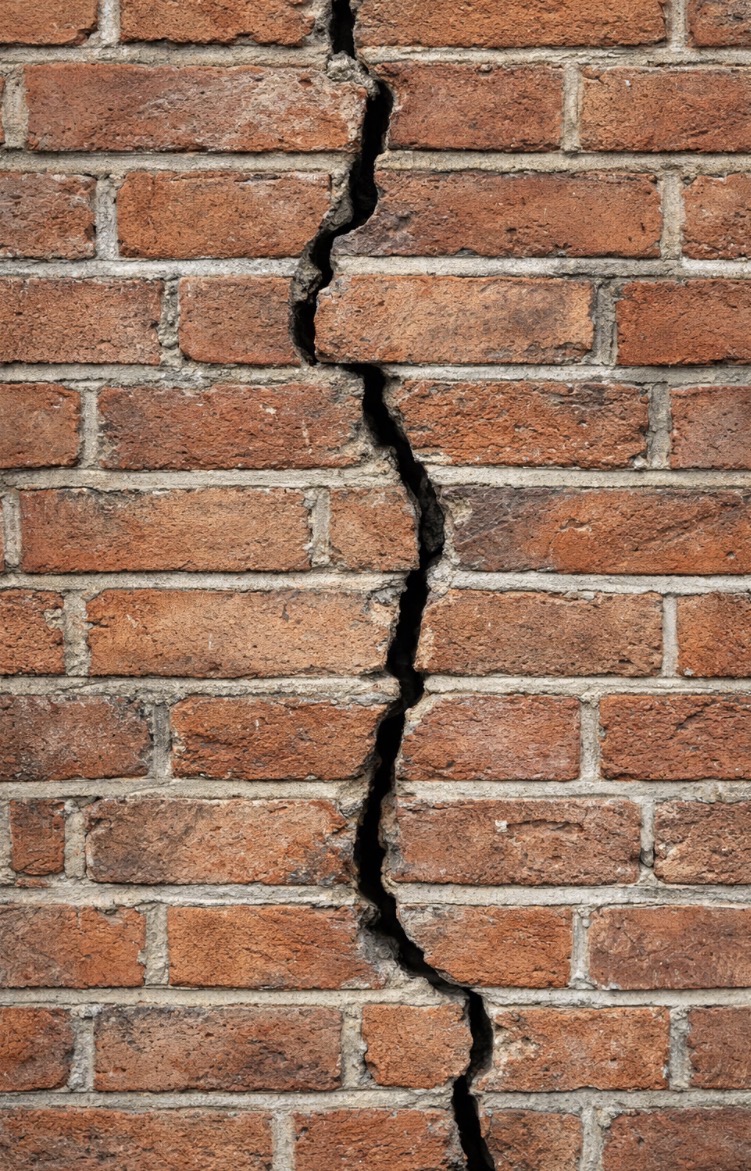
Stair-step cracks in brickwork are one of the most recognisable crack patterns in UK homes. These cracks follow the mortar joints in a stepped or zig-zag pattern and are often found on external walls. While some stair-step cracks are minor and caused by natural settlement, others can indicate structural movement such as subsidence.
Understanding the size, location, and progression of the crack is key to determining how serious the issue may be.
What Do Stair-Step Cracks Look Like?
Stair-step cracks:
- Follow the mortar joints between bricks
- Form a stepped diagonal pattern
- Often start near windows or doors
- May be wider at one end
- Can appear internally and externally in the same location
They are more concerning than straight plaster cracks because they affect the masonry itself.
What Causes Stair-Step Cracks?
Common causes include:
1. Natural Settlement
All buildings settle slightly after construction. Minor stepped cracks can form as the structure adjusts.
2. Subsidence
Subsidence occurs when the ground beneath foundations shrinks or moves, causing part of the building to drop. This often produces diagonal or stair-step cracking.
3. Lintel Failure
If a lintel above a window or door fails, the brickwork above may crack in a stepped pattern.
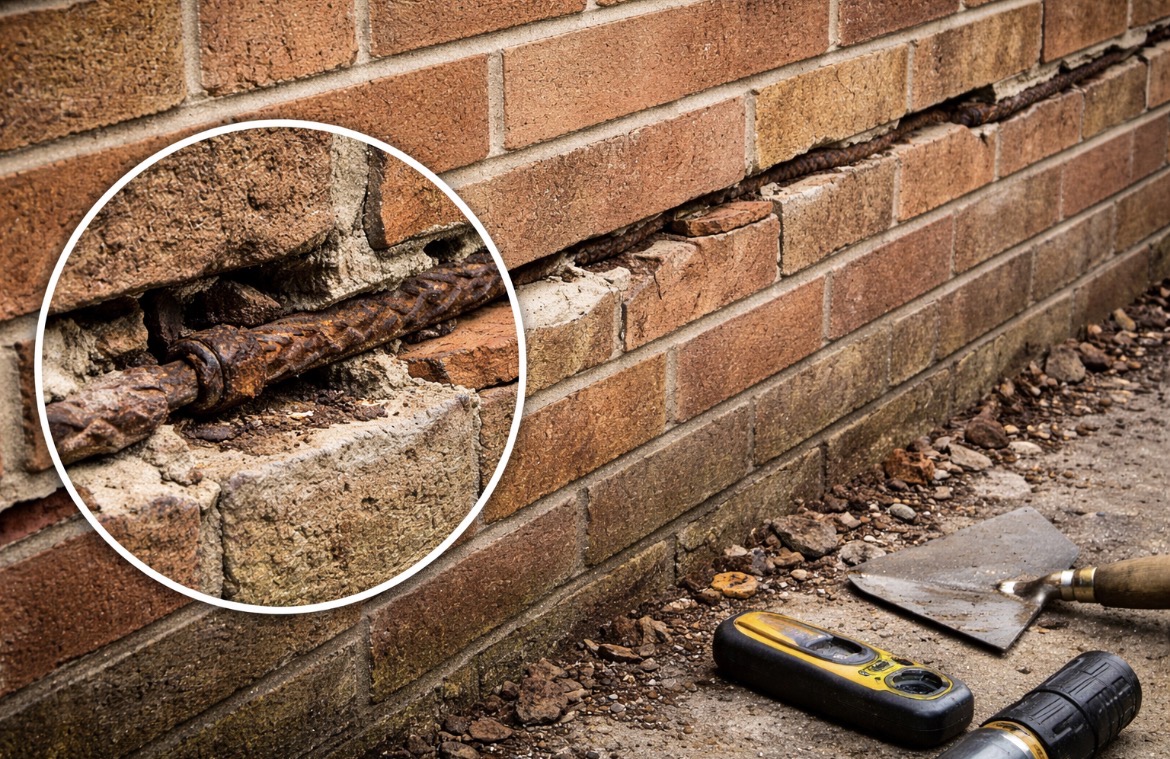
4. Cavity Wall Tie Failure
Corroded wall ties can cause horizontal expansion pressure, leading to cracking along mortar joints.
When Are Stair-Step Cracks Serious?
Stair-step cracks may indicate structural movement if they:
- Are wider than 3–5mm
- Continue to widen over time
- Appear both internally and externally
- Are accompanied by sticking doors or windows
- Cause visible bulging in brickwork
Cracks that taper (wider at the top or bottom) can suggest ongoing movement.
How to Monitor the Crack
If the crack appears stable and under 3mm wide:
- Measure the width.
- Mark the ends with a pencil and date them.
- Take photographs every few months.
- Watch for changes after heavy rain or dry periods.
If the crack grows, further investigation may be needed.
Do Stair-Step Cracks Always Mean Subsidence?
No.
While stair-step cracks are commonly associated with subsidence, they can also result from:
- Poor workmanship
- Inadequate wall ties
- Minor foundation settlement
- Thermal expansion and contraction
Professional assessment is the only way to confirm active structural movement.
Final Thoughts
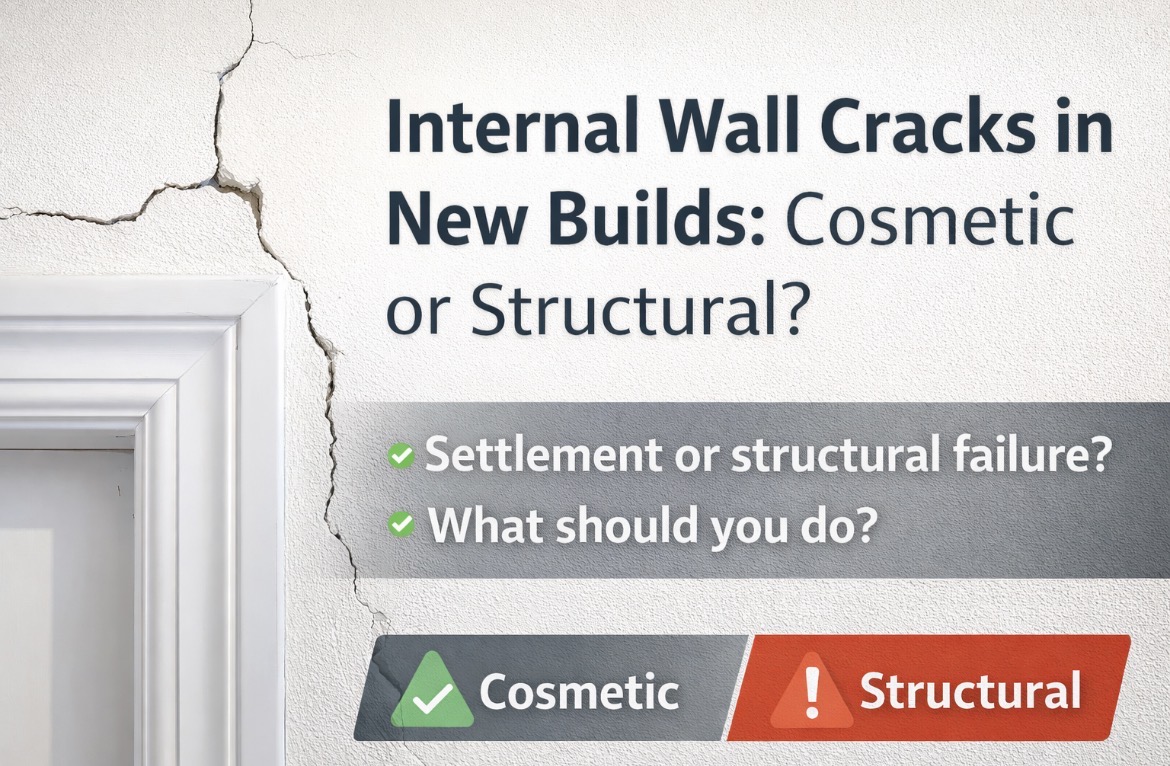
Stair-step cracks in brickwork should never be ignored, but they do not automatically mean your home is structurally unsafe. The width, progression, and surrounding symptoms determine whether the issue is cosmetic settlement or something more serious such as subsidence.
Early identification can prevent unnecessary cosmetic repairs and ensure any structural problem is addressed correctly.