
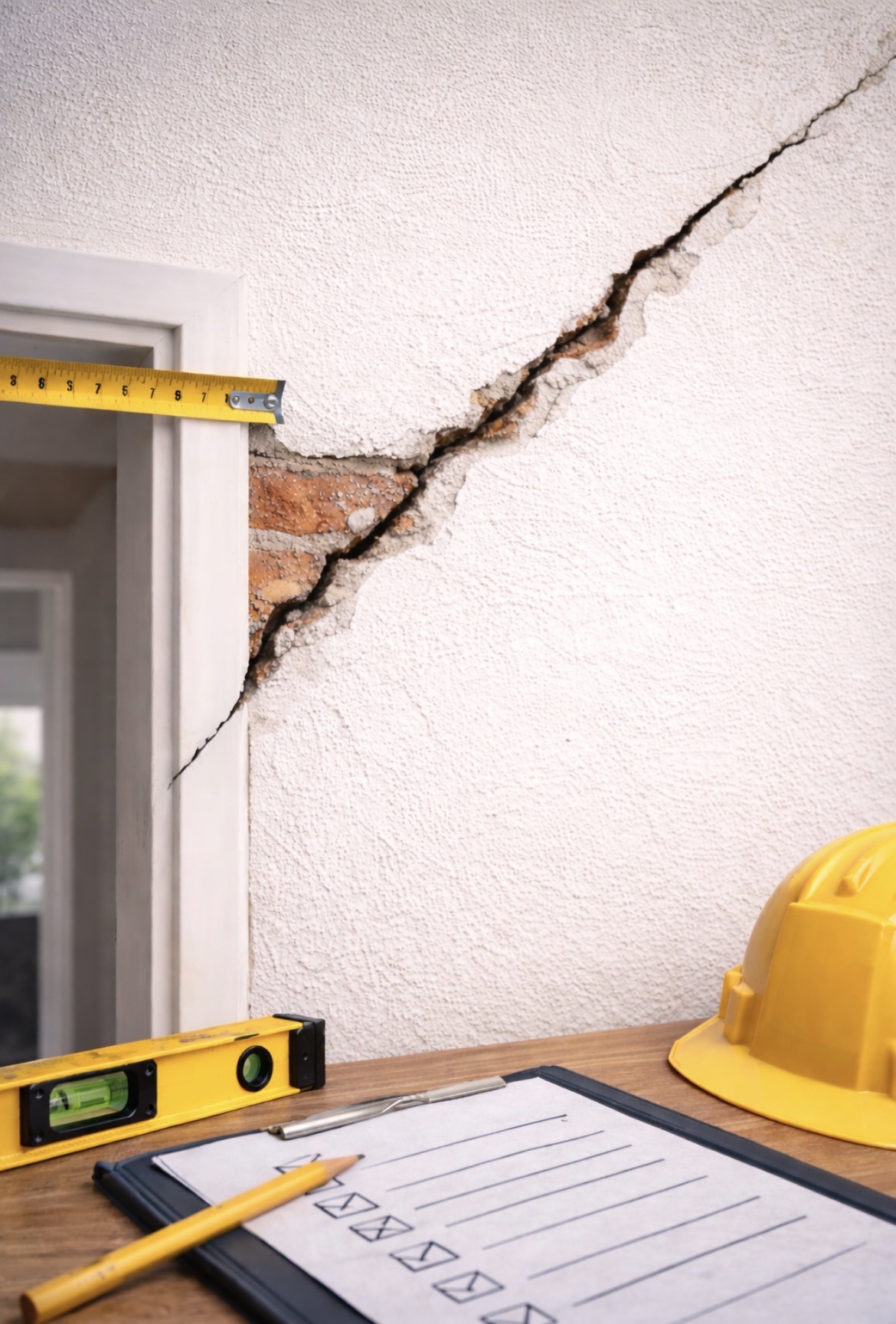
Diagonal cracks in walls are often more concerning than straight vertical or horizontal cracks. They typically form at an angle, often starting near the corners of doors and windows, and can extend across plaster or brickwork. While some diagonal cracks are caused by minor settlement, others may indicate structural movement such as subsidence or foundation issues.
Identifying the size, location and progression of the crack is essential before carrying out repairs.
What Do Diagonal Cracks Look Like?
Diagonal cracks:
- Run at an angle across the wall
- Often start at the top corners of doors or windows
- May follow mortar joints in a stepped pattern
- Can appear internally and externally in the same area
- May widen at one end
When diagonal cracks affect brickwork rather than just plaster, they require closer attention.
Common Causes of Diagonal Cracks
1. Normal Settlement
Minor diagonal cracking can occur as a building naturally settles, particularly in newer homes.
2. Subsidence
Subsidence occurs when the ground beneath foundations shifts or shrinks, causing part of the building to drop. Diagonal cracking is one of the most common visible signs.
3. Lintel Movement
If a lintel above a door or window shifts or fails, the load distribution can change, resulting in diagonal cracking.
4. Structural Alterations
Removing or altering load-bearing walls without proper support can create stress cracks.
5. Foundation Movement
Changes in soil moisture levels can cause foundations to move slightly, leading to angled cracking.
When Are Diagonal Cracks Serious?
You should monitor diagonal cracks carefully if they:
- Are wider than 3–5mm
- Continue to widen over time
- Appear on both internal and external walls
- Form a stair-step pattern in brickwork
- Are accompanied by sticking doors or windows
- Occur alongside sloping floors
Cracks that widen at one end may indicate ongoing movement.
Cosmetic vs Structural Diagonal Cracks
Cosmetic diagonal cracks:
- Thin and stable
- Limited to plaster
- Do not change over time
Structural diagonal cracks:
- Extend through masonry
- Increase in width
- Reappear after repair
- Appear alongside other movement symptoms
Monitoring progression over several months helps determine whether movement is active.
How to Monitor Diagonal Cracks
- Measure the width of the crack.
- Mark the end points and date them.
- Take photographs every few months.
- Inspect the same area externally.
- Note any changes in door or window alignment.
If the crack continues to widen or new cracks appear nearby, professional assessment may be necessary.
Final Thoughts
Diagonal cracks in walls should not be ignored, particularly when they affect brickwork or continue to widen. While some are caused by harmless settlement, others may indicate structural movement or subsidence. Identifying the cause before repairing the surface ensures that the correct solution is applied and prevents recurring damage.
Leave a Reply