
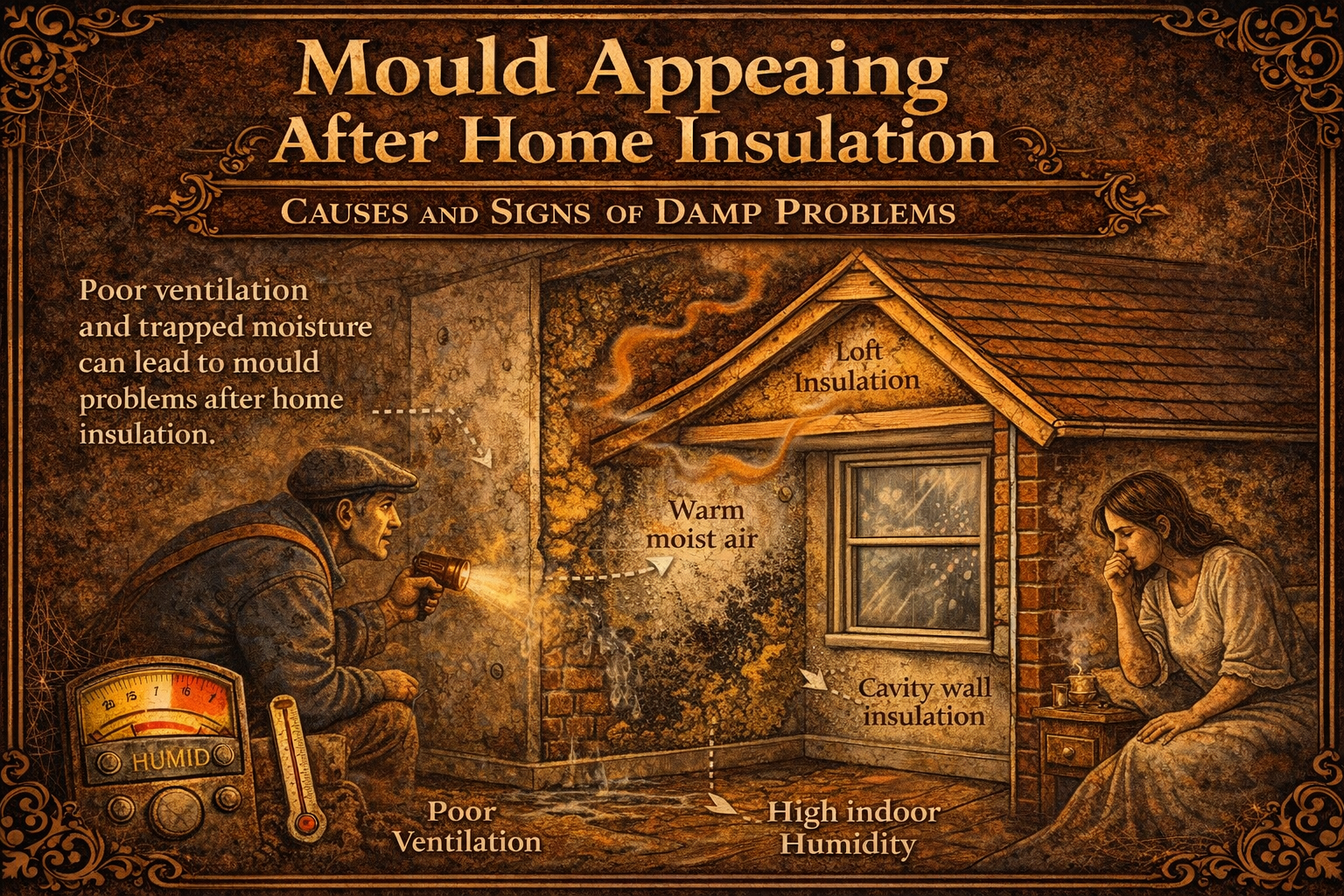
Home insulation upgrades are designed to improve energy efficiency and keep properties warmer. However, some homeowners notice mould growth appearing after insulation has been installed.
This can occur when insulation changes the way heat, airflow and moisture move through the building. If ventilation is reduced or moisture becomes trapped, condensation can form on colder surfaces inside the home.
Over time this moisture can lead to mould developing on walls, ceilings or around windows.
Why Insulation Can Lead to Mould Problems
Insulation improves the thermal performance of a building, but it can also make a home more airtight.
When warm indoor air containing moisture cannot escape easily, humidity levels inside the home can increase. This moisture may condense on colder surfaces such as external walls or window frames.
Common causes include:
- reduced ventilation after insulation upgrades
- trapped moisture within wall structures
- poor installation of insulation materials
- existing damp problems made worse by insulation
In some cases the insulation itself can prevent walls from drying properly.
Signs Mould Is Developing After Insulation
Mould growth may begin in areas where condensation forms most easily.
Typical warning signs include:
- black mould forming on external walls
- mould around windows or in corners of rooms
- musty smells inside the home
- damp patches on insulated walls
- mould appearing behind furniture
These issues are often more noticeable during colder months when indoor humidity levels are higher.
Homes Most Likely to Experience Problems
Some properties are more susceptible to mould after insulation work.
This may include:
- older homes with solid walls
- properties with limited ventilation
- homes with high indoor humidity
- buildings where insulation was poorly installed
In these situations, insulation upgrades can unintentionally create conditions that allow condensation to develop.
Preventing Mould After Insulation Upgrades
Preventing mould growth usually involves managing moisture levels and improving airflow inside the home.
Possible solutions include:
- improving ventilation in kitchens and bathrooms
- installing extractor fans or ventilation systems
- maintaining steady indoor heating
- reducing indoor humidity levels
These measures help prevent moisture from accumulating on colder surfaces.
When to Investigate Further
If mould begins appearing soon after insulation has been installed, it may be worth investigating whether the insulation system is contributing to the problem.
A professional survey can identify whether ventilation, moisture or installation issues are responsible and recommend appropriate solutions.
Leave a Reply