
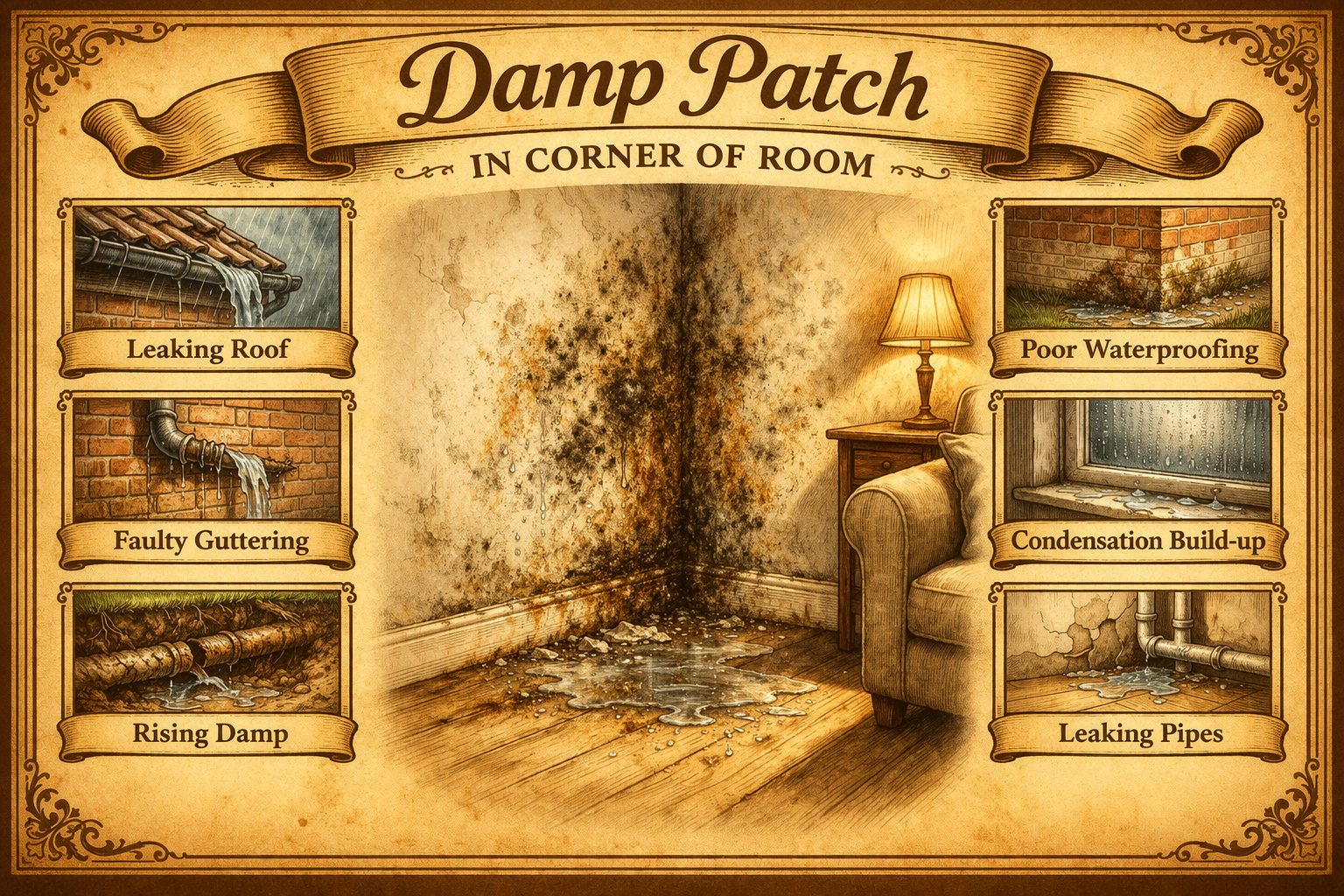
Damp patches in the corners of rooms are one of the most recognisable signs of condensation and cold bridging. These areas are particularly vulnerable because they are often the coldest parts of a room and have the least airflow.
Cold bridging occurs where heat escapes more easily, such as at junctions between walls or where insulation is lacking. As a result, these areas become significantly colder than the rest of the room. When warm, moist air comes into contact with these cold surfaces, condensation forms.
Corners are also prone to poor airflow, especially if furniture is placed nearby. This creates ideal conditions for moisture buildup and mould growth.
Typical signs include:
Unlike other forms of damp, this type is usually not caused by water ingress. Instead, it is related to indoor environmental conditions.
To confirm the cause, check whether the damp is surface-level and associated with mould. If so, condensation is the most likely explanation.
Fixing the issue involves improving airflow and reducing humidity. This can include:
- Opening windows regularly
- Using extractor fans
- Keeping furniture away from corners
- Maintaining consistent heating
Improving insulation can also help reduce cold bridging. This may involve adding insulation to walls or addressing gaps in existing insulation.
Using a dehumidifier can provide short-term relief, but long-term solutions should focus on ventilation and insulation.
Preventing damp in corners requires a balanced approach to heating, ventilation, and moisture control. Addressing these factors can significantly reduce the risk of condensation and improve overall indoor comfort.
Leave a Reply