
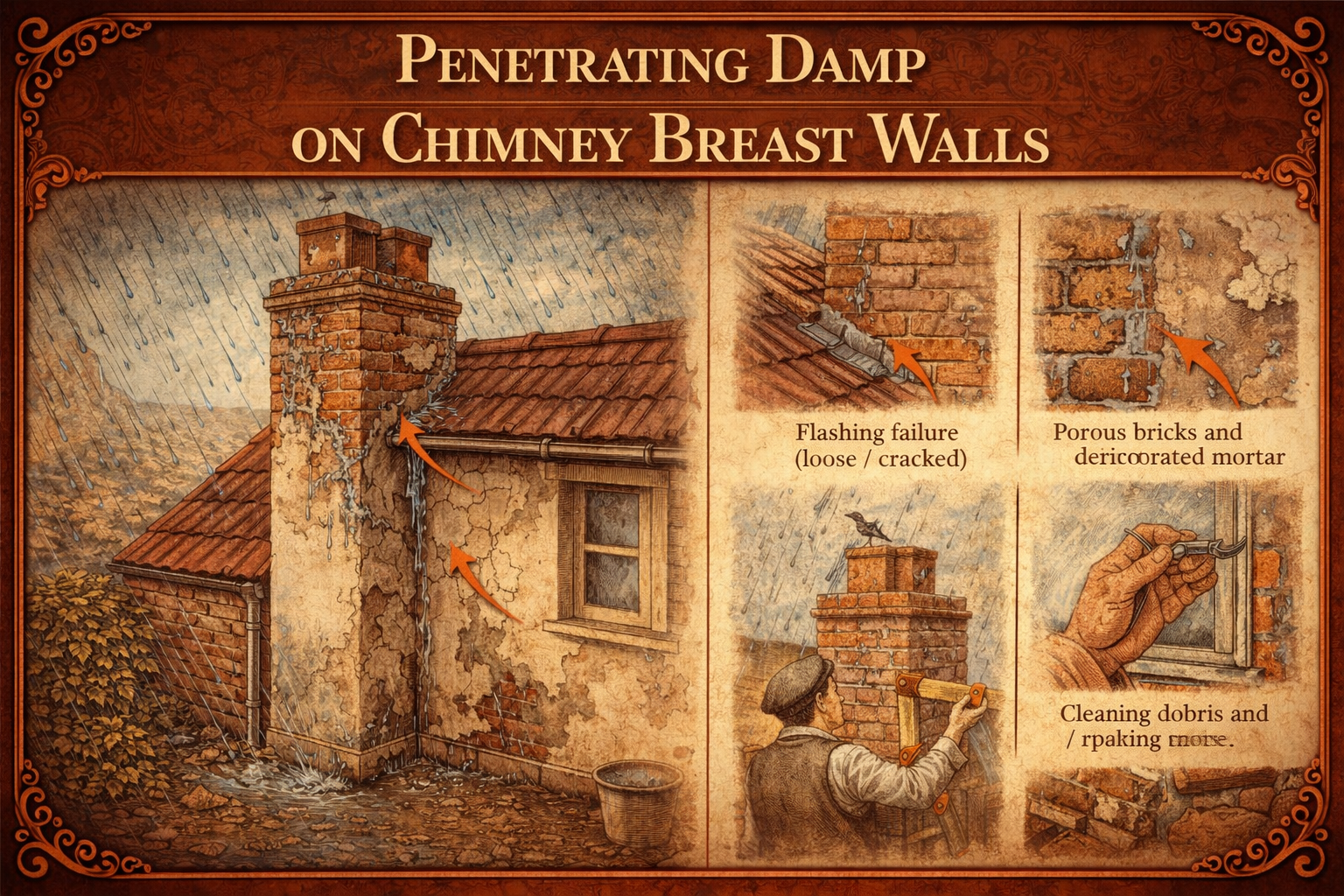
Chimney breast walls are particularly vulnerable to penetrating damp due to their exposed position and complex construction. Unlike standard walls, chimneys are subjected to weather from multiple directions and contain several potential entry points for water.
A common cause of damp in chimney breasts is defective flashing. Flashing is used to seal the joint between the chimney and the roof. If it becomes loose, cracked, or improperly installed, water can enter at this junction and travel down into the chimney structure.
Porous brickwork and deteriorated mortar joints are also frequent issues. Over time, exposure to the elements can cause chimney masonry to become highly absorbent. Missing or damaged chimney pots, caps, or cowls can allow rainwater to enter directly from above.
Internally, penetrating damp on chimney breast walls often appears as staining, discolouration, or damp patches. Salt deposits may also form on the surface, and wallpaper or plaster may begin to deteriorate. The problem is often more noticeable after heavy rain.
Unused chimneys can make the issue worse. Without proper ventilation, moisture can become trapped within the flue, leading to condensation and damp problems internally.
Repairing chimney-related damp involves addressing the external defects. This may include repairing or replacing flashing, repointing brickwork, and installing chimney caps or cowls to prevent water ingress while maintaining ventilation.
Regular inspection and maintenance of chimneys are essential to prevent damp problems and ensure long-term structural integrity.
Leave a Reply