
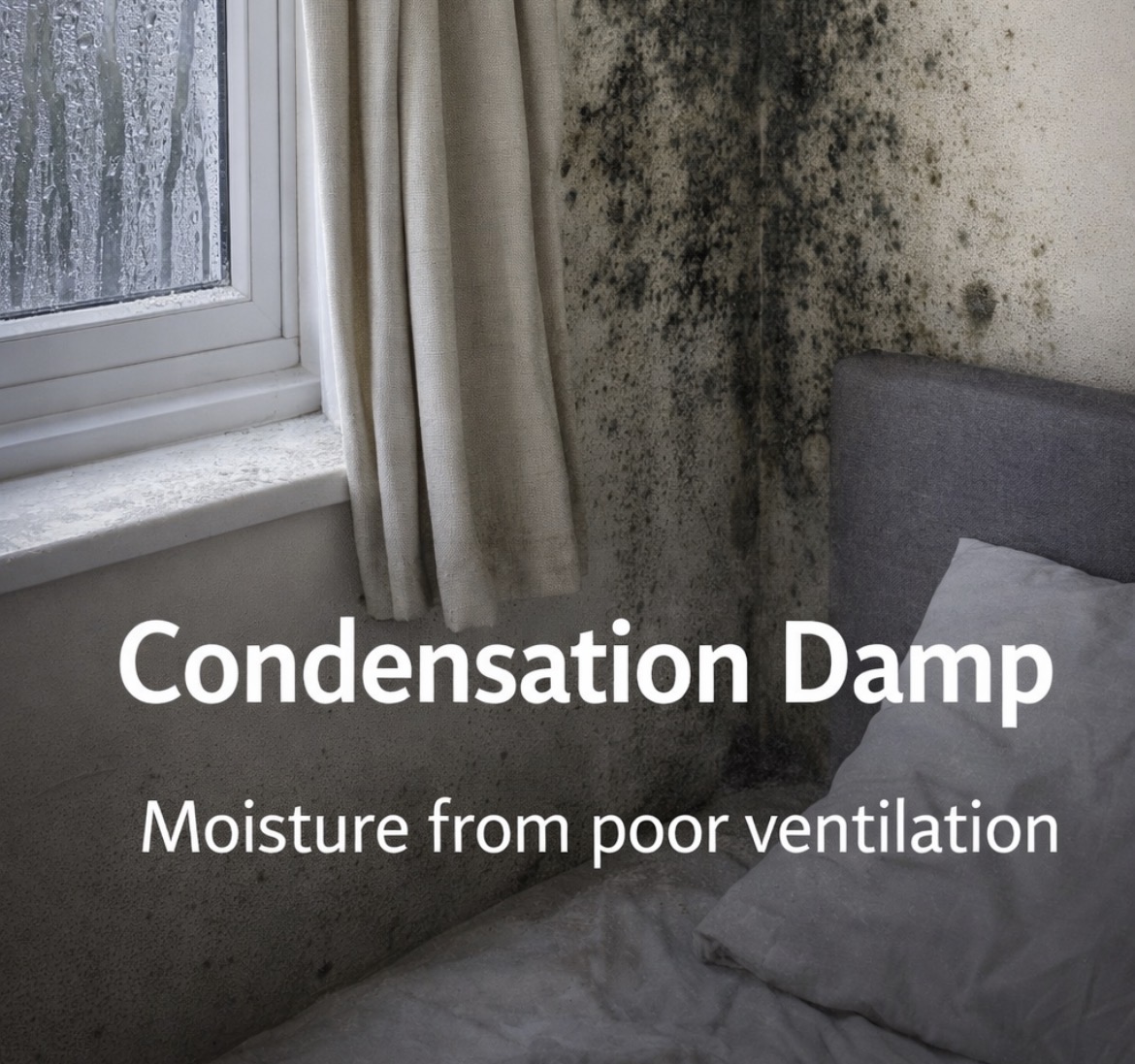
Condensation damp is the most common type of damp found in homes. It occurs when warm, moist air comes into contact with cold surfaces, forming water droplets.
Unlike rising or penetrating damp, condensation is caused by internal moisture rather than structural defects.
What Causes Condensation Damp?
Condensation forms when:
- Indoor air is humid
- Surfaces are cold
- Ventilation is poor
- Heating is inconsistent
Everyday activities such as cooking, showering and drying clothes increase indoor moisture levels.
When warm air hits cold walls or windows, water forms on the surface.
Signs of Condensation Damp
Common signs include:
- Water droplets on windows
- Black mould in corners
- Damp patches behind furniture
- Musty smells
- Mould around window frames
- Peeling wallpaper
Condensation damp often worsens in autumn and winter.
Where Does It Usually Appear?
Condensation damp is most common in:
- Bedrooms
- Bathrooms
- Kitchens
- Poorly ventilated flats
- North-facing rooms
It typically appears in upper corners and on cold external walls.
How Is It Different from Rising Damp?
Condensation damp:
- Appears on surfaces
- Is seasonal
- Causes mould growth
- Is linked to ventilation
Rising damp:
- Starts at ground level
- Leaves tide marks
- Affects plaster internally
Diagnosis is important before treatment.
How to Prevent Condensation Damp
Effective prevention includes:
- Opening windows daily
- Using extractor fans
- Keeping rooms consistently heated
- Wiping down wet surfaces
- Avoiding drying clothes indoors
- Using a dehumidifier if necessary
Improving airflow is key.
Can Condensation Damp Cause Mould?
Yes.
Condensation is one of the main causes of black mould in homes.
If not addressed, mould can spread across walls and ceilings.
Final Thoughts
Condensation damp is caused by excess indoor moisture and poor ventilation. While it does not usually damage the structure of a building, it can lead to mould growth and recurring surface damp problems.
Improving ventilation and managing humidity are the most effective long-term solutions.
Leave a Reply